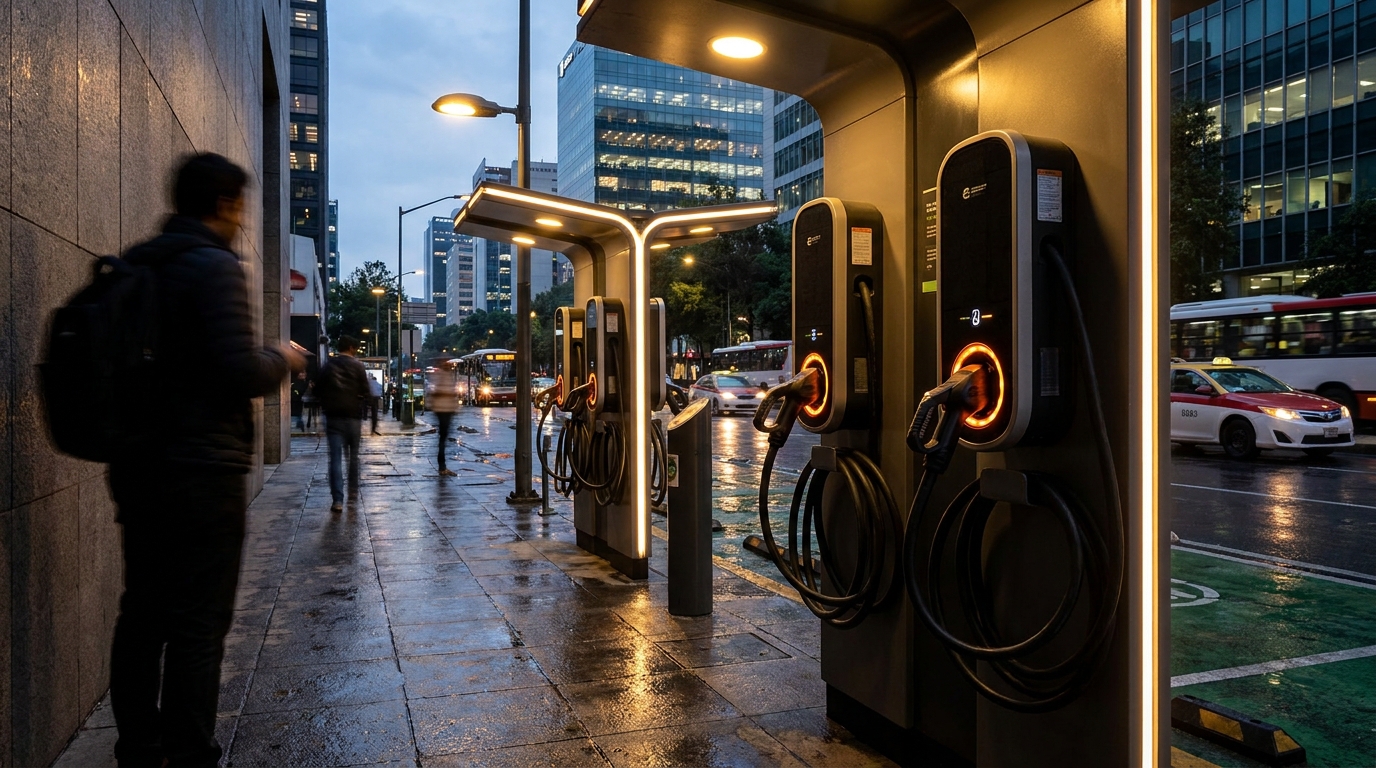
Mexico reached 60,932 EV charging connections at the close of the first half of 2026, a 17.5% increase from the 51,860 recorded in the same period of 2025. The data comes from the Electromovilidad Barometer, published on July 20 by the Electro Movilidad Asociación (EMA) and reported by Energía a Debate.
The expansion of the charging network is advancing in step with electrified vehicle sales across the country. During the first half of 2026, 53,430 units were sold, spanning pure electric and plug-in hybrid vehicles, a 22% increase compared to the same period of 2025, according to EMA figures cited by Forbes México. Mexico's cumulative electrified vehicle fleet has now reached 263,928 units. The simultaneous growth of both infrastructure and market reinforces Mexico's integration into the North American electromobility supply chain, where the United States and Canada are accelerating their own deployments.
Of the total connections, 4,653 belong to the public network, representing 27% annual growth, of which 1,592 are direct-current fast-charging points and 3,061 are alternating-current. The companies that contributed most to the public network buildout were VEMO, Evergo, FAZT, Tesla, and SynegyEV, according to the EMA barometer.
Private infrastructure accounts for 56,279 connections, up 16.8% year-on-year. The residential segment leads with 45,238 chargers installed in homes. According to the EMA's second national survey, 90% of users who installed a home charger did so with an investment of less than 25,000 pesos.
The Barometer also reported that electric vehicle operation avoided the emission of 28,505 tonnes of carbon dioxide equivalent during the first half of 2026. Eugenio Grandio, president of the EMA, noted that the country is building a solid foundation for electromobility, but called for updated regulations and the removal of bureaucratic barriers to accelerate deployment. The association will publish its next barometer update in January 2027.
This article was written with artificial intelligence assistance based on verified sources and reviewed by a human editor before publication.