
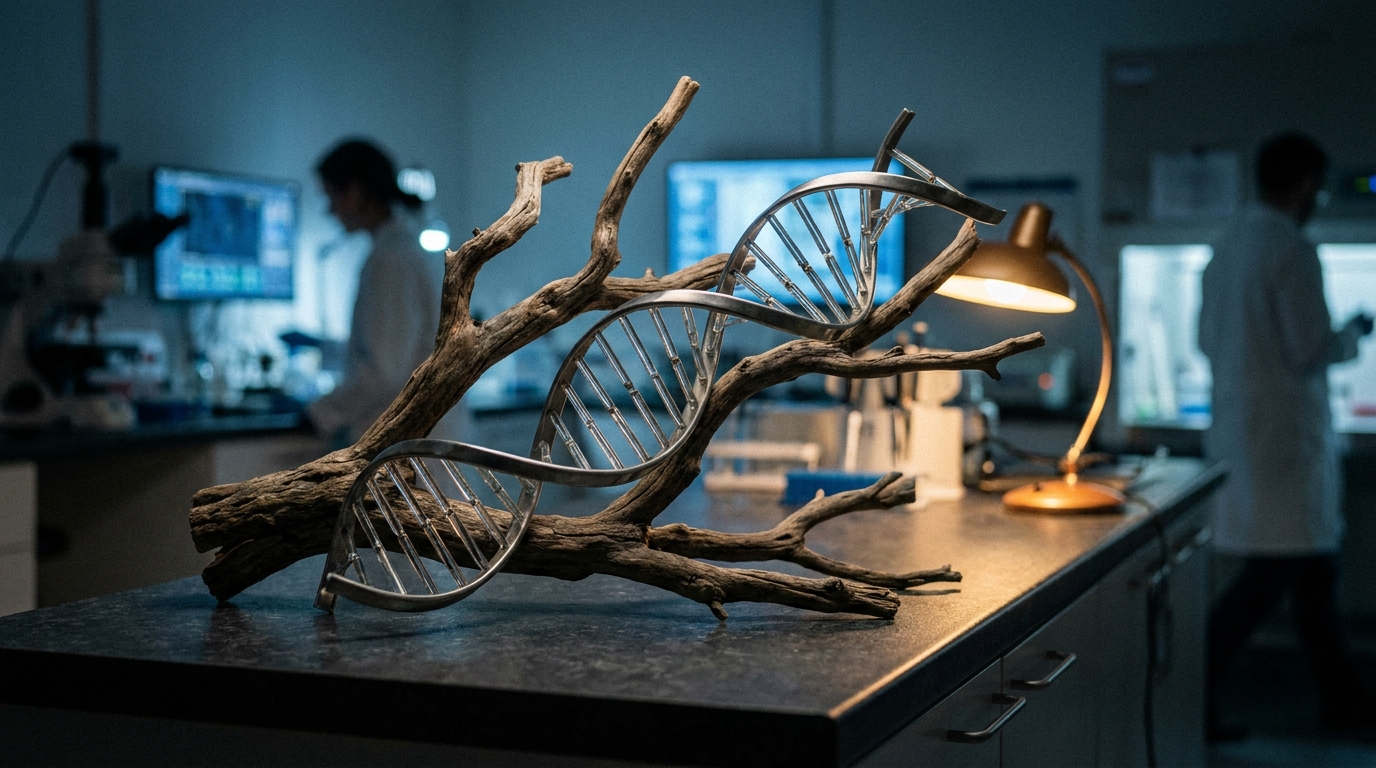
A team from the University of California, Berkeley identified traces of two ancient human populations never before documented in modern DNA, according to a study published in the journal Science on July 30, 2026. The finding, achieved through a new computational method called TRACE, confirms that the genetic history of our species includes more interbreeding with extinct lineages than previously recorded.
TRACE, developed by Professor Priya Moorjani's laboratory, reconstructs ancient genealogies from current genomes without requiring fossil DNA, a key advantage over earlier techniques. The first lineage detected diverged from modern humans approximately 800,000 years ago and interbred with Homo sapiens in Africa before the great migration out of the continent, more than 50,000 years ago. Its genetic imprint appears in all populations worldwide: every person, regardless of origin, carries between 0.5% and 1% of their genome inherited from this ghost ancestor, a proportion comparable to that of Neanderthal DNA. The finding, also reported by Ars Technica, feeds directly into the field of genetic ancestry testing that a growing number of people of Latino and Mexican origin use to trace their family history.
The second lineage is even older: it split from the human trunk approximately 1.8 million years ago and did not interbreed directly with Homo sapiens, but with the Denisovans, another extinct human population that inhabited Eurasia. A fraction of that DNA reached modern humans when the Denisovans mixed with our direct ancestors more than 200,000 years ago. Researchers detected this heritage by analyzing genomes from Oceanian populations, which retain up to 4% Denisovan DNA. TRACE validated its precision by correctly identifying already-known Neanderthal and Denisovan DNA regions, with a false positive rate below 0.25% and an accuracy above 90 percent.
The study, authored by Yulin Zhang, Arjun Biddanda, and Priya Moorjani, opens the door to applying TRACE to other species to reconstruct evolutionary histories without depending on the fossil record. For people who today trace their origins with commercial genetic tests, the message is clear: the human family tree has deeper roots and more intertwined branches than we imagined.
This article was drafted with artificial intelligence assistance from verified sources and reviewed by a human editor before publication.