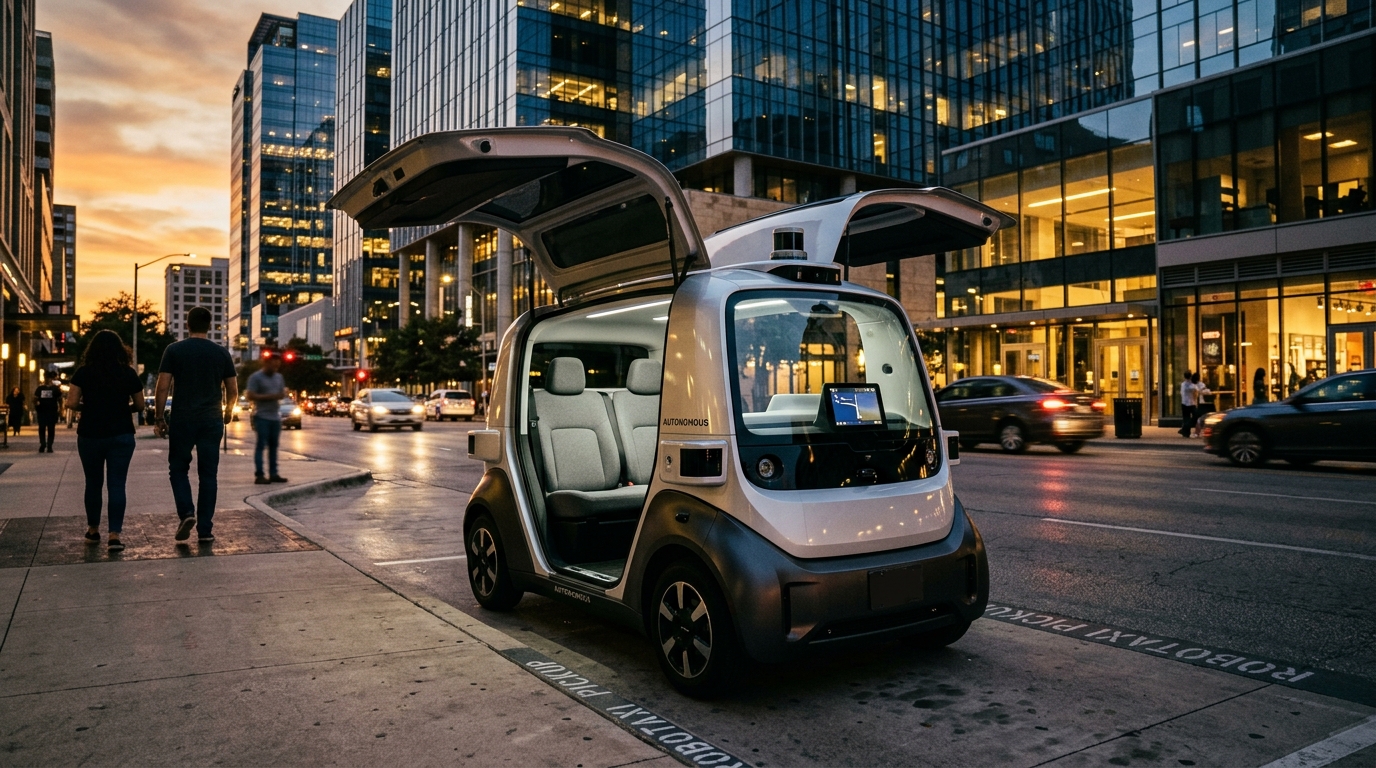
Tesla is launching the Cybercab this Thursday, September 3, in Austin, Texas. The two-seat robotaxi, which has no steering wheel or pedals, was unveiled as a prototype in 2024. The company is integrating it into its robotaxi service this week, nearly two years after that announcement, according to Wired.
The Cybercab is the centerpiece of Tesla's pivot toward an autonomous transportation service, and The Verge describes it as the first public test of its camera-only driving system. Tesla piloted this service in Austin since the summer of 2025 and is now expanding to other cities in Texas and Florida, with permits for Arizona and Nevada, according to Wired. The news carries particular significance for the Latino community across North America: Texas is home to one of the largest populations of Mexican origin in the United States. Ride-hailing and home delivery are sectors with a strong Latino presence, and the advance of robotaxis in that state is being closely watched by that community.
Tesla's registered fleet in Texas includes 51 Cybercabs and 263 Model Y vehicles, and on-street testing of the Cybercab in Austin began in late June 2026, according to Wired. The Cybercab runs an adapted version of the Full Self-Driving system, which in current vehicles requires driver supervision and which in this model will be monitored by remote operators. Tesla defends the camera-only design on the grounds of lower cost; Waymo, which already operates nearly 4,000 driverless vehicles across up to 14 U.S. cities, contends that cameras alone are insufficient to guarantee safety. The U.S. road safety regulator has kept an investigation open since 2024 into crashes involving the system, Wired reports.
Thursday's event in Austin will mark the commercial launch of the Cybercab. Tesla plans to sell the vehicle to private buyers before the end of 2026, at an announced price below $30,000, and expansion of the service to additional cities will depend on how it performs in Texas.
This article was written with the assistance of artificial intelligence based on verified sources and reviewed by a human editor before publication.