
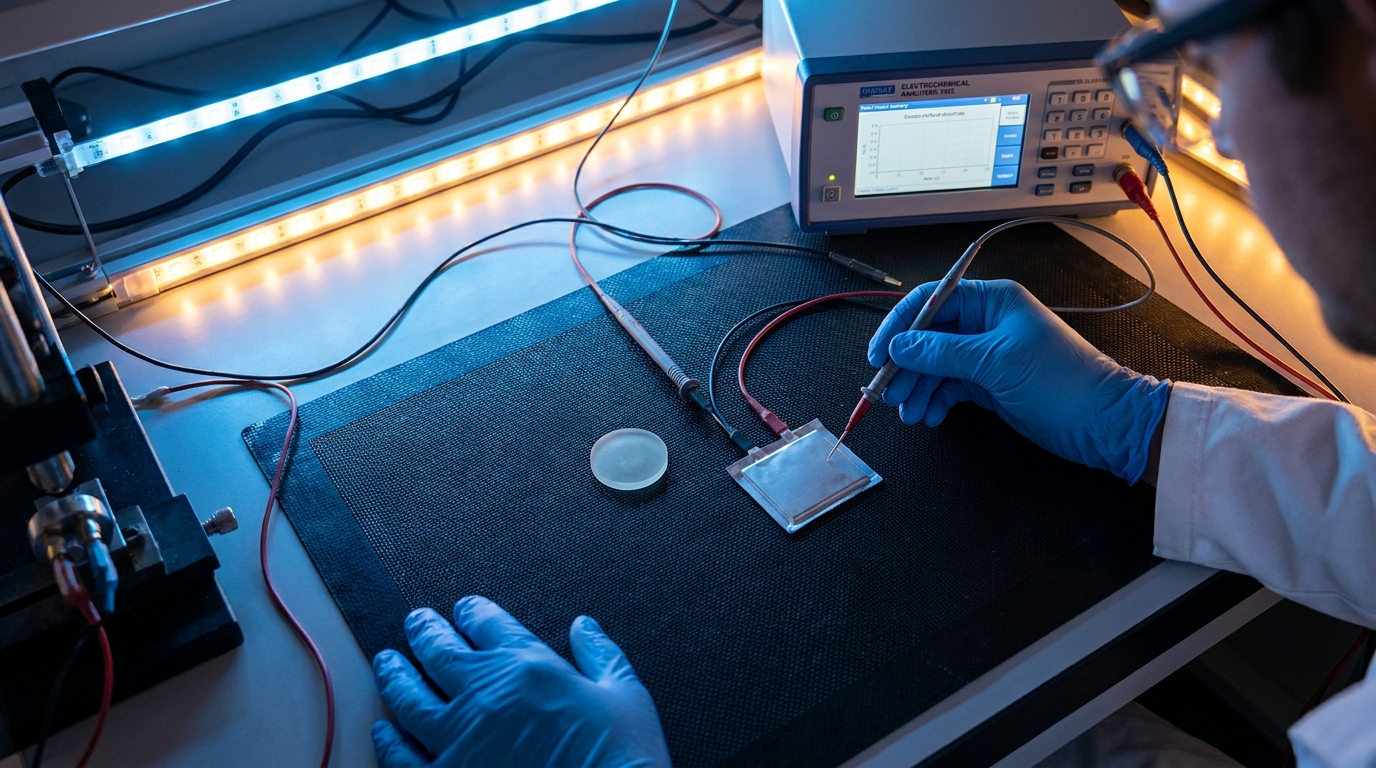
Researchers at MIT and the Technical University of Munich (TUM) have identified why solid-state batteries fail and managed to increase their performance by more than 300 percent, according to a study published in Nature Nanotechnology on July 6, 2026. The cause is microscopic electrical imbalances at the grain boundaries of the ceramic LLZO electrolyte, which trigger internal short circuits, as reported by Investigación y Desarrollo.
Solid-state batteries replace the flammable liquid electrolyte of conventional lithium-ion cells with a solid ceramic material, promising higher energy density, faster charging, and a lower fire risk. Commercial adoption has been held back, however, by dendrite formation: metallic filaments that pierce the electrolyte and cause short circuits. The finding arrives as Mexico advances its own battery strategy. The Institutional Program LitioMx 2026-2030, published on June 10, sets a target of establishing an industrial battery-pack assembly plant, according to El Universal.
The team, led by Professor Jennifer Rupp of TUM and Professor Harry Tuller of MIT, analyzed the LLZO ceramic electrolyte (lithium, lanthanum, and zirconium oxide) using electron microscopy, impedance spectroscopy, and machine-learning models. They found that at grain boundaries, the junctions between microcrystals roughly one micron in size, negative electrical charges accumulate, slowing lithium-ion transport and attracting misplaced electrons. Those electrons react with the ions to form metallic lithium that grows as a dendrite until it punctures the cell. By adjusting the electrolyte's processing conditions to reduce those negative charges, the team raised the critical current density by more than 300 percent, according to the article published in Nature Nanotechnology.
The significance of the finding lies in the fact that it requires no new material, only a manufacturing process adjustment for an already-known one, which brings industrial application considerably closer. The team's next step is to apply this grain-boundary control to other promising solid electrolytes for the automotive industry.
This article was drafted with AI assistance from verified sources and reviewed by a human editor before publication.