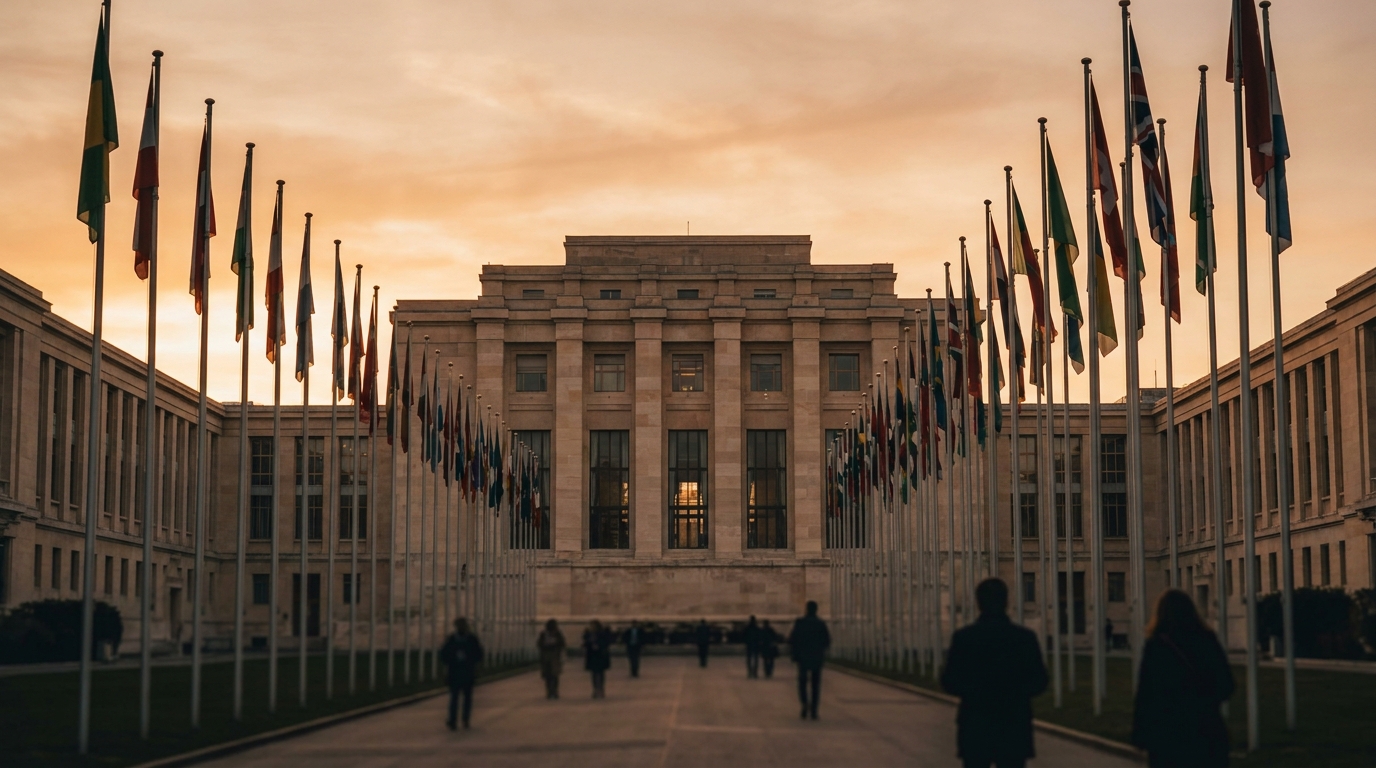
The Global Dialogue on Artificial Intelligence Governance convened by the UN opened on July 6 in Geneva. The report underpinning it, produced by a panel of 40 international experts, reveals that the United States and China hold close to 90 percent of global AI computing capacity.
The scientific panel, established by the UN General Assembly in 2025, warns that more than 40 AI governance frameworks exist worldwide yet operate in a fragmented manner. An article published in Nature on July 7 reinforces the urgency: safeguards have not kept pace with the development of artificial intelligence. The call to build multilateral rules coincides with an announcement by President Claudia Sheinbaum, who on July 6 stated that Mexico will launch a national debate process on AI regulation starting July 19, once the FIFA World Cup 2026 concludes, as reported by El Heraldo de México.
The United States holds close to 75 percent of AI supercomputer capacity and China approximately 15 percent, according to the panel report cited by UN News. The Geneva dialogue, which brings together Member States, seeks to lay the foundations of an international architecture that allows all countries to make informed decisions on the deployment of this technology. In Mexico, Sheinbaum outlined an evidence-based approach: "This is not about prohibition, but about informing and creating regulatory conditions together," she declared during her morning press conference.
The UN dialogue will continue in the coming weeks with a Member State discussion phase, while the scientific panel refines its final recommendations. On the Mexican side, the national debate will begin on July 19 and the Chamber of Deputies included artificial intelligence regulation on the agenda for the ordinary session period beginning September 1, according to La Razón.
This article was written with artificial intelligence assistance based on verified sources and reviewed by a human editor before publication.