
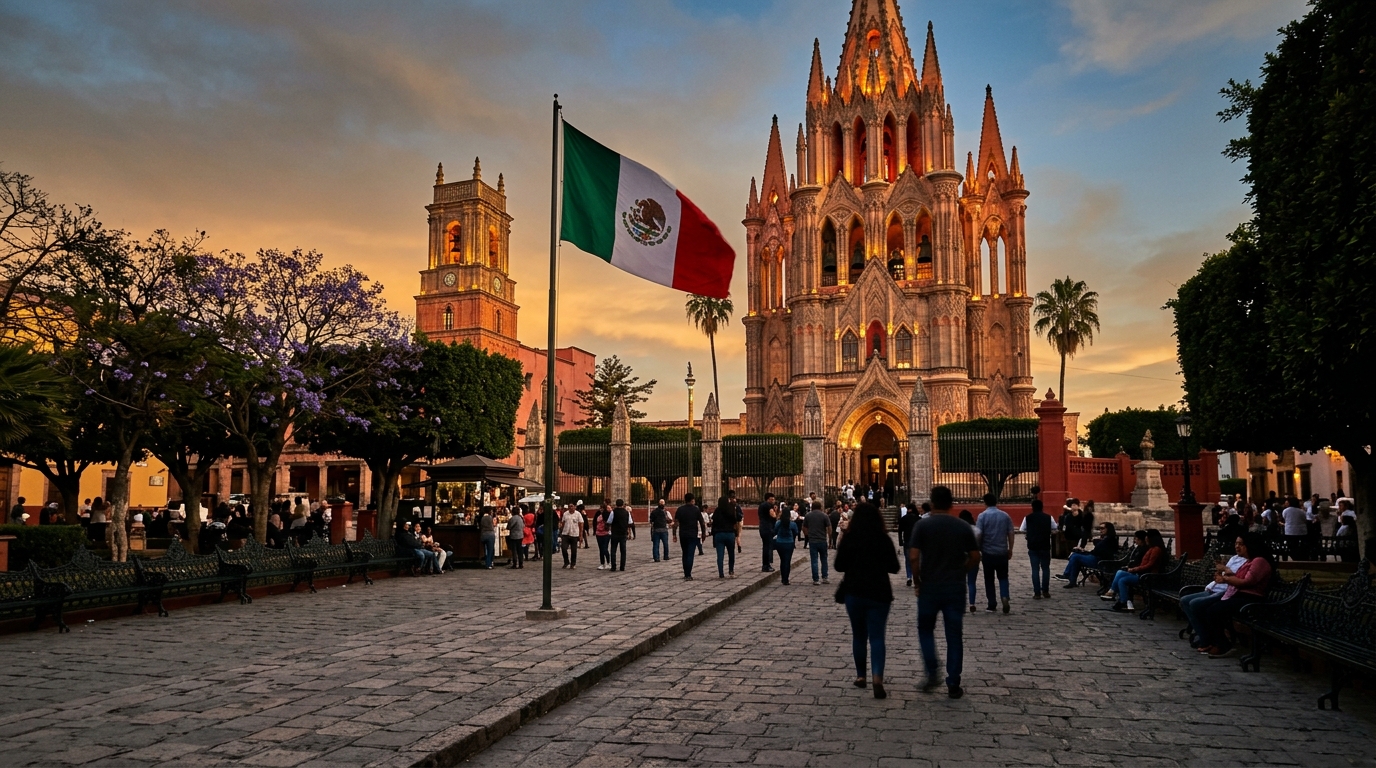
The Instituto Nacional de Estudios Históricos de las Revoluciones de México (INEHRM) launched on August 3 a virtual colloquium marking 100 years since the start of the Cristero War, the conflict that pitted the State against Catholic sectors between 1926 and 1929.
The occasion marks July 31, 1926, when the Ley Calles came into force, a statute that codified the limits the 1917 Constitution imposed on the Catholic Church. Writing in Reforma, historian Carlos Martínez Assad recalled that armed conflict erupted in August of that year in Zacatecas, when a group of peasants attempted to free the parish priest of Chalchihuites. The Church hierarchy responded by suspending public worship in temples, according to El Universal. A century later, the memory of La Cristiada remains alive in the religious and cultural identity of Mexican and Mexican-American communities, and the centenary has made it a subject of historical reexamination on both sides of the border.
The colloquium, titled "A Hundred Years Since the Start of the Cristero War," opened with the panel "Political and Ecclesiastical Power: Church and State in Nineteenth-Century Mexico." Researcher Cristina Gómez Álvarez explained that the relationship between both institutions took root with the Spanish conquest and ran through the Independence period, noting that separating religious belief from politics cost Mexico considerable effort. Researcher Reveriano Sierra clarified that the panel's aim is not to assign blame but to understand the conflict as a complex relationship between Church and State. In his keynote lecture, Martínez Assad outlined the stages of the struggle, with the Liga Nacional Defensora de la Libertad Religiosa and rural parish priests among its central figures. The sessions are broadcast on the INEHRM's YouTube channel.
The centenary program continues through August with additional colloquium panels and public commemorative activities. For communities on both sides of the border, the event is also an invitation to revisit one of the deepest wounds in the relationship between religion and the State in Mexico.
This article was drafted with artificial intelligence assistance from verified sources and reviewed by a human editor before publication.