
Mexican composer Gabriela Ortiz premiered her first symphony, La Reina Roja, on July 31, inspired by the Maya tomb discovered in 1994 in Palenque, Chiapas. The work, in five movements, was presented at the Paax GNP Festival with the Orquesta Imposible and the Orquesta de la Comunidad de Madrid, conducted by Alondra de la Parra.
The discovery that inspired the piece took place at Temple XIII in Palenque, where the tomb of Tz'akab Ajaw, wife of Pakal the Great, was found, reshaping scholarly understanding of royal women's roles during the Maya Classic period, according to Excélsior. Ortiz's work takes as its starting point the eponymous book by journalist Adriana Malvido, which chronicled that discovery 32 years ago. The festival co-commissioned the symphony with institutions including the Concertgebouw in Amsterdam, the Philharmonie de Paris, Lincoln Center in New York, the Musikverein in Vienna, and ORCAM in Madrid, according to El Universal.
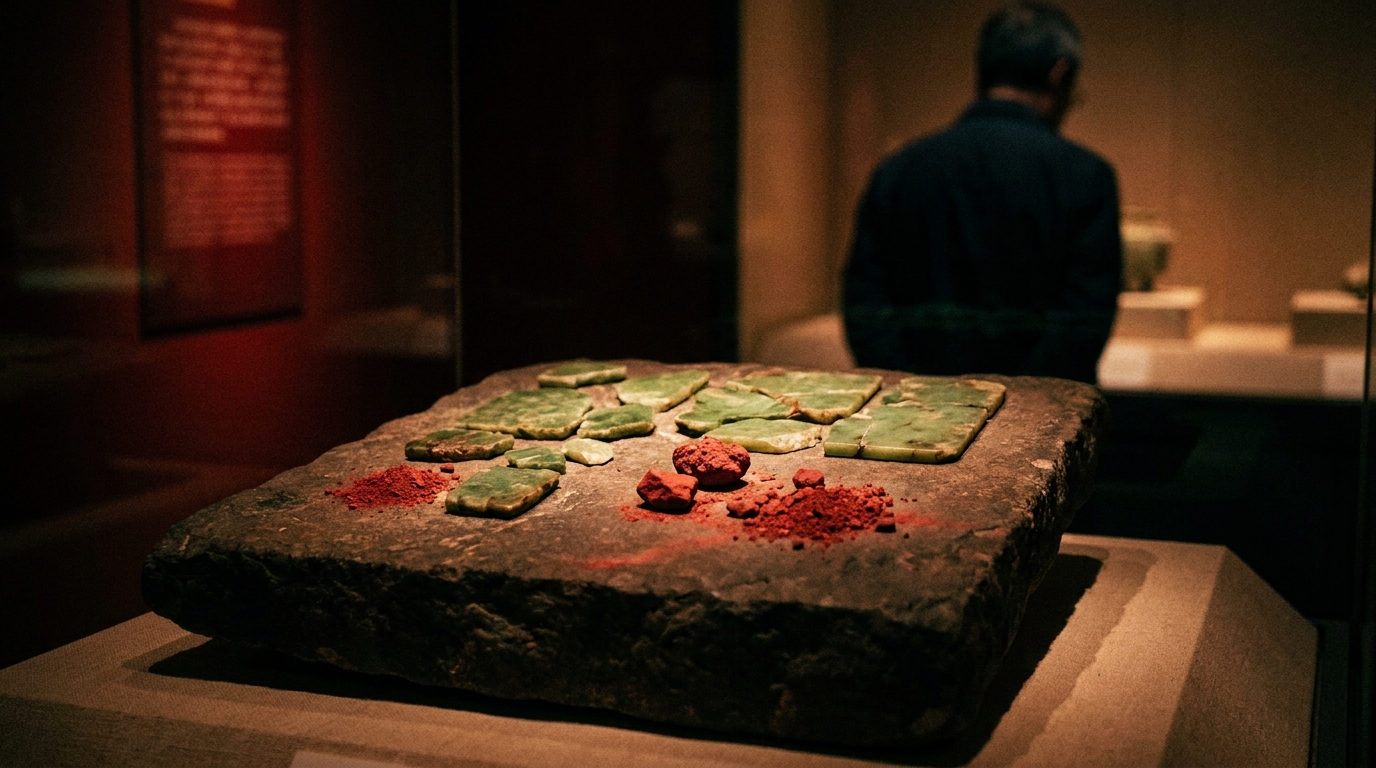
Ortiz structured the piece in five sections performed without pause: 'Luminiscencia en rojo,' 'Geometrías de selva y piedra,' 'Cinabrio,' 'Rostro malaquita,' and 'Tz'akab Ajaw.' Before the performance, the composer asked the audience to stay open: "We are going to travel to another world. I ask you to be very open, because we are going to enter the world of sensations, the world of images, the world of scents." Cinnabar, she explained, was the red mineral that coated the sarcophagus when it was opened, and malachite evokes the queen's reconstructed mask, assembled from small stone fragments. At the close, the ovations lasted seven minutes, and archaeologist Fanny López Jiménez, who first intuited the sarcophagus's presence in Temple XIII, took the stage alongside Malvido.
The co-commission with European and New York venues anticipates the score's journey through stages in France, the Netherlands, Austria, and Spain, projecting Mexican musical creation into international circuits. The Paax GNP Festival, which opened on July 23, closes on August 2 in Quintana Roo.
This article was written with artificial intelligence assistance based on verified sources and reviewed by a human editor before publication.