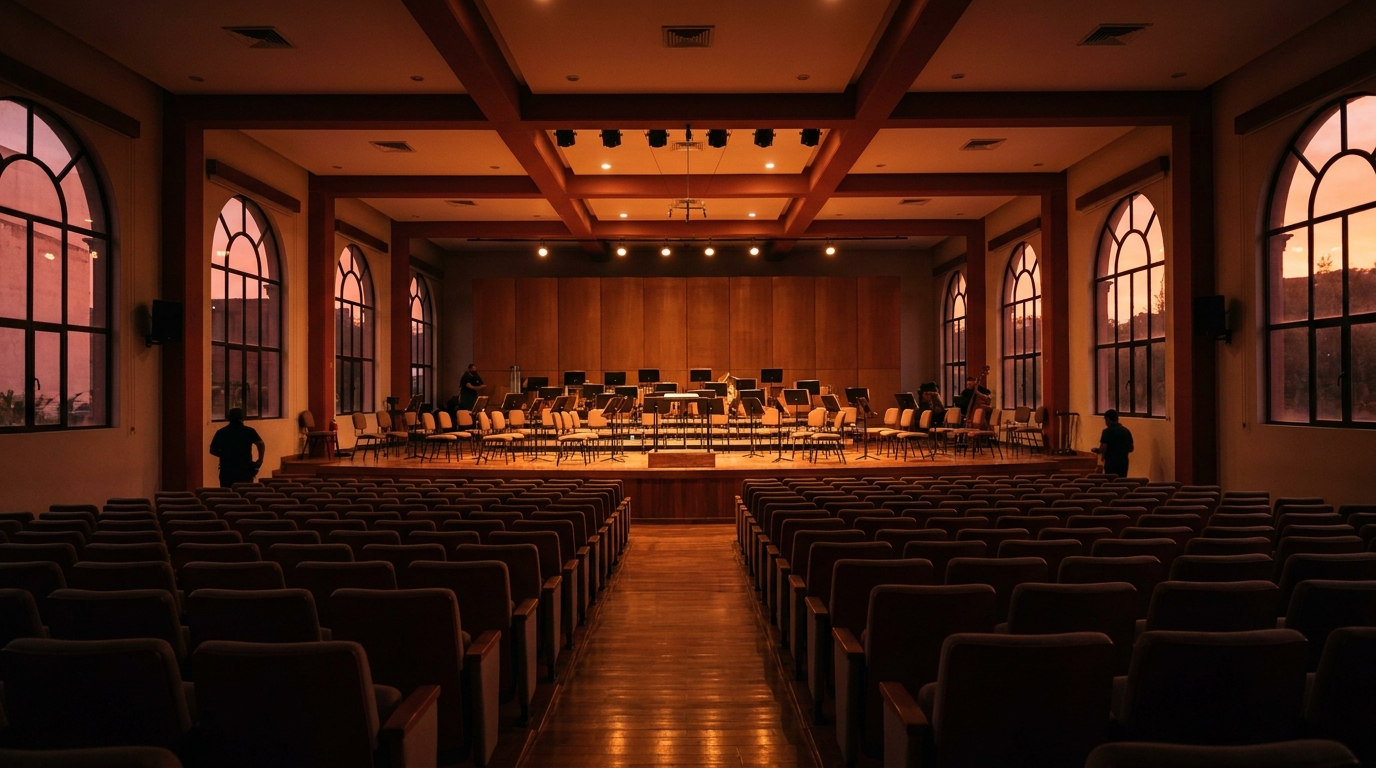
The opera Atala, by Miguel Meneses, considered the most widely performed Mexican opera of the 19th century, returned to the stage on Friday, July 24, after more than a century and a half without being performed in full. The Sala de Conciertos Felipe Villanueva in Toluca hosted the first of two performances of this work based on the novel by François-René de Chateaubriand, with a libretto by Giuseppe Sapio, as reported by El Universal.
The recovery is the work of Compañía Ópera: Nuestra Herencia Olvidada, which invested nearly three years locating, studying, and restoring the original manuscripts. The musicological edition was led by Dr. Aurea Maya and baritone Carlos Reynoso, with transcription by David Pérez and Ana Rosalía Ramos. Premiered in Zacatecas in September 1868, Atala subsequently toured Mazatlán, Guadalajara, Aguascalientes, and Guanajuato, an unusual circuit for a Mexican opera of the period. Meneses was the favorite composer of Maximilian of Habsburg, a proximity that, according to Excélsior, contributed to the work being excluded from the capital's repertoire after the restoration of the Republic.
The performance features the Orquesta Sinfónica del Estado de México (OSEM), conducted by Rodrigo Macías, and the Coro Polifónico del Estado de México, under the direction of Rita Rosales. The cast includes soprano Ana Rosalía Ramos in the title role, tenor Alan Pingarrón as Chactas, bass-baritone Rodrigo Urrutia as Father Aubry, and baritone Carlos Reynoso as Simaghano. Reynoso returned to Mexico after winning the Voci in Barcaccia 2026 International Singing Competition in Italy. The first performance took place on Friday, July 24, at 20:00; the second will be on Sunday, July 26, at 12:30, both in concert version. The project received the highest rating from Efiartes (100 out of 100 points) and is preparing a staged production for February 2027 at the Conjunto Santander de Artes Escénicas.
The score of Atala is more than a musical document: it is a piece of the cultural puzzle of 19th-century Mexico. Its return brings audiences closer to a chapter of their artistic history that had been silent for a century and a half. From February 2027, the work will also have a full staged production.
This article was written with artificial intelligence assistance from verified sources and reviewed by a human editor before publication.