The Palacio de Bellas Artes announced the first International Chicanx Art Encounter, which from July 30 to August 1 will bring together 15 artists, curators, and filmmakers from Mexico and the United States in the Sala Manuel M. Ponce, with free admission. The program also includes a film series at the Cineteca Nacional from July 28 to August 1.
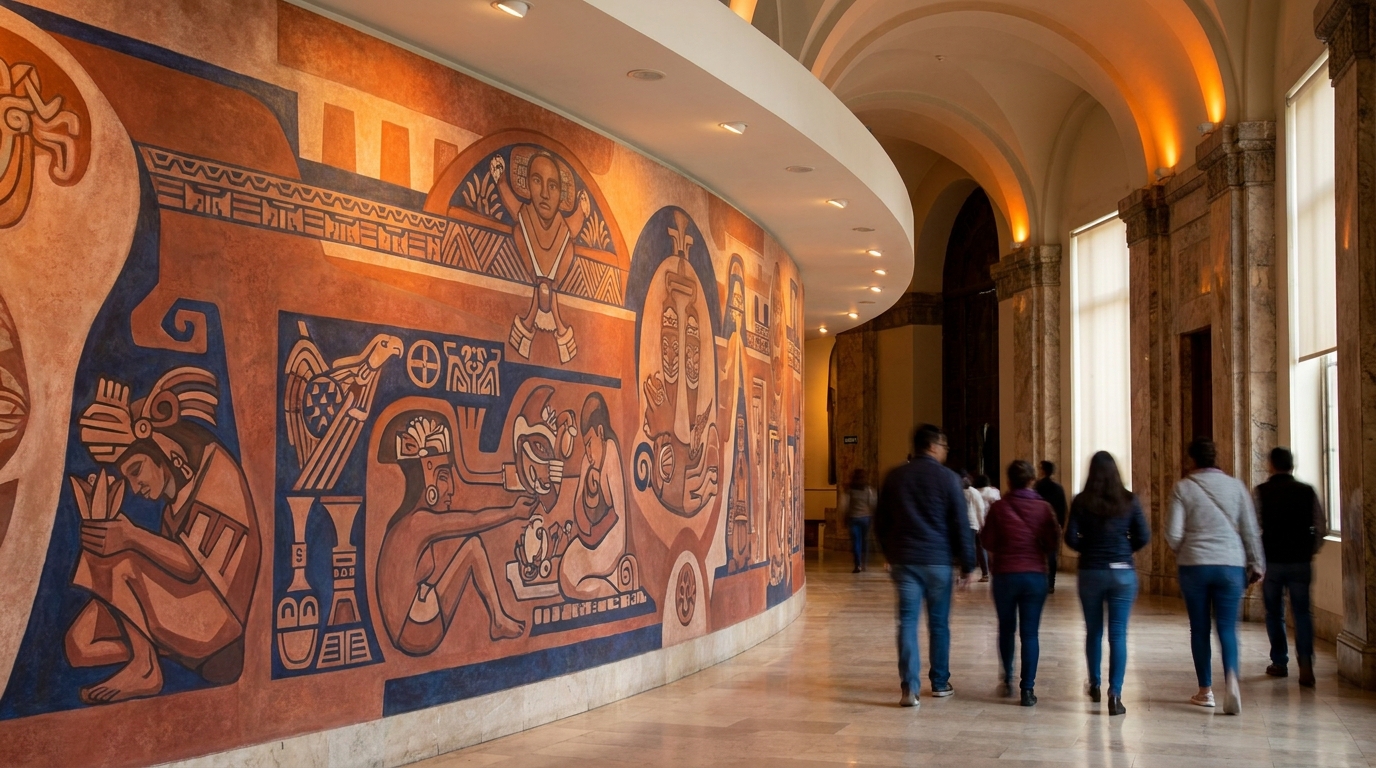
The encounter complements the exhibition Aztlán, túnel del tiempo, currently on view at the Museo del Palacio de Bellas Artes, which surveys five decades of the Chicano movement, from the muralism of East Los Angeles to contemporary digital practices. Organized by the Instituto Nacional de Bellas Artes y Literatura (INBAL) with support from the Terra Foundation for American Art, the program represents a significant institutional recognition for the Mexican-American community. According to Aristegui Noticias, the panels were designed to bridge creators whose work unfolds on both sides of the border.
On Wednesday, July 30, the session Solidarity Communities opens with artist Beatriz Cortez and curator Daniela Lieja. On Thursday the 31st, Rita Gonzalez, head of contemporary art at LACMA, philosopher Sayak Valencia, and writer Luis J. Rodríguez participate in the panel Curatorship, Writing, and Political Imagination. That same day, Chaz Bojórquez, a pioneer of Chicanx graffiti, joins Said Dokins in a conversation about the wall as aesthetic and political language. On Friday, August 1, Mexican photographer Graciela Iturbide and artist Rubén Ortiz-Torres discuss the White Fence Gang series, which Iturbide documented in East Los Angeles in the 1980s. Punk singer Alice Bag closes the program with the talk Chicanx Punk. According to Infobae, the film series at the Cineteca Nacional, curated by Jesse Lerner, spans from a 1908 silent film to contemporary documentary on the border, with daily screenings at 19:00 and a ticket price of 70 pesos.
The encounter places Chicanx art at the center of the summer programming at Mexico's most important cultural venue. With figures the Mexican-American community recognizes as its own, Bellas Artes opens a conversation about identity and migration that runs in both directions across the border.
This article was written with artificial intelligence assistance from verified sources and reviewed by a human editor before publication.