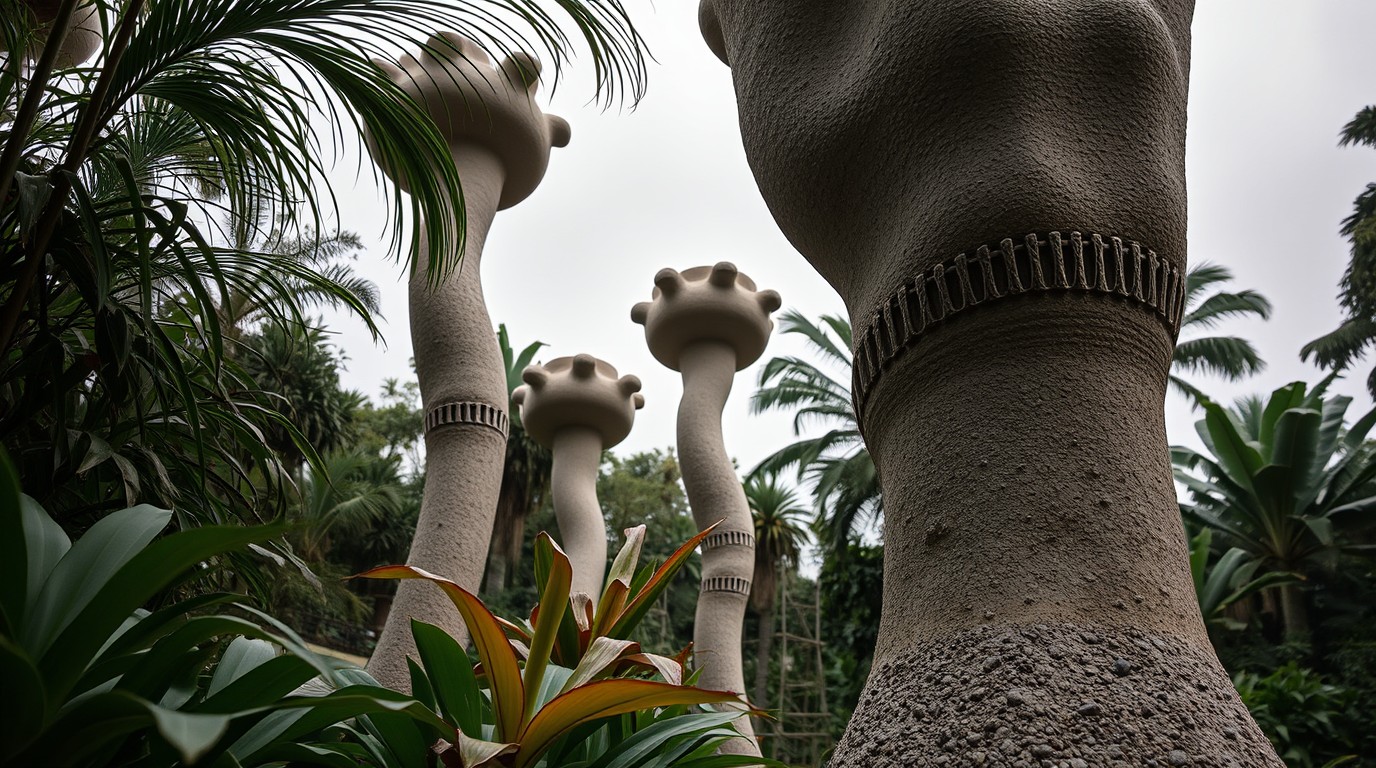
The writer Martín Solares published in 2026 the novel Una noche en la selva (Literatura Random House), a fictional account of the British artist Edward James and the construction of the surrealist garden of Las Pozas, in Xilitla, San Luis Potosí. According to the author, the book took him 20 years of work, a detail he shared in an interview published on September 28 by the news agency Quadratín San Luis Potosí.
The story is told like The Arabian Nights: a single night in the Huasteca, five first times in James's life, from first love to recovery after a loss. In an interview with El Universal, Solares explained that he wanted each chapter to tell a complete story while also braiding into the others, just like the garden, where every sculpture is different.
The garden that inspired the book is a Mexican work of global reach. According to Quadratín, the site covers around 40 hectares and concentrates its constructions on about 10; James dedicated the ensemble to friends such as Leonora Carrington and raised it after losing close to 50 thousand orchids to a frost. The first concrete sculpture, the reporter notes, became a monument to those lost flowers. For Solares, the garden was born of three forces: love, the pursuit of poetry and the conquest of personal freedom.
The project began in 2003, when Solares was 31. In Paris he saw a surrealist retrospective whose final room was dedicated to Xilitla and to James, traveled to the Huasteca and stayed five days. After several crime novels, such as Los minutos negros, he abandoned the idea of writing a detective story because he considered James's life too complex for that structure.
The novel was presented on October 16 at the Universidad Autónoma de San Luis Potosí and at the Gandhi bookstore in the state capital. El Sol de San Luis ran excerpts and interviews about the book in October. Las Pozas, for its part, continues to receive visitors during the year-end season, a calendar worth keeping in mind for anyone who wants to read the novel and then walk the garden.
This article was written with the assistance of artificial intelligence from verified sources and reviewed by a human editor before publication.