
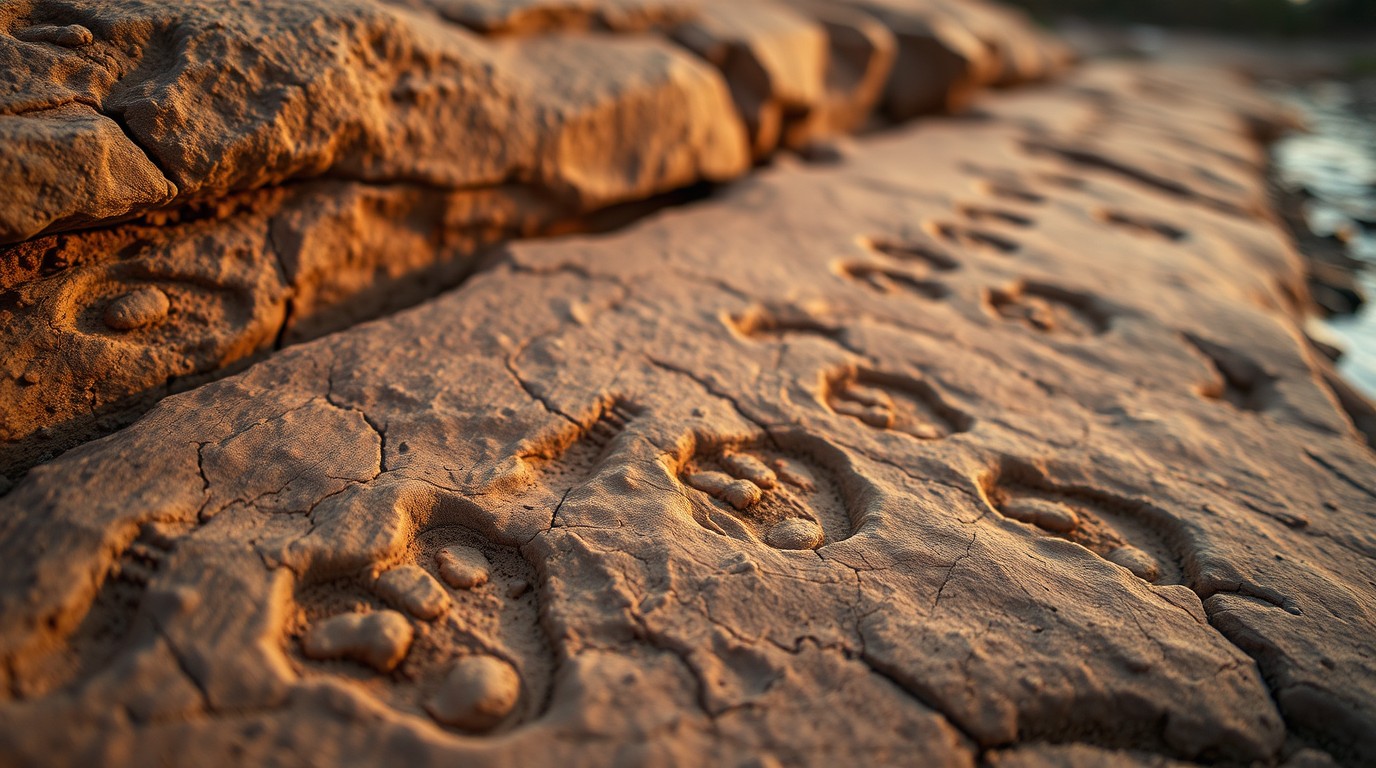
The National Institute of Anthropology and History (INAH) confirmed on October 26, 2026 the discovery of at least 50 fossilized dinosaur footprints roughly 65 million years old in the bed of a stream in San Juan de los Plátanos, municipality of Apatzingán, Michoacán. The marks extend across about 40 square meters of sedimentary rock at the river's edge and measure between 12 and 48 centimeters long, with a width of up to 30 centimeters, according to the INAH statement reported by El Universal.
The trail was reported by residents of the community, who alerted the institute's state center to the tracks of giant animals. Researcher Raymundo Cervantes Barriga went to the site and confirmed that they were footprints of herbivorous and carnivorous dinosaurs. The tracks date to the Late Cretaceous, when the area, today in Michoacán's Tierra Caliente, had bodies of water that the animals approached to feed. It matters for Mexico because the site will be registered with the INAH alongside the just over 30 dinosaur footprint sites in the country and is shaping up to be the fourth in Michoacán.
Based on shape, size and number of toes, the paleontologist preliminarily attributed the tracks to three families:
- Large carnivorous theropods, up to 4 meters tall, possibly tyrannosaurids, with three-toed footprints. - Dromaeosauridae, similar to raptors, carnivores up to 2 meters. - Hadrosauridae, herbivores known as duck-billed, up to 4 meters, with rounded-tip footprints.
The INAH team has already begun registering and documenting the deposit, and extensive areas remain to be reviewed, so the number of footprints is expected to increase. According to La Jornada, it has not yet been determined how many species will be identified through paleontological study protocols. In Michoacán there are precedents at Playa Azul, in Lázaro Cárdenas; El Aguaje, in Aguililla; and the border between Tiquicheo and Tuzantla.
What comes next is laboratory work: specialists will analyze the material and the final extent of the site. Cervantes Barriga suggested that this type of discovery can motivate the region's communities, especially children. The definitive number of species will depend on those studies, and it is worth following the updates that the INAH publishes.
This article was written with the assistance of artificial intelligence from verified sources and reviewed by a human editor before publication.