
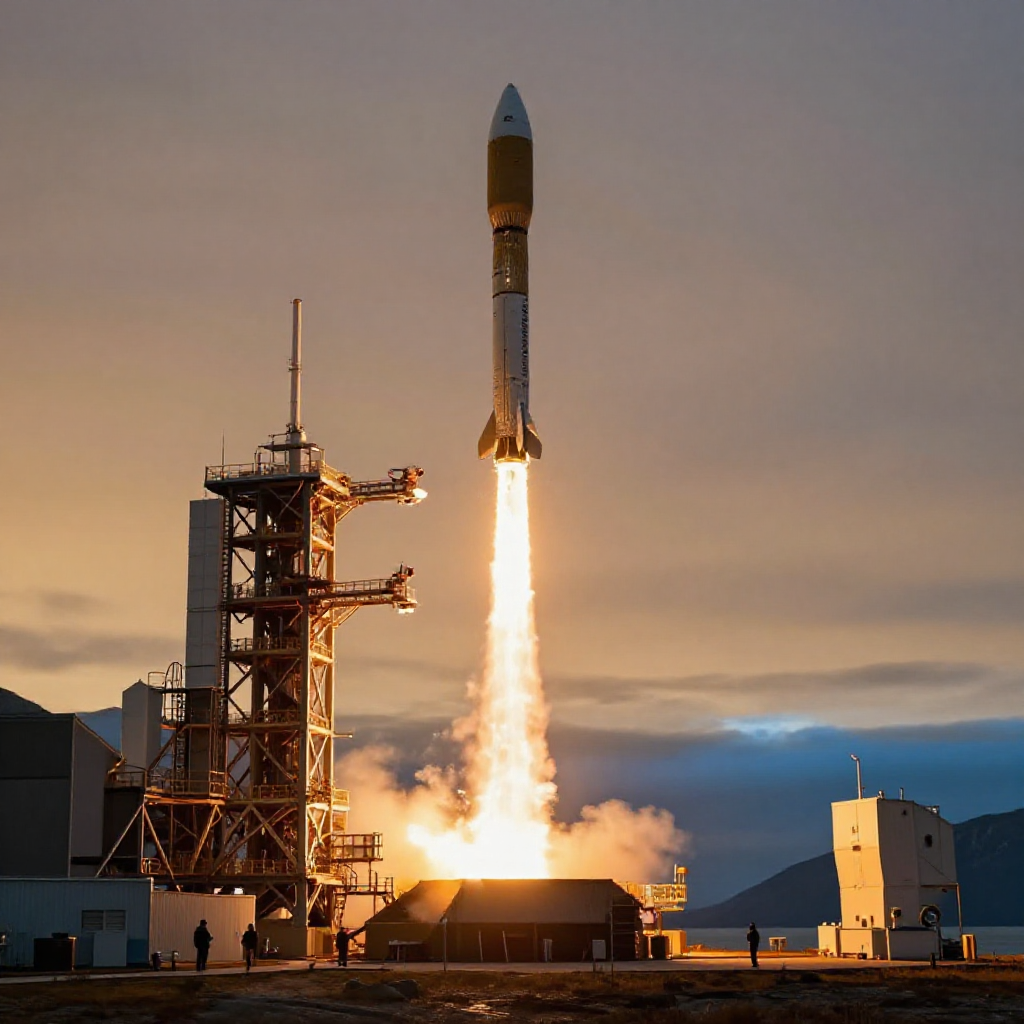
On Saturday, September 5, German company Isar Aerospace delivered its Spectrum rocket to low Earth orbit, the first fully commercial launch vehicle to reach space from European soil. Liftoff occurred at 20:12 UTC from Andøya spaceport in Norway, and minutes later the rocket deployed its satellites, Ars Technica reported.
The milestone arrives after Europe stopped using Russian Soyuz rockets and became dependent on foreign providers, primarily American ones, to place its institutional satellites in orbit, according to Al Jazeera. In the race for commercial launch capacity that SpaceX leads in the United States, the continent was seeking a home-grown option. The flight also comes at a moment when several European startups are competing to open a market that has until now been concentrated among a handful of global players. For the Latin community in North America, the news matters because more commercial launch providers put downward pressure on the cost of accessing space, on which services such as telecommunications and Earth observation depend across the continent.
The Spectrum is a two-stage rocket, 28 meters tall, designed for small and medium payloads to low Earth orbit. On its first payload-bearing flight it deployed five small satellites, Al Jazeera reported, and Bloomberg described the deployment as a first for Europe. The company was founded in 2018 by three students from the Technical University of Munich, including its CEO, Daniel Metzler, who said the day opened space from continental Europe and that the continent now has a genuine alternative for commercial and institutional clients. He added that the priority is scaling launcher production and fulfilling the order backlog amid growing global demand, according to Ars Technica's report.
The next step is turning the milestone into cadence. Isar is already preparing additional rockets, and in August the European Space Agency awarded it a contract of approximately $230 million to accelerate development, according to Al Jazeera. If the company sustains that pace, satellite customers in the Americas will gain a launch option beyond the current ones.
This article was written with artificial intelligence assistance based on verified sources and reviewed by a human editor before publication.