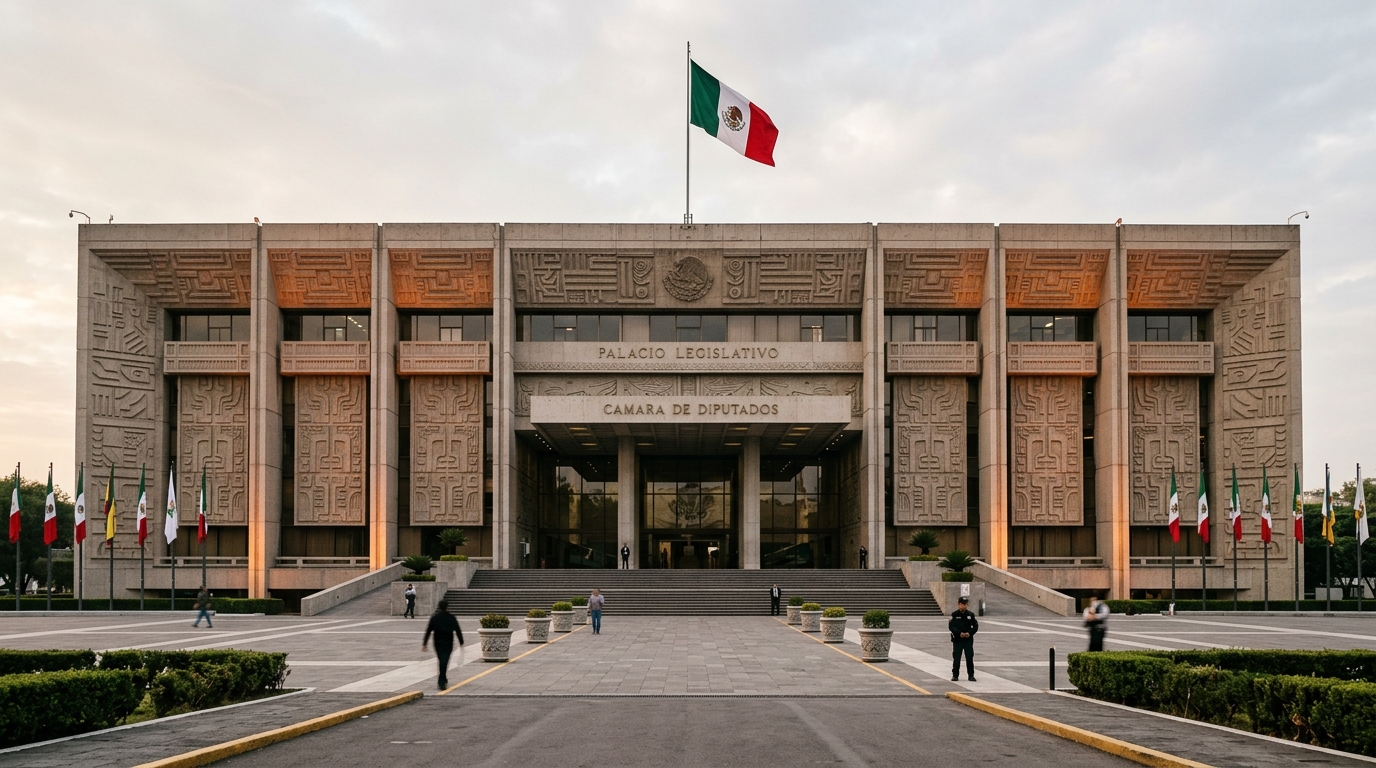

The federal government sent the Digital Economy for Digital and Electronic Payments Law initiative to the Chamber of Deputies on September 10, 2026, within the 2027 Economic Package, with the goal of reducing cash circulation. The proposal calls for the Ministry of Finance and Public Credit (Secretaría de Hacienda y Crédito Público) to determine the sectors and activities where only digital and electronic payments will be accepted.
According to El Financiero, the proposal seeks to close the gap between the available payments infrastructure and its effective use, and it recognizes the CURP Digital as a trust mechanism to verify identity without physical presence. The framework goal is the National Financial Inclusion Policy: digital payments reaching 50% of private consumption spending by 2030. Today around 85% of payments are made in cash, down from 95% in previous years. For small businesses and gas stations, the transition defines operating costs and cash flow in the short term.
Specialists consulted by El CEO note that the measure may raise traceability in the medium term, but that the short term demands investment in terminals and connectivity. James Salazar, deputy director of economic analysis at Kapital, noted that the risk is not in digital payments themselves, but in the transition, because of gas stations' compressed margins and the cost of commissions. Guillermo Guzmán, director of the Trading Advisor investment academy, stressed that the rollout must take connectivity into account in areas of southern Mexico. Arturo Luna, vice president of payments at FinTech México, argued that the law must contribute to the 50% goal. The initiative also envisions promoting QR codes and NFC devices.
After the decree takes effect, Hacienda will have 15 business days to define the strategic sectors and the activities subject to the mandate. The timeline for that transition and the digital coverage available outside major cities mark the next stage of the discussion in Congress.
This article was written with the assistance of artificial intelligence based on verified sources and reviewed by a human editor before publication.