A team of astronomers at Harvard University confirmed on July 16, 2026, the first detection of an atmosphere on a rocky exoplanet located in the habitable zone of its star. The finding, published in Science, makes LHS 1140 b the only known world that meets the three conditions science seeks for habitability: being rocky, orbiting where liquid water could exist, and retaining a gaseous envelope.
LHS 1140 b lies 48 light-years from Earth, in the constellation Cetus. It has 5.6 times the mass of our planet and a radius 70% larger, and receives approximately 42% of Earth's solar irradiation, placing it in the zone where water would remain liquid at the surface. Principal investigator Collin Cherubim, who led the study as part of his doctorate at Harvard, stated that an atmosphere is indispensable for a planet to harbor life. The finding is of close interest to the Mexican astronomical community, which collaborates in international exoplanet search networks. According to Wired, this is the first rocky exoplanet in the habitable zone confirmed to retain an atmosphere.
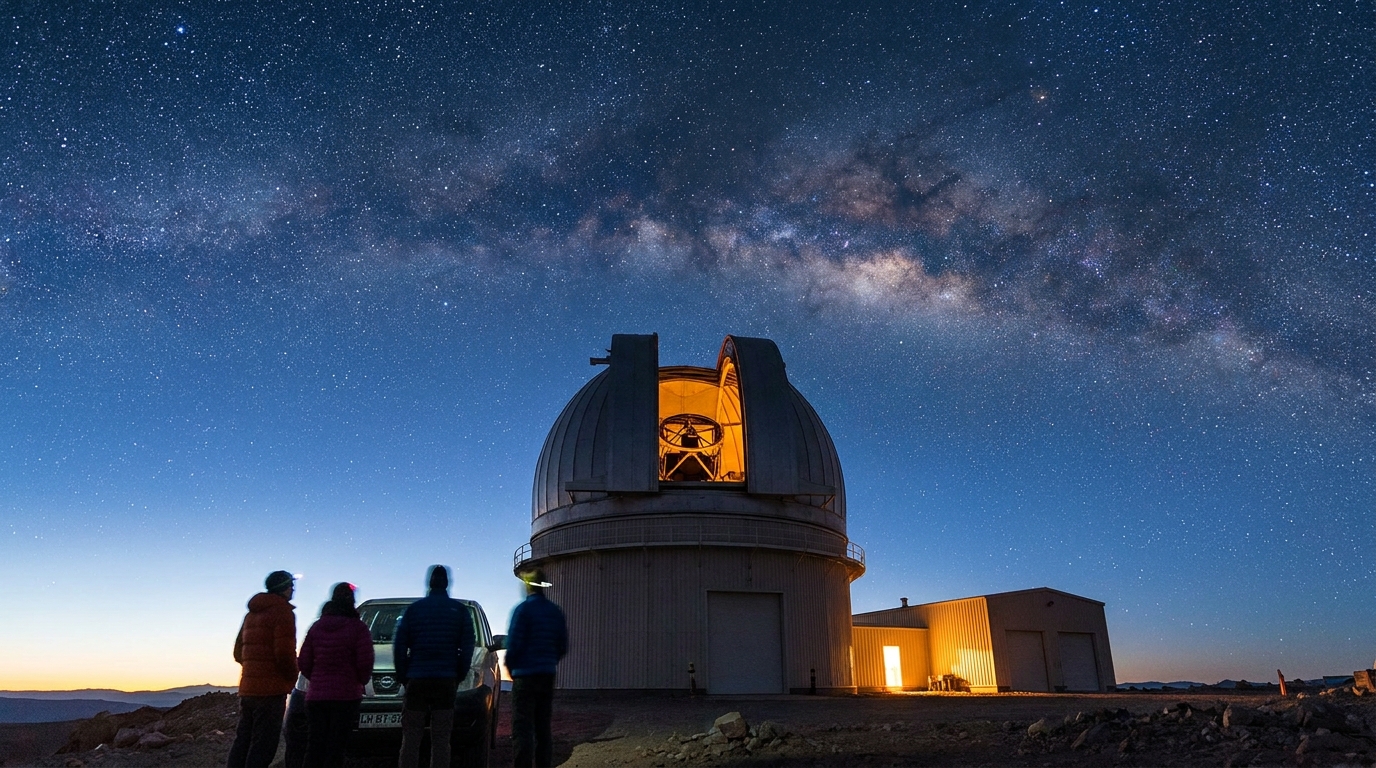
The detection was made with the WINERED infrared spectrograph, installed on the Magellan Clay telescope at Las Campanas Observatory in Chile. During observations carried out in September 2024, the team identified helium escaping from the upper layers of the planet's atmosphere as it transited in front of its star. A second observation in 2025 did not detect the signal, indicating that atmospheric escape varies over time. The study's models, reported by Phys.org, estimate that this atmosphere has persisted for more than 3 billion years. In the lower layers, the study suggests the presence of heavier gases such as nitrogen, carbon dioxide, or carbon monoxide.
The finding does not confirm the presence of water or life, but validates a detection technique that instruments such as the James Webb Space Telescope will be able to leverage. The Rocky Worlds program will use the JWST and Hubble over the next five years to search for water vapor and carbon dioxide in LHS 1140 b.
This article was written with artificial intelligence assistance from verified sources and reviewed by a human editor before publication.