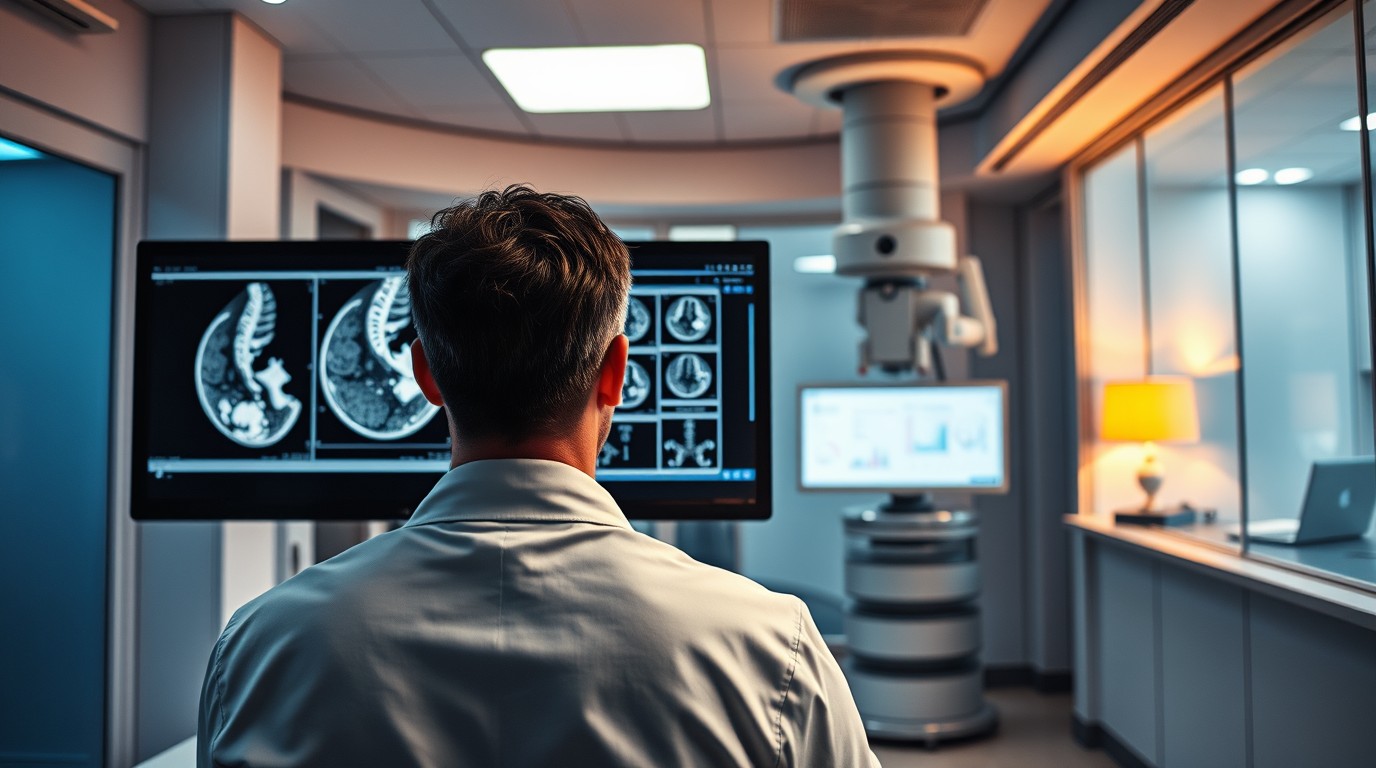
In a hospital, this is obvious. A radiologist uses artificial intelligence to review hundreds of scans per shift. The software detects patterns and flags possible anomalies in seconds. It does not suffer from visual fatigue. However, the system does not diagnose. The algorithm ignores the clinical history, the symptoms and the patient's context. The doctor evaluates the software's alert, defines the next steps and communicates the situation. The machine processes data; the professional brings clinical judgment and empathy.
This direct collaboration also happens in technical procedures. Today we use robotic arms to assist in complex surgeries. These machines do not operate autonomously. A surgeon controls the controls from a console. The equipment cancels out the natural tremor of the hands and enables millimeter movements in tight spaces. The robot delivers extreme physical precision; the doctor keeps absolute control of the operation and executes the strategy.
Adopting these tools transforms our daily capabilities. It frees us from repetitive tasks and overcomes our physical limitations. This lets us focus on the highest-value work: critical analysis, solving unforeseen problems and direct interaction with other people.
We use technology as support. Machines perform the heavy or ultra-precision work. We provide the direction and the context.