Three pre-Hispanic pieces, including a warrior figure that belonged to the Metropolitan Museum of Art in New York (the Met), were handed over on July 15 to the Mexican Consulate General in New York, according to El Universal. The return was announced by the Secretariat of Foreign Affairs (SRE) and the National Institute of Anthropology and History (INAH).
The restitution was completed with the collaboration of the Manhattan District Attorney's office and the museum itself, which the communiqué praised for its ethics and institutional responsibility. Each object was linked to a criminal investigation coordinated by that office's Antiquities Trafficking Unit. This is a binational cooperation mechanism Mexico has employed since 2018, when it began tracking auctions in New York, Paris, and Rome: since then it has recovered approximately 16,500 cultural pieces, according to El Financiero data. For the Mexican community in the United States, the case demonstrates that the consular and judicial route can bring back heritage within a cooperative framework.
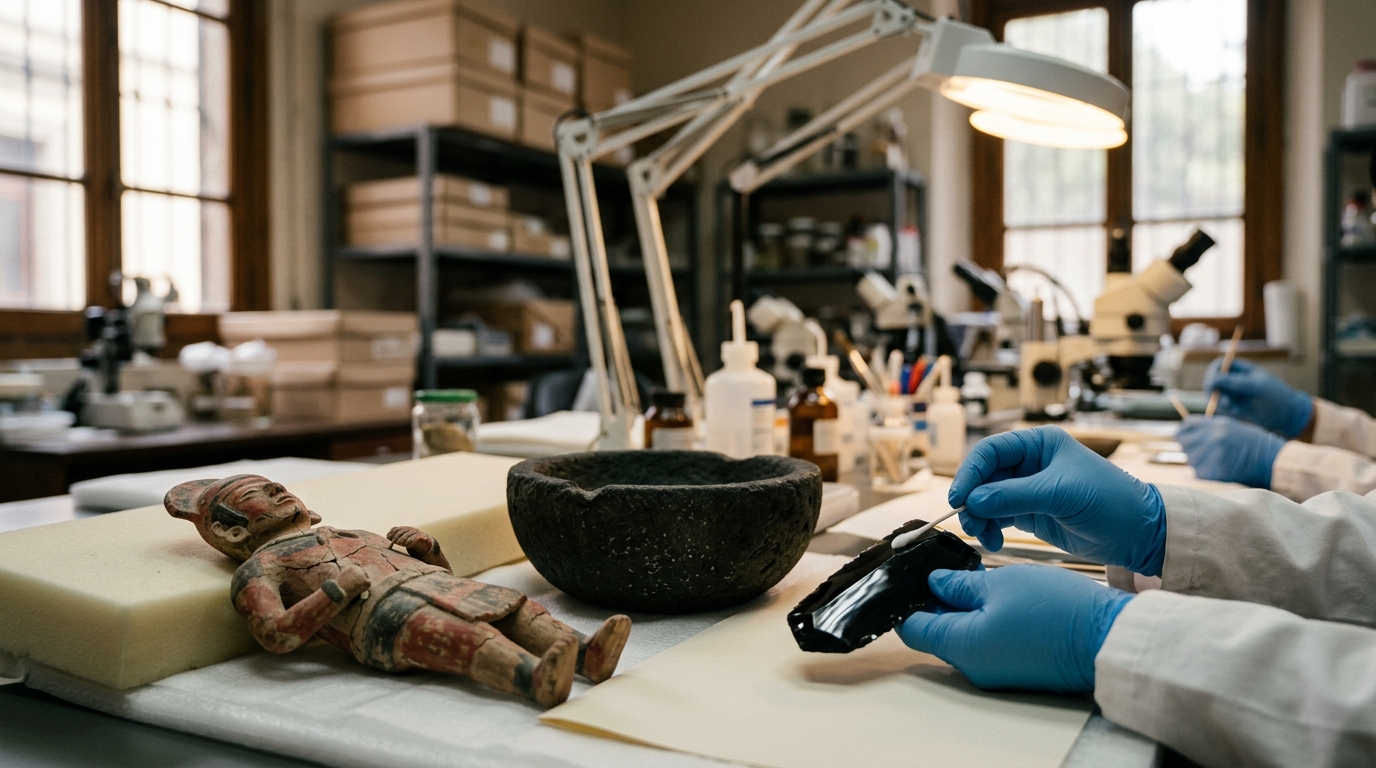
The principal piece is an anthropomorphic figure in the Ixtlán del Río style, modeled in clay with paint and incision, 91 centimeters tall, which "depicts a warrior dressed in a helmet, earrings, anklets, and breastplate," the report noted. It was made between 100 BC and 600 AD and belongs to the Shaft Tomb (Tumbas de Tiro) tradition of western Mexico. The second piece is a stone bowl from the central region of what is today Guerrero, dated between 300 and 900 AD. The third is a prismatic obsidian blade worked with pressure and percussion techniques, an example of Mesoamerican lithic industry. INAH specialists determined that the objects are national property under the terms of the Federal Law on Archaeological, Artistic, and Historical Monuments and Zones.
The pieces remain at the Mexican Consulate in New York and will travel by diplomatic pouch to the Legal Advisory Office of the foreign ministry in Mexico City for official handover to INAH. That transfer will be the next milestone in a mechanism Mexico has already used to recover thousands of pieces.
This article was written with artificial intelligence assistance based on verified sources and reviewed by a human editor before publication.