
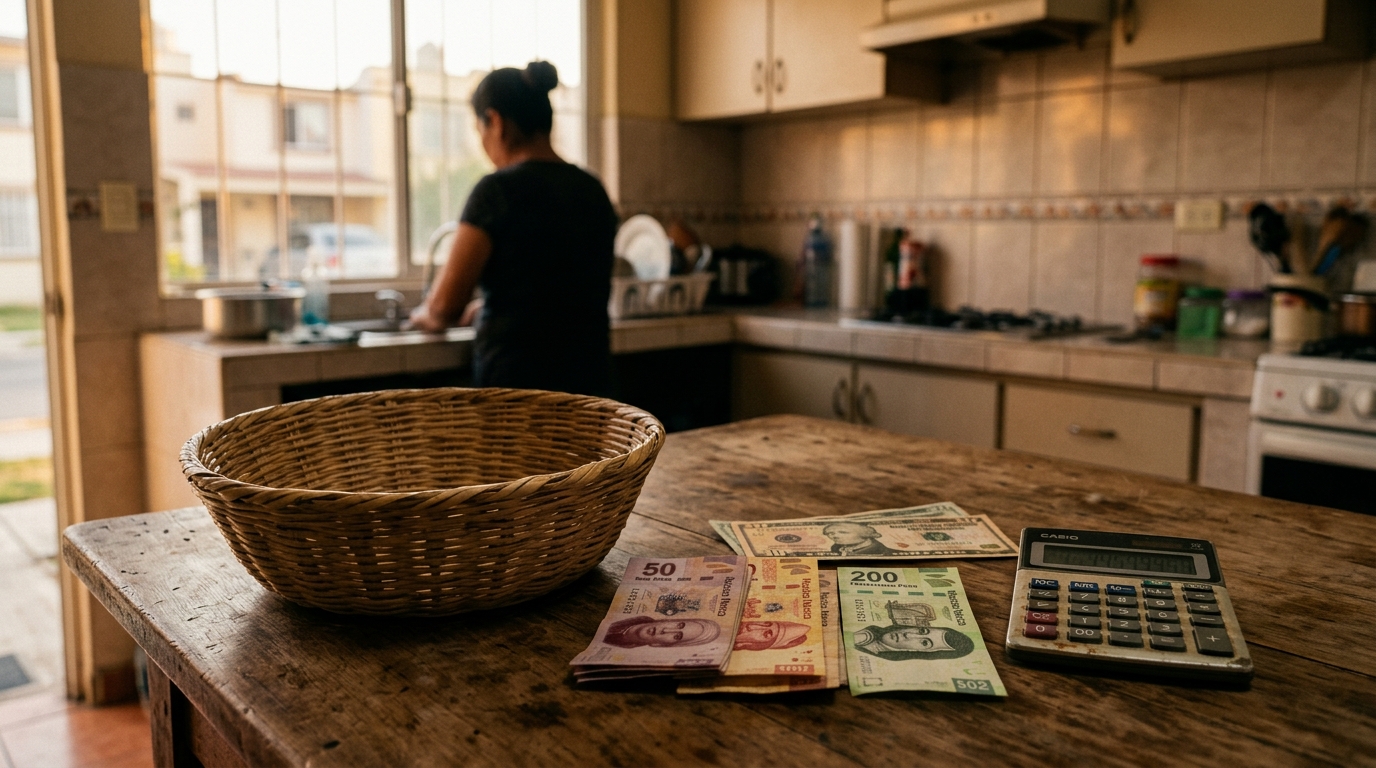
Remittances flowing into Mexico lost purchasing power for the fourteenth consecutive month in July 2026. That month the country received 5,571 million dollars, 3.0% more than a year earlier in U.S.-dollar terms, according to El CEO. Converted to pesos and adjusted for inflation, however, the income was worth 6.7% less than in July 2025, according to El Universal.
The decline matters for millions of Mexican households and for the families sending money from the United States, the principal source of these flows. Peso appreciation against the dollar means each transfer stretches less in local currency. The average remittance per household reached 426 dollars in July, the highest monthly figure on record since the Banco de México began tracking the data in 1980, according to El Universal. In peso terms, that transfer amounted to 7,438 pesos per month, 6.6% less than the 7,960 pesos received in July 2025, and not enough to cover the food basket for three people in urban areas, which cost 7,637 pesos that month, according to Inegi. A year earlier, the same transfer covered more than three such baskets.
Analysts point to two forces behind the gap: exchange-rate appreciation and inflation. The peso averaged 17.46 per dollar in July and 17.07 in August, per the Banco de México's FIX rate, nearly 40 centavos stronger than the prior month, compressing the peso amount each family receives when converting their dollars. Juan José Li Ng, senior economist for Mexico at BBVA Research, calculates that real remittance flows to Mexico have fallen 24.8% from their peak in July 2022 through July 2026. In cumulative January-to-July terms, inflows totaled 36,349 million dollars, the second-highest figure for that period, trailing only 2024.
Banco BASE projects remittances will grow 3.5% in dollar terms during 2026, but that their purchasing power will fall 9.81% relative to 2025, marking the second consecutive year of real-terms decline. On the regulatory front, the U.S. Treasury is scheduled on November 15 to review requirements around consular identification documents, a development that banks are monitoring closely.
This article was drafted with artificial intelligence assistance from verified sources and reviewed by a human editor before publication.