NASA formally ended its $30 million mission to rescue the Swift space observatory on Wednesday, August 19. The observatory is now expected to fall back into Earth's atmosphere within the coming months. The Link spacecraft, built by Katalyst Space Technologies and launched in July to boost Swift into a higher orbit, lost control before completing the maneuver.
Swift has orbited Earth since 2004 and is a benchmark instrument for studying gamma-ray bursts, the most energetic events in the universe. Its orbit has degraded faster than expected due to intense solar activity, and without a rescue it will re-enter the atmosphere. Axios reported the end of the rescue attempt on the same day, and the AP noted that the observatory was orbiting at roughly 345 kilometers when the cancellation was announced, down from approximately 600 kilometers at its original orbital altitude. NASA Administrator Jared Isaacman said the agency must move fast and accept calculated risks when the potential return justifies it.
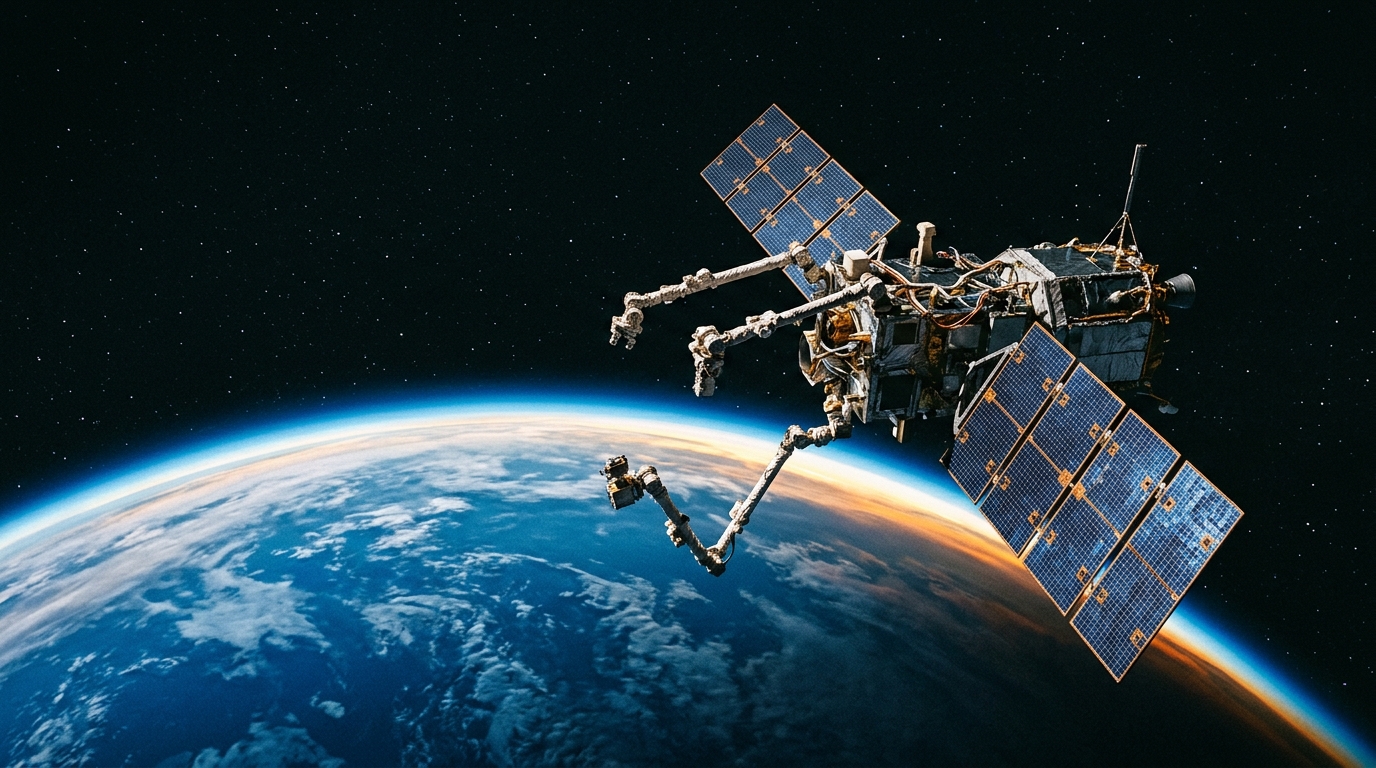
Link, roughly the size of a refrigerator and fitted with three robotic arms, lifted off on July 3. NASA awarded the $30 million contract less than a year ago, and Katalyst built and launched the spacecraft in nine months, a timeline that typically takes several years. In late July, Link spun out of control: two of its three reaction wheels stopped functioning. The company acknowledged that the mission would not conclude as planned, but noted that the spacecraft remains operational and could still approach Swift to test its proximity navigation system. Katalyst added that it intends to extract technical and operational value from the flight.
Swift's re-entry is scheduled for October, and NASA has no replacement observatory in development. The telescope will disintegrate upon re-entering the atmosphere. The first commercial orbital rescue attempt closes without resolution, leaving open the question of whether private companies can extend the operational lives of aging satellites.
This article was written with the assistance of artificial intelligence from verified sources and reviewed by a human editor before publication.