Mexico's Secretariat of Agriculture and Rural Development and the Secretariat of Science, Humanities, Technology and Innovation (Secihti) formally installed the Technical-Scientific Council of the National Strategy Against the Cattle Screwworm on August 28, El Universal reported. The body will design the plan to transition from an emergency response to a full national campaign across all 32 states.
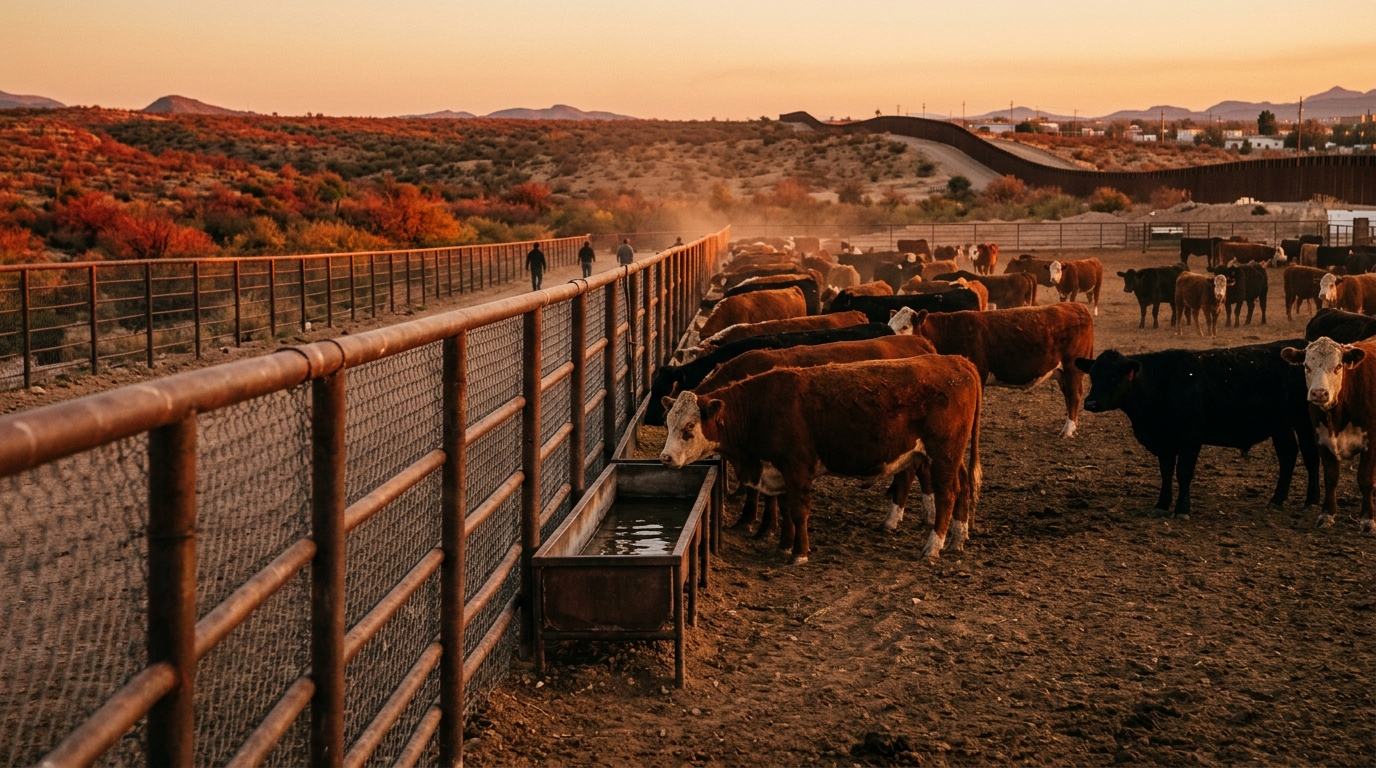
The shift from emergency to campaign status matters to the binational community because screwworm control was the condition for reopening Mexican cattle exports to the United States. According to Aristegui Noticias, on August 25 Mexico resumed live cattle shipments from Agua Prieta, Sonora, to Douglas, Arizona, with an initial lot of 750 head that will gradually increase to 1,500, following fourteen months of restrictions. Sonora and Chihuahua were the first states positioned to resume shipments due to their lower sanitary risk, days after Sonora confirmed its first case since the emergency began in November 2024. The pest has spread to 30 of the 32 states; only Baja California and Baja California Sur report no presence.
The council, installed at Secihti's headquarters, brings together government officials, academics, and producers to coordinate the response on the basis of scientific evidence, at the direction of President Claudia Sheinbaum. Víctor Arrazate Argueta, representative of the technical team, said the strategy will transition from a National Emergency Device to a national campaign across all 32 states, with the National Service for Agrifood Health, Safety and Quality (Senasica) leading operations. As of August 23, Senasica had recorded 39,470 cumulative cases since the emergency began, of which 1,937 remained active. Research lines include early detection, genetics and biotechnology studies, and artificial intelligence tools. The council will seek to "strengthen scientific, technological and institutional capacities in support of the livestock sector," the secretariats stated.
The new council's plan supports the cattle trade reopening achieved this month, on which thousands of ranching families on both sides of the border depend. Shipments through Agua Prieta will scale from 750 to 1,500 head in the coming weeks.
This article was written with artificial intelligence assistance from verified sources and reviewed by a human editor before publication.