
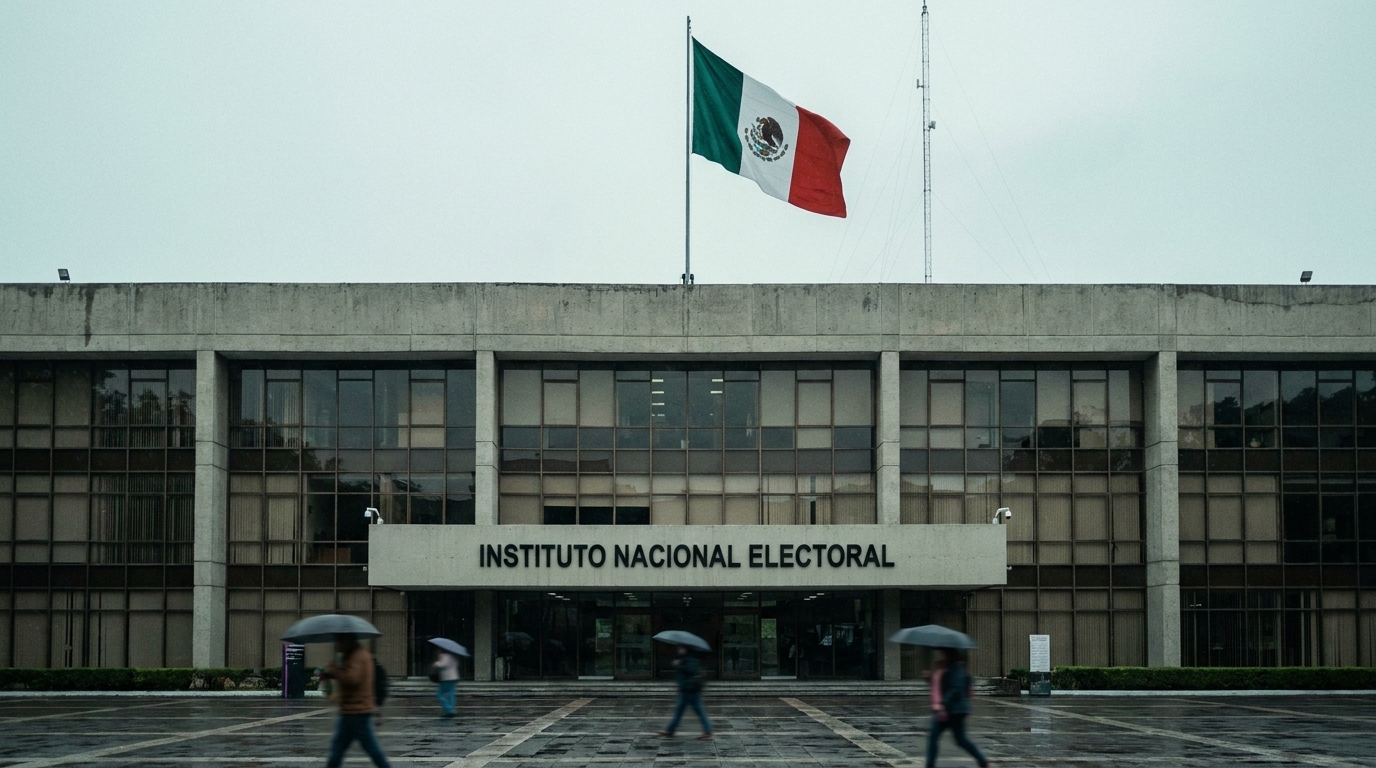
Mexico's National Electoral Institute (INE) established the Candidacy Integrity Verification Commission on July 30, 2026, a new institutional screening mechanism that will review up to 800,000 candidate profiles before they appear on the ballot in the 2026-2027 electoral cycle. Councillors Arturo Chávez, Norma de la Cruz, and Uuc-kib Espadas make up the collegiate body, with Chávez serving as its first president under an annual rotation system, according to El Universal.
The commission stems from the reform to the General Law on Electoral Institutions and Procedures (LGIPE), published on June 2, 2026. Its purpose is to shield candidacies against possible organized crime infiltration through a preventive, voluntary mechanism: political parties decide whether to submit their candidates' profiles for review. The INE will serve as a liaison with the Attorney General's Office (FGR), the National Intelligence Center (CNI), the Financial Intelligence Unit (UIF), and the National Banking and Securities Commission (CNBV) to produce risk assessments, according to El Financiero. INE Chairwoman Guadalupe Taddei clarified that the institute will neither investigate nor determine criminal liability. Results are delivered confidentially to the requesting party, and it is that party that decides whether to maintain or withdraw the nomination.
The INE president estimated the institute will receive between 750,000 and 800,000 queries from political parties, a figure corresponding to the total number of candidacies at stake at the federal, state, and municipal levels in 2027. The LGIPE reform establishes the commission as a permanent body within the INE, not merely for the current electoral cycle. Candidates' files will be cross-referenced against the databases of the four federal agencies. If an assessment returns a risk flag, the report does not block candidacy registration. The final decision rests with the party or independent candidacy that requested the review.
The 2026-2027 federal electoral process formally begins on September 10, 2026. From that date, political parties may begin submitting pre-candidate profiles to the new commission. The mechanism represents the first institutional filter of its kind in Mexican electoral history, designed to operate prior to the official registration of candidacies and without replacing the powers of the Public Prosecutor's Office.
This article was drafted with artificial intelligence assistance from verified sources and reviewed by a human editor before publication.