
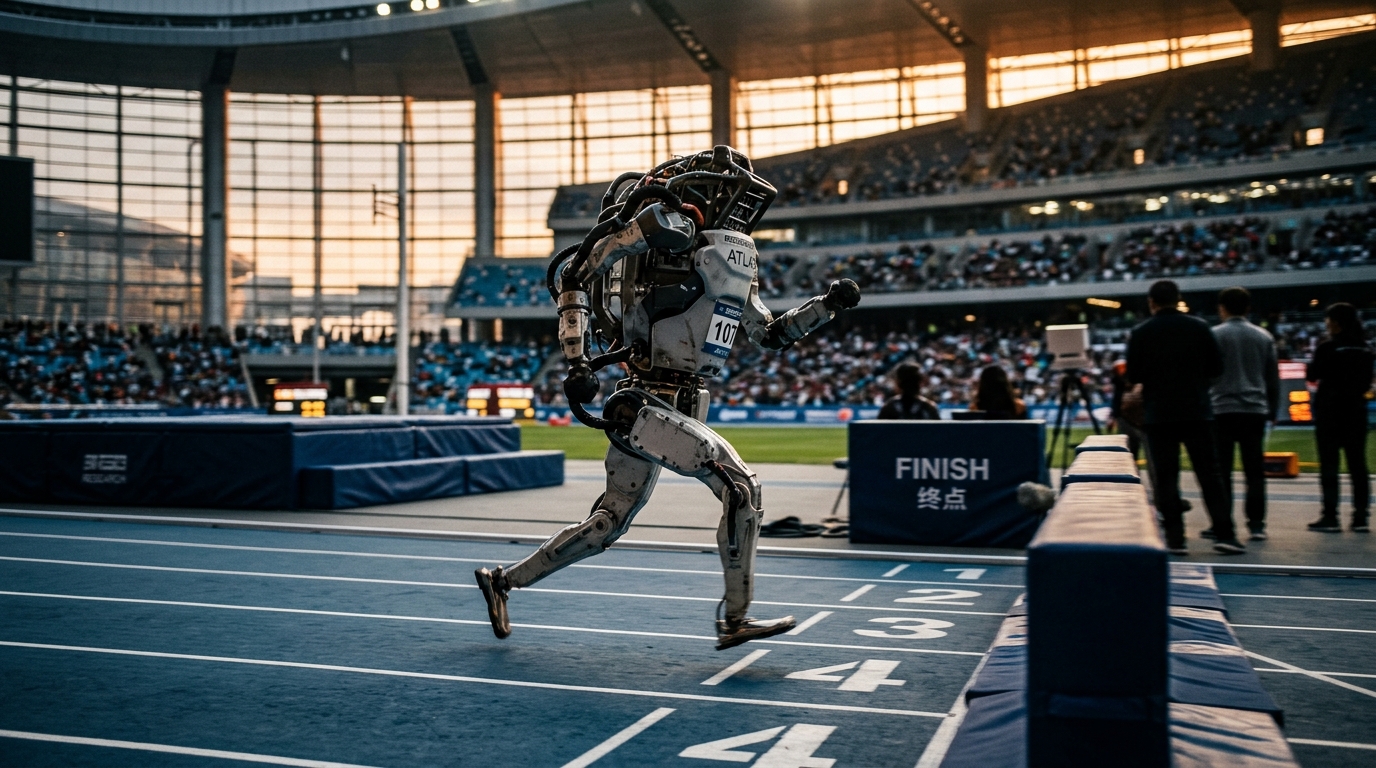
On Saturday, August 22, at the second edition of the World Humanoid Robot Games in Beijing, the robot Tiangong Ultra ran 100 meters in 9.39 seconds and surpassed the human record of 9.58 that Usain Bolt set in 2009, according to The Verge.
The mark was set in a preliminary heat of the event, which this year brings together more than 2,000 robots from 16 countries across 51 disciplines, according to NBC News. In the same heat, Lightning, developed by Honor, finished second with 9.47 seconds; in a prior trial, the same robot had run 100 meters in 9.32 seconds, with a peak speed of 14.5 meters per second. For Mexico, the United States, and Canada, the figure matters beyond sport: the three economies integrated under USMCA are evaluating how much automation enters their manufacturing supply chains, and the pace China is displaying in humanoid robotics foreshadows the options that factories in the region will face in the next decade.
Tiangong Ultra is a product of the Beijing Humanoid Robot Innovation Center, a research center in China's capital. On the same day, the robot also ran 400 meters in 38.16 seconds, below the human record of 43.03 that Wayde van Niekerk established in 2016, according to The Verge. Unlike athletes, the robots did not celebrate with a victory lap: videos show several crossing the finish line and continuing straight ahead until hitting crash mats, where they are removed on stretchers. The improvement is striking compared to the inaugural 2025 edition, when the 100-meter champion took 21.50 seconds. Experts cited by NBC News note that, for now, humanoids are used primarily in demonstrations, shows, and research.
The event runs five days and will continue this week with jumping, soccer, and robotic boxing competitions. The time of 9.39 seconds has not been ratified by an independent sports body, and the conversation about how quickly automation reaches the region's production lines is only beginning.
This article was written with artificial intelligence assistance based on verified sources and reviewed by a human editor before publication.