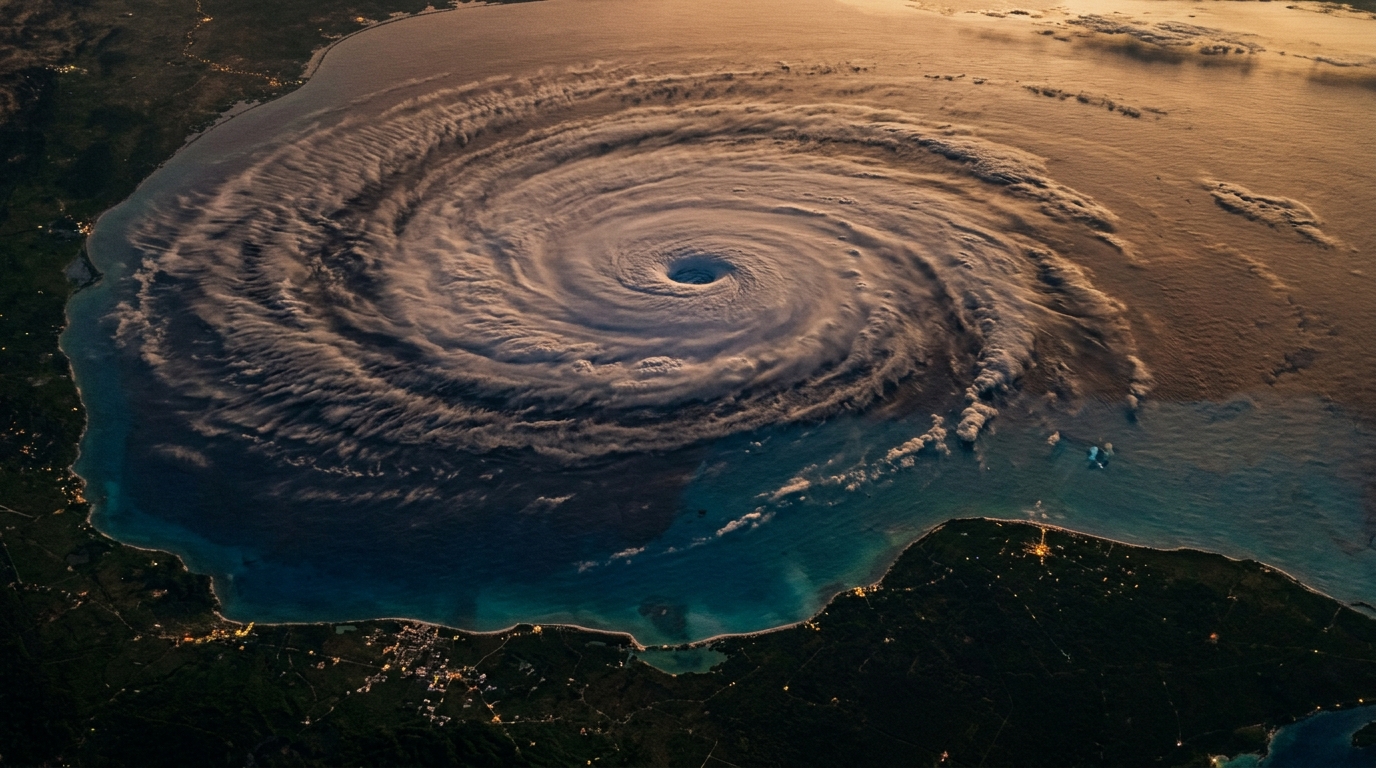
A Google DeepMind artificial intelligence model delivers an average of one or more days of additional lead time in hurricane track and intensity forecasting over leading operational models, according to a study published on August 6 in the journal Nature. The WeatherNext Cyclones model generates forecasts of up to 15 days.
Tropical cyclones rank among the most dangerous and costly weather phenomena on the planet, and forecasting them involves two distinct challenges: track depends on global atmospheric currents that low-resolution models have traditionally handled best, while intensity requires local models that analyze the thermodynamic processes of the storm's core. WeatherNext trains a single model for both tasks using nearly 20 terabytes of global atmospheric data and the IBTrACS historical archive, as reported by Engadget. Its development involved the U.S. National Hurricane Center, the Cooperative Institute for Research in the Atmosphere, and the UK Met Office. For Mexico, the relevance is direct: every season, hurricanes in the Gulf and the Pacific put coastal communities at risk.
Evaluated against cyclones from 2023 to 2025, WeatherNext Cyclones outperformed leading operational models in track, intensity, and wind radii, with improvements comparable to a decade of operational development. The model produces a 15-day forecast in under a minute and supports ensembles of up to 1,000 members, compared to the 50 of conventional ensembles, improving the capture of rare events. Google published the model's code and weights on GitHub for other scientific teams to use. The researchers noted that rapid prediction allows forecasters to assess extreme-risk scenarios well in advance, including those with lower probability but higher impact.
The study argues that integrating these predictions into consensus ensembles improves overall accuracy. For Mexico's meteorological services, that advantage translates into more hours of preparation for evacuation decisions on the Gulf and Pacific coasts during the coming hurricane season.
This article was written with artificial intelligence assistance from verified sources and reviewed by a human editor before publication.