
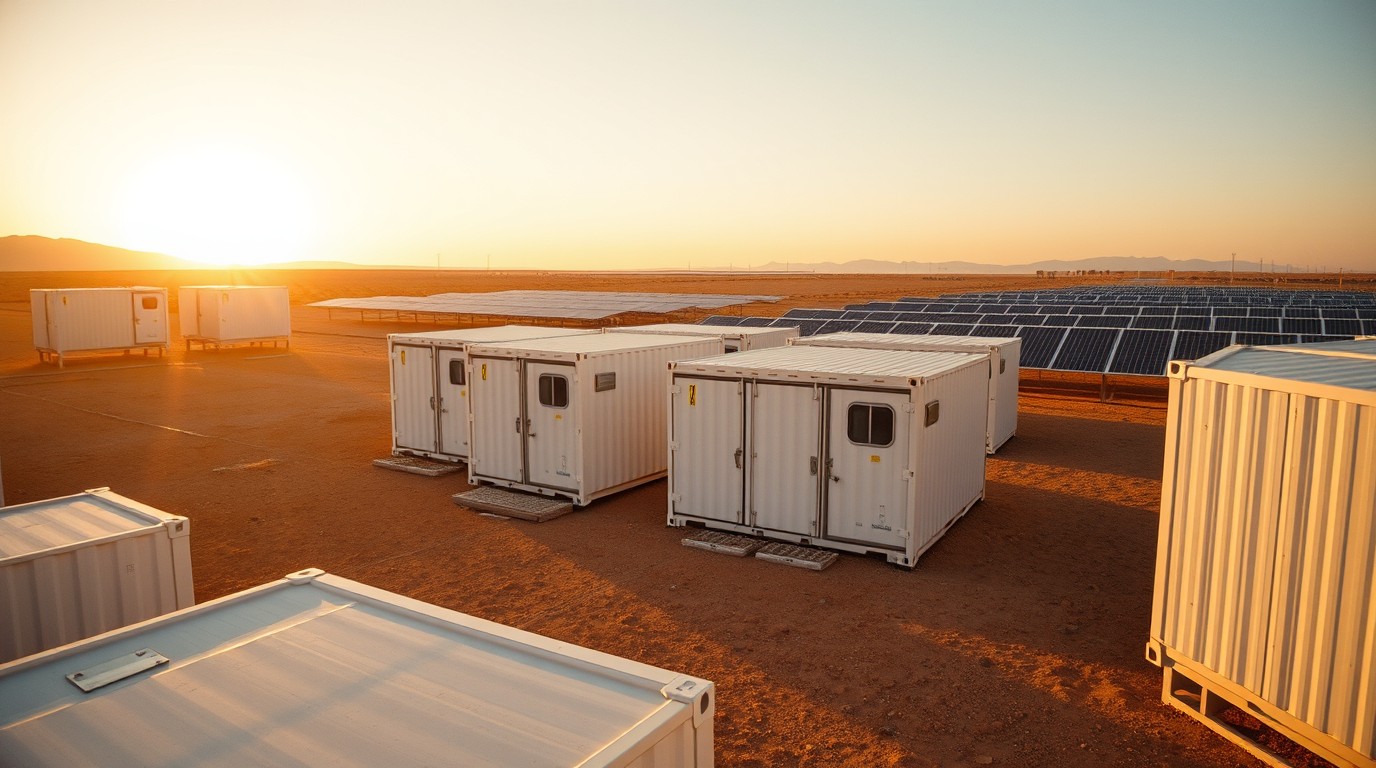
Chile has close to 5 GW of battery storage in operation and testing, a figure Mexico has set as its own target for 2030 in its Electricity Sector Development Plan (PLADESE). According to data from the Chilean Renewable Energy and Storage Association (ACERA) as of June 1, 2026, Chile has 2,063 MW in operation and 2,425 MW in testing, per an analysis by Energía Estratégica.
That total of 4,488 MW is equivalent to nearly the six-year goal of 5,000 MW that PLADESE sets for batteries in Mexico toward 2030, according to Energy & Commerce, and the Andean country still has 5,746 MW more under construction. For the Mexican community, the figure matters because batteries are the backup that sustains the hours of highest consumption in an increasingly solar and wind-powered system. The Ministry of Energy and the Federal Electricity Commission (CFE) sought partners to add 935 MW of storage, with registration open until October 30, 2026, and report around 3,000 MW at large scale already tied to renewable projects.
The Chilean case suggests that speed does not depend only on the written target. New renewable plants that come online under that scheme must include batteries equivalent to 30% of their capacity and three hours of backup, operating between 2027 and 2030. In Chile, falling costs and clear remuneration rules accompanied the deployment. On the other shore, the Mexican market is already drawing manufacturers: Tamara Berríos, an executive at BYD Chile, said that after opening Chile the company is targeting the markets of Brazil and Mexico, where the numbers are starting to make sense.
In parallel, the Business Coordinating Council (CCE) said in an interview with El CEO that it knows of investment projects that chose other countries given the availability of energy. The organization described the relocation of a semiconductor plan to Thailand and of a data center project to Brazil. The CCE also indicated that meeting the demand of data centers would mean doubling the country's current electricity generation.
The close of storage registration on October 30 marks the next data point to watch. What comes next is observing how many of those 935 MW materialize and how they compare with the Chilean curve on the road to 2030.
This article was written with the assistance of artificial intelligence from verified sources and reviewed by a human editor before publication.