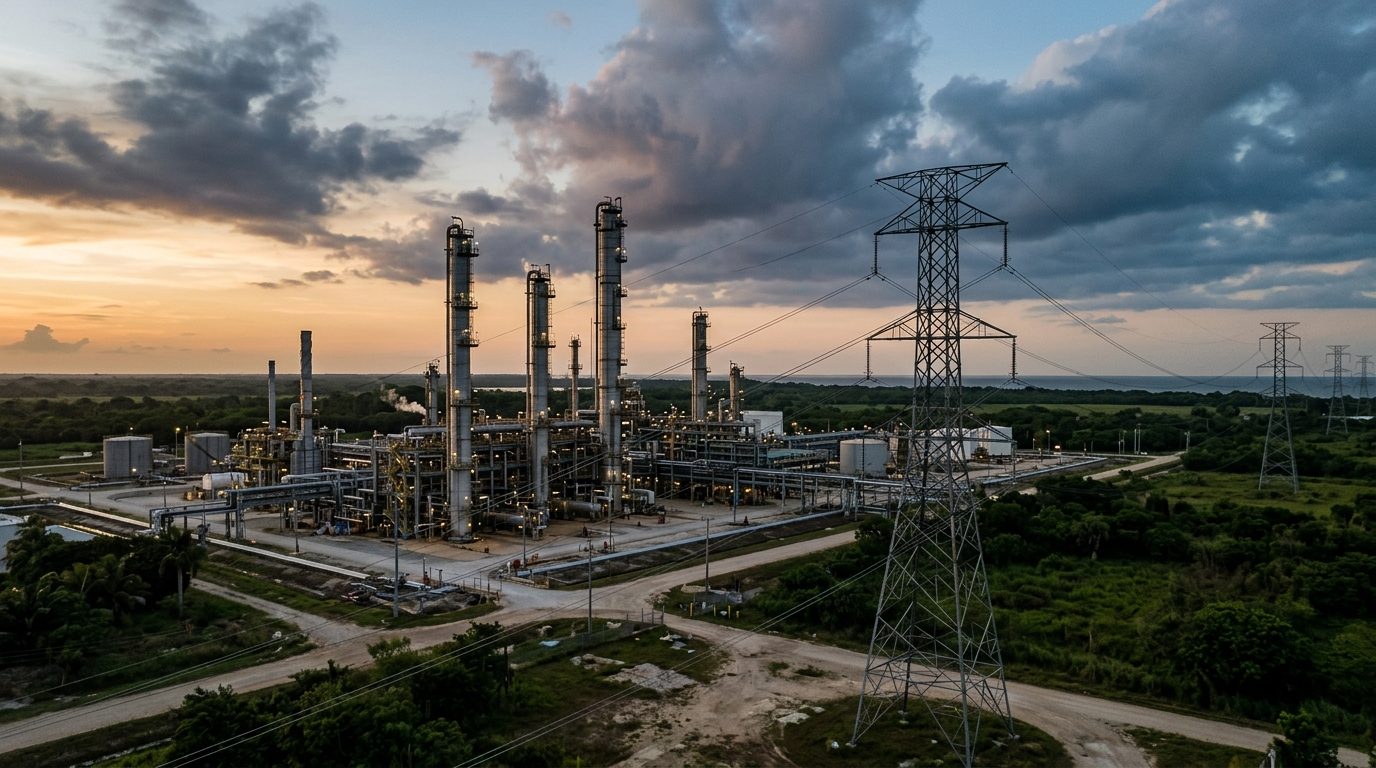

The Federal Electricity Commission and the Mexican Association of Data Centers agreed on September 10, 2026 to a coordination scheme to anticipate the electricity demand of data centers, an industry projected to require 1.73 gigawatts of capacity by 2031, against the 279 megawatts installed today.
The agreement, reported by La Jornada, includes technical working sessions that will meet every week to analyze information and statistics, build growth projections and closely track projects. MEXDC will share with CFE the data on the developments that are coming, their expected growth and their consumption profiles; with that information, the Commission's technical teams will define the generation, transmission, distribution and storage solutions each one requires according to its characteristics and location. For Mexico the point is one of competitiveness: the energy available in the areas where technology parks are concentrated is one of the filters that determine which digital infrastructure projects land in the country.
Energía a Debate specified that the industry reports 279 megawatts installed, 205 megawatts under construction during 2026 and a projection of 1.73 gigawatts of required capacity by 2031. The scheme also includes strengthening territorial service, with the identification of CFE Distribución personnel responsible for the areas where data centers already operate, and the monitoring of proceedings with the National Energy Control Center (Cenace). CFE notes in its bulletin that Mexico has electricity sufficiency to accompany the sector's growth, and that advance planning seeks to serve the companies already investing in the country.
The technical working sessions do not yet have a public date for their first meeting, and a measurable goal remains on the table: if the required capacity by 2031 materializes, the grid in the regions with technology parks will have to grow at the same pace. Coordination with Cenace is the next point to watch.
This article was written with the assistance of artificial intelligence based on verified sources and reviewed by a human editor before publication.