
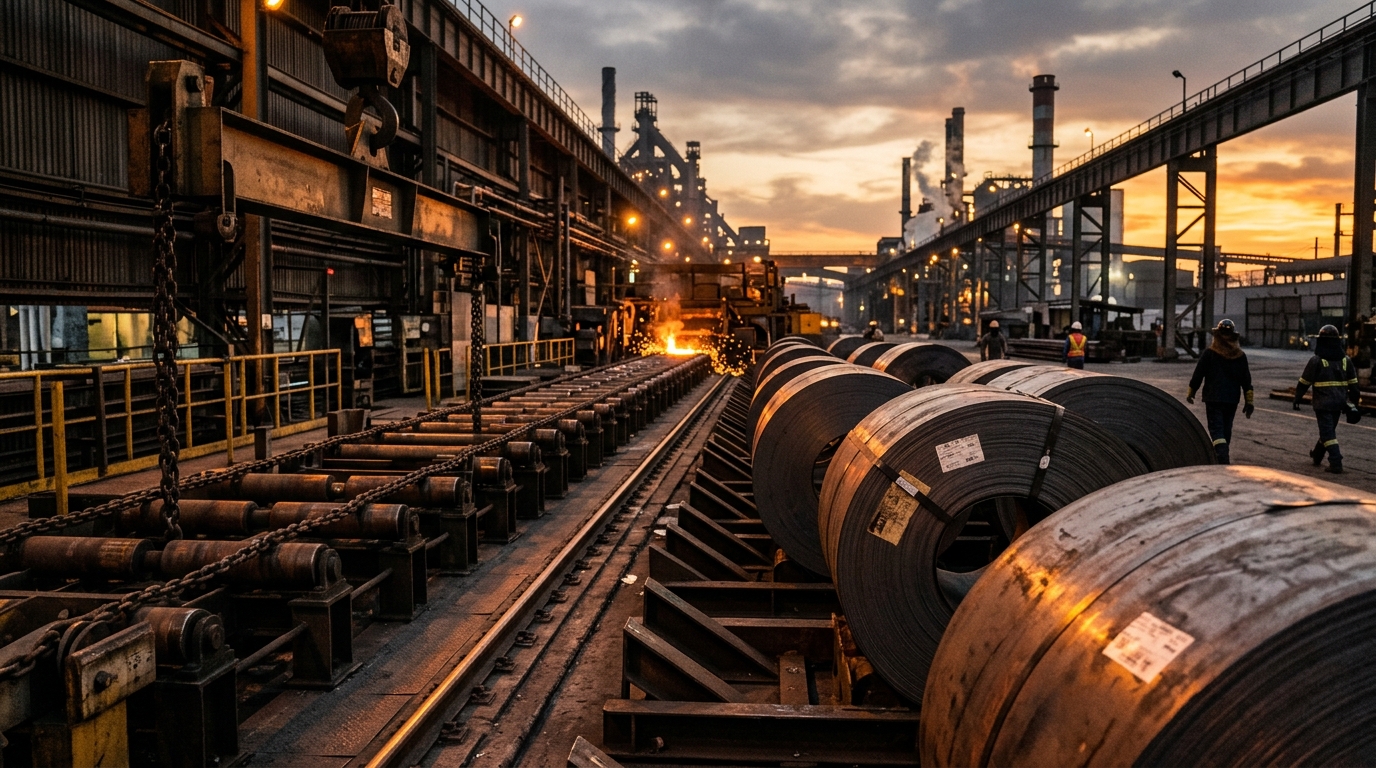
The American Chamber of Commerce of Mexico (AmCham) expects the USMCA review to end with a reduction, not an elimination, of the 50% tariff the United States maintains on Mexican steel and aluminum, a position the chamber stated on August 17, 2026.
The 50% tariff, in effect since June 2025 under Section 232 of U.S. trade law, applies despite USMCA's preferential access provisions for goods meeting rules of origin, and since this year also covers products derived from those metals. For Mexican industry the cost is direct: the National Chamber of Iron and Steel (Canacero) reports that steel exports fell 50% in one year, while exports from Asian countries grew. Canada, the European Union, and Mexico have each adopted measures to protect their steel supply chains; in Mexico's case, the government signed an agreement to purchase domestic steel for public works projects. Against this backdrop, Economy Secretary Marcelo Ebrard asked the United States not to impose new tariffs while treaty negotiations are ongoing, according to Expansión.
AmCham, which represents 1,500 companies generating 8.5 million formal jobs and accounting for 21% of national GDP and 20% of private investment, views a reduction as the most likely of three possible outcomes. At the Council of the Americas congress in Mexico City, chamber president Óscar del Cueto noted that the tariffs generate around 2 billion dollars per day for the U.S. government, and that companies "are not going to pull up the rails and leave," as they seek legal certainty in the agreement, according to El Universal. The Mexican government's objective, per the chamber, is for a preliminary agreement to give Mexico the best tariff treatment relative to the rest of the world, before closing the steel, aluminum, and auto parts chapters. Canacero, for its part, is working to secure "an exemption that benefits the integrated supply chain."
Bilateral rounds between the Economy teams and the U.S. Trade Representative will continue in the coming weeks. The outcome of the review will determine whether the Mexican metallurgical industry recovers ground in the U.S. market and what preferential treatment it retains relative to other partners going into 2027.
This article was written with artificial intelligence assistance from verified sources and reviewed by a human editor before publication.