
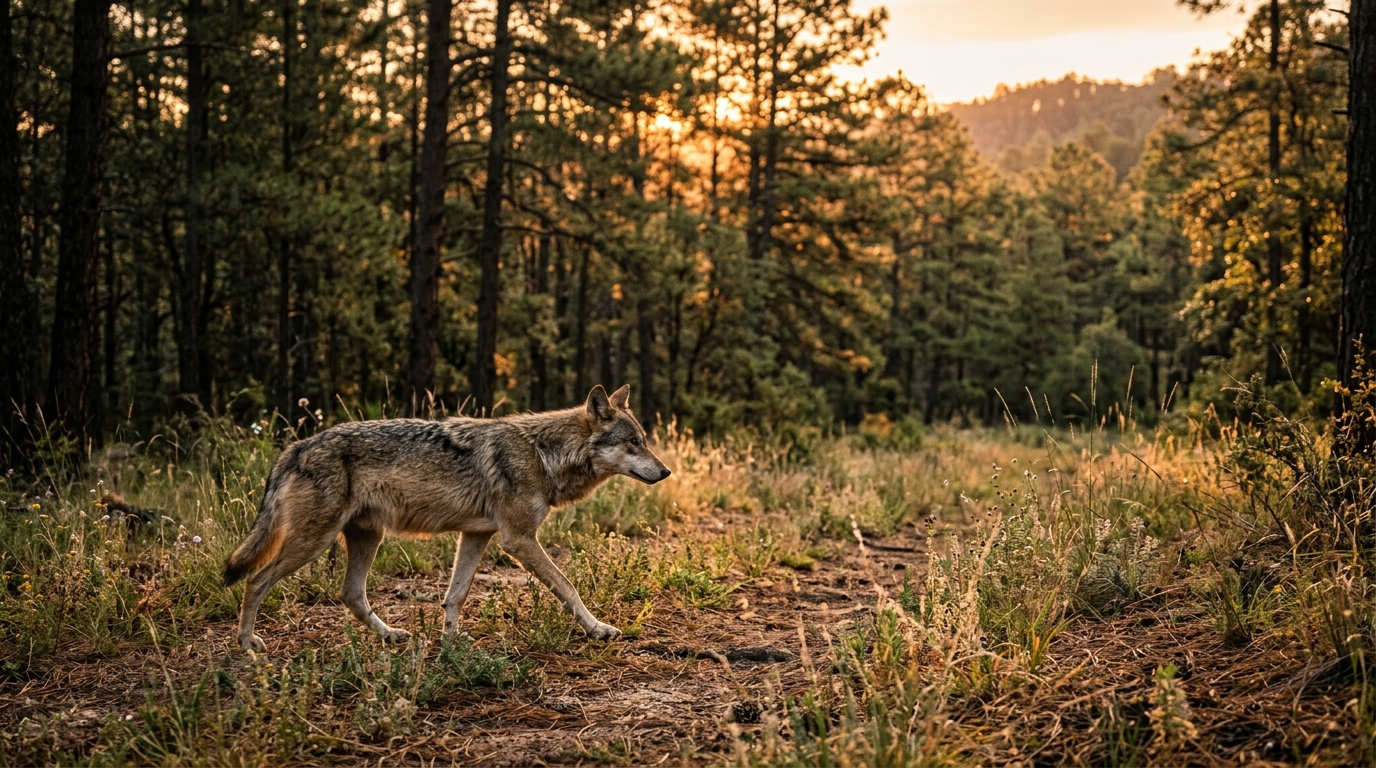
President Donald Trump signed an executive order on September 4 giving Interior Secretary Doug Burgum 90 days to determine whether the Mexican gray wolf meets the recovery criteria of the Endangered Species Act (ESA), according to The Guardian.
The measure is part of the Supporting America's Ranchers package and also instructs federal authorities to encourage states to withdraw their own protections, according to The Guardian. The Mexican gray wolf was virtually extinct in the wild in the 1970s; the United States reintroduced it in Arizona and New Mexico in 1998, and Mexico did so in 2011. Recovery rests on a binational program, and Mexico is home to between 30 and 40 individuals, according to El Universal. The current recovery plan requires the population to average more than 320 animals over four consecutive years before federal protection is lifted, and the count of 319 wolves recorded at the end of 2025 in Arizona and New Mexico is the first year that counts toward that threshold, The Guardian reported.
The latest censuses, according to biologist José Alberto Gallardo Cruz, a researcher at the Centro Transdisciplinar Universitario para la Sustentabilidad at the Universidad Iberoamericana, show around 300 wolves in the United States and between 30 and 40 in Mexico, descendants of just seven founding individuals. "A species that is highly threatened is being put at risk and runs the danger of going extinct," he told El Universal. The specialist noted that from January to June of this year, 106 head of cattle were affected in Arizona and New Mexico, compared with more than 2 million head in those two states. Ranching sectors and Arizona legislators back the review and are calling for compensation, according to The Guardian.
Burgum has until the first days of December to deliver his determination, and conservation groups such as the Center for Biological Diversity have announced they will challenge any delisting decision in federal courts. Mexico has taken part in the binational recovery program since 2011 and its wolf population remains part of the same effort that began half a century ago.
This article was written with the assistance of artificial intelligence based on verified sources and reviewed by a human editor before publication.