
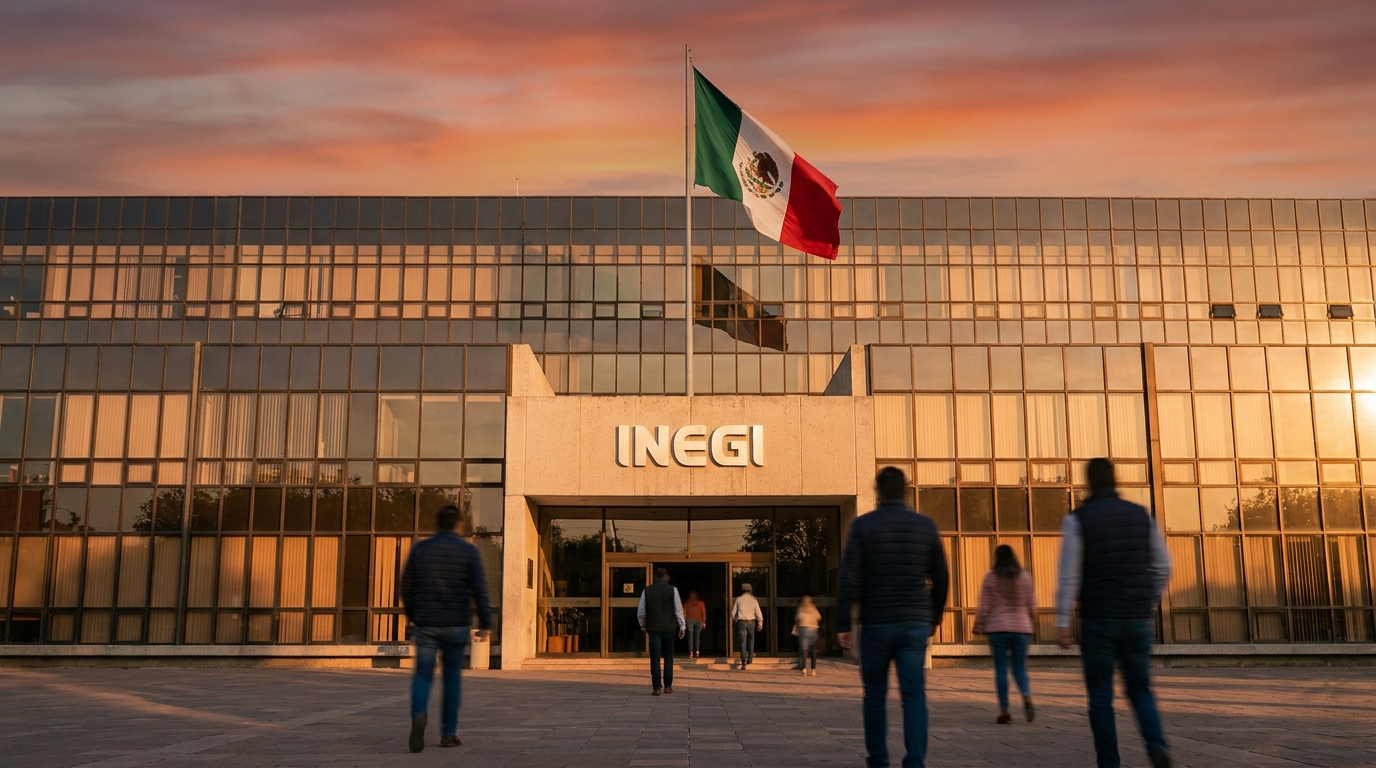
Mexico's GDP expanded 1.5% in the second quarter of 2026, its strongest quarterly advance since late 2020, according to the preliminary estimate published by INEGI on July 30. The figure nearly quadruples the 0.4% growth recorded by the United States in the same period and beat the 1.4% consensus forecast from analysts surveyed by Bloomberg.
The result reverses the contraction Mexico's economy recorded in the first quarter of the year and confirms a recovery that gathered momentum from April onward. By sector, agricultural activities led growth with a quarterly gain of 3.3%, followed by industry at 1.6% and services at 1.5%, the largest component of the national economy, according to El Universal. This is the first quarterly GDP estimate for the April-June period, a separate indicator from the monthly IGAE figure INEGI published last week.
For the Mexican and Mexican-American communities that follow both economies closely, the differential is significant. While Mexico accelerated, the U.S. economy fell short of the 0.5% analysts had expected, weighed down by Middle East tensions and rising energy prices.
According to El Heraldo de México, second-quarter performance was driven by the dynamism of the export sector tied to technology infrastructure and artificial intelligence, along with the effect of the 2026 World Cup. The co-hosting arrangement among Mexico, the United States, and Canada generated additional activity in services, trade, and transportation from April through June. An economist consulted by El Universal estimated that roughly two thirds of quarterly growth stemmed from spending associated with the tournament.
INEGI's preliminary estimate is a provisional calculation that is revised when the institute releases the final figure. Analysts cited by both outlets warn that global financial market volatility and geopolitical tensions maintain an uncertain environment for the remainder of 2026. The final Q2 GDP figure will be published on August 25, when it will be clear whether the Mexican economy sustains its first-half momentum.
This article was written with artificial intelligence assistance from verified sources and reviewed by a human editor before publication.