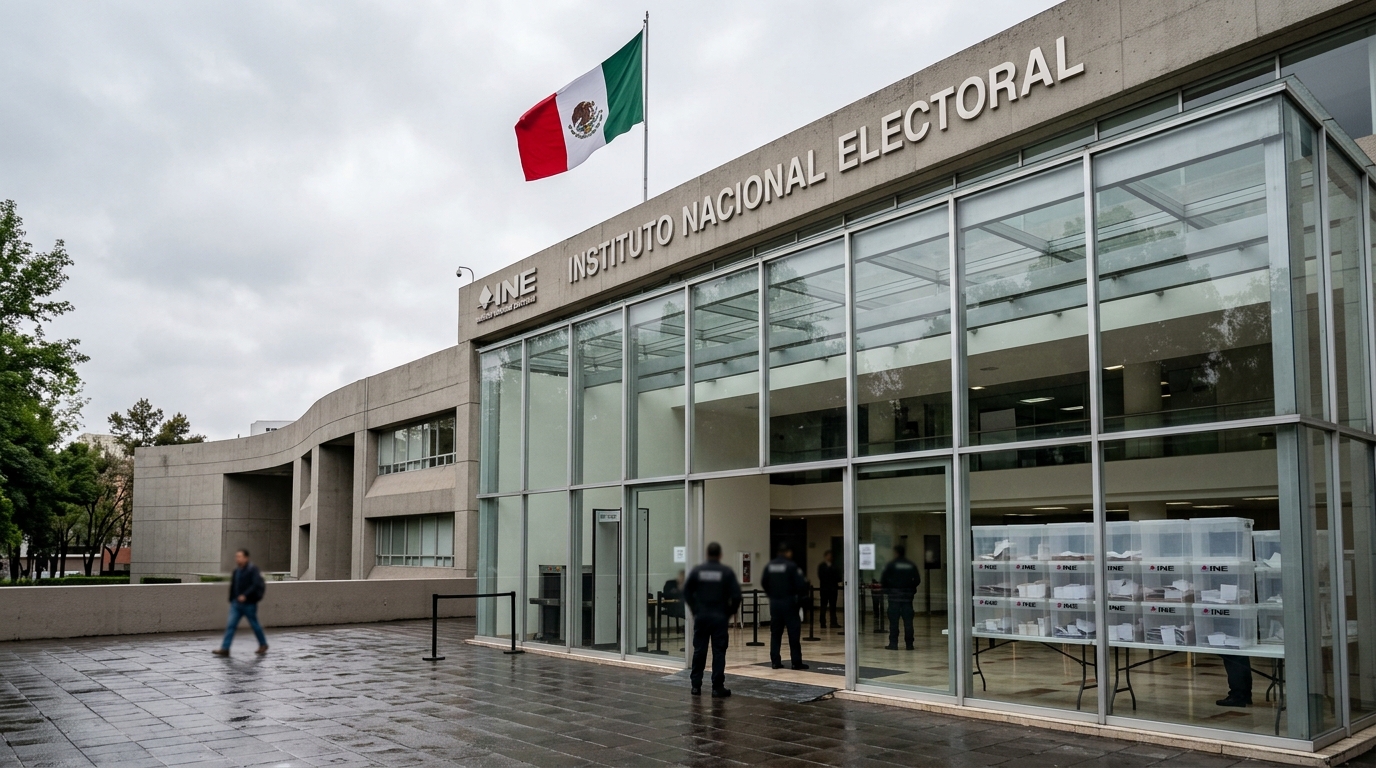
The National Electoral Institute (INE) confirmed on August 9 the operational design of the Candidacy Integrity Verification Commission, which will review potential ties between candidates and organized crime ahead of the 2027 elections. The estimated universe reaches up to 800,000 queries, according to the institute's president, Guadalupe Taddei.
The mechanism marks the first time the INE exercises its function of cooperating with security and justice institutions during an election. Five federal agencies will participate in the information exchange: the Attorney General's Office (FGR), the Secretariat of Security and Citizen Protection, the National Intelligence Center, the Financial Intelligence Unit (UIF), and the National Banking and Securities Commission (CNBV), as reported by Excélsior. The institute will act as a conduit between parties and authorities: it will receive queries from political parties and deliver responses from the institutions, without managing the information itself. The process arrives ahead of the 2027 elections, which will renew federal, state, and municipal offices, on a matter that also resonates with the Mexican community in the United States and Canada given the relationship between security and electoral processes.
According to Expansión Política, the commission will function as a sort of official intake registry: information flows in for review and results flow out from the FGR, the Secretariat of Security, the UIF, and other authorities. Taddei called on party leaderships to nominate carefully: "I ask political parties to be extraordinarily careful and to protect Mexican democracy." She also clarified that the INE is not an integrity validation body and that information is delivered to the requesting party, which decides whether to maintain or withdraw the candidacy. The General Council will decide next Tuesday whether to install the commission immediately or wait until September, when the ordinary commission renewal takes place. Eight of the ten council seats entitled to join it expressed interest.
This week's decision will determine whether the filter is active immediately or not until September, setting the calendar leading to 2027. The figure to watch: how many profiles parties will submit for review once the mechanism opens, and whether there will be priorities by type of office.
This article was drafted with artificial intelligence assistance from verified sources and reviewed by a human editor before publication.