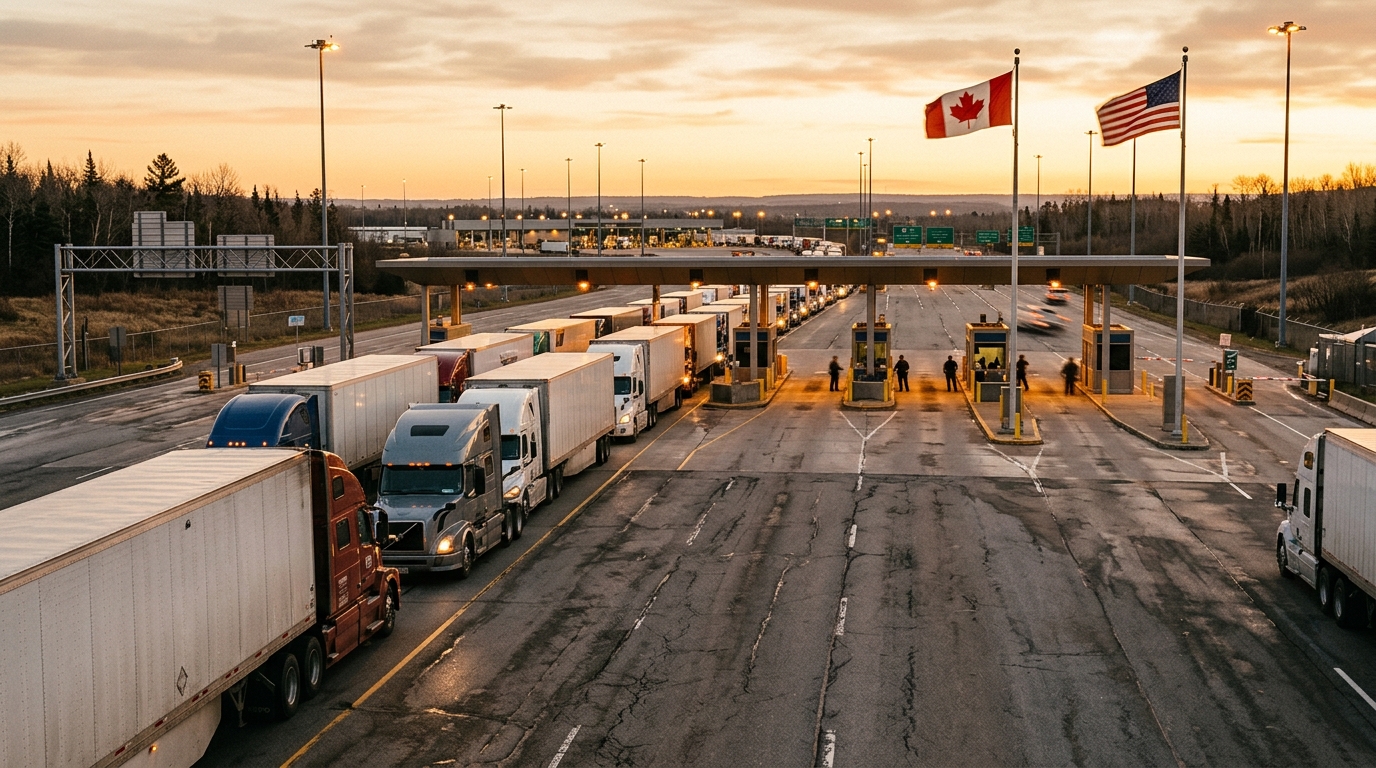
The United States imposed on Saturday, August 22, a 50% tariff on Canadian goods worth approximately $20 billion, following the collapse of trade negotiations between Washington and Ottawa, according to Expansión. The breakdown puts the relationship between the two North American partners on hold at precisely the moment Mexico is negotiating its own tariff chapter with the United States.
The tariffs stem from a decision announced on July 20 under Section 338 of the Tariff Act of 1930, a rarely used instrument that allows Washington to impose duties of up to 50% when it determines that a trading partner is discriminating against its exports. The United States accuses Canada of restricting its automotive exports, pulling American beverages from provincial stores, and favoring European dairy products. According to La Jornada, the goods affected will not receive preferential USMCA treatment, adding pressure to the treaty review that also involves Mexico. For Mexico, the outcome is a direct signal of the posture Washington is prepared to take with its North American partners.
The list of affected Canadian products includes wine, dairy, clothing, furniture, cement, fishing rods, and hockey equipment, a measure reaching just over 5% of Canada's exports to the United States. The United States had delayed the tariffs' entry into force by three days while both governments sought a deal, and the outcome converted negotiations into an exchange of recriminations. Canadian Prime Minister Mark Carney announced that Canada will respond dollar for dollar starting September 8, with countermeasures targeting American steel, dairy, appliances, agricultural machinery, pulp, paper, and electronics, and he suspended trade dialogue. "We cannot accept what they offered, nor will we give what they demanded," Carney said. US Trade Representative Jamieson Greer maintained that Canada refused to finalize the agreement on the terms reached earlier in the week, and that no new meetings are scheduled.
Canadian retaliatory measures take effect September 8, while both parties will need to return to the table to negotiate the future of USMCA. For Mexico, the outcome defines the terrain of its own tariff conversation with the United States in the coming weeks.
This article was written with artificial intelligence assistance based on verified sources and reviewed by a human editor before publication.