U.S. President Donald Trump imposed new tariffs on imports from 60 economies between July 21 and 25, 2026, an offensive that analysts consulted by El Financiero characterize as the consolidation of a permanent trade policy. The effective average U.S. tariff rate rose to 10.7%, according to Bloomberg Economics.
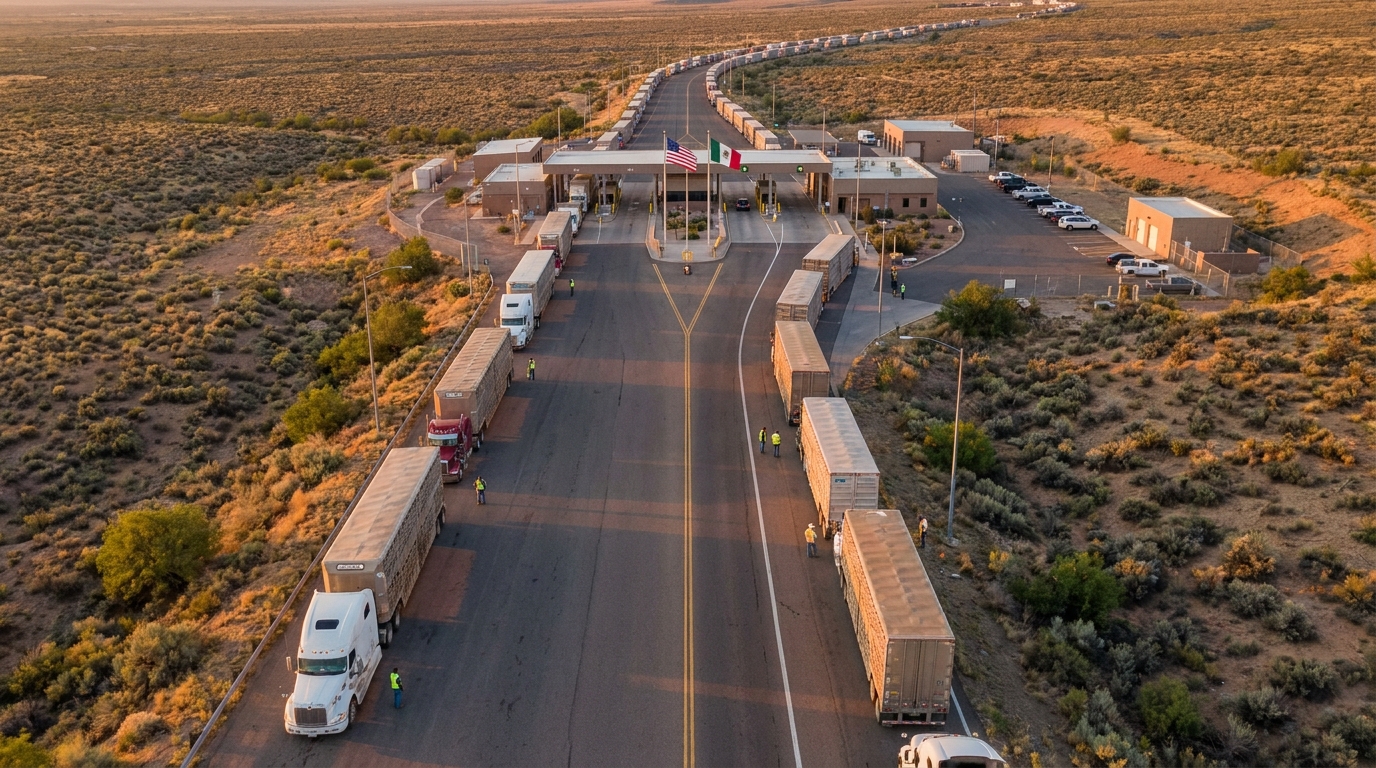
The escalation coincided with the third round of the USMCA review, held in Mexico City from July 21 to 23 between Mexico and the United States, which concluded without a definitive agreement on the tariff regime. Mexico retains an exemption for approximately 85% of its exports (those that comply with the treaty's rules of origin), but Washington's signal is that tariffs have ceased to be a transitory tool. According to AP, the imposition of tariffs on 60 economies on the grounds of combating forced labor sparked debate: for some, it is a legitimate commercial pressure mechanism; for others, a maneuver that allows tariffs to be maintained without passing through Congress. The fourth round is scheduled for the first half of September in Washington.
The week's tariff offensive spanned three fronts. On Monday, July 21, the White House announced a 50% tariff on approximately $20 billion in Canadian imports, invoking Section 338 of the Tariff Act of 1930, a provision that had never previously been used. On Wednesday, July 23, additional 25% duties on Brazilian products took effect; Brazil responded with a credit package of $3.6 billion for its exporters. On Thursday, July 24, U.S. Trade Representative Jamieson Greer announced tariffs of 10% and 12.5% on goods from 60 economies.
Josh Lipsky of the Atlantic Council told El Financiero that U.S. markets had gone "from hating tariffs to being able to live with them and, finally, to needing them." Chad Bown of the Peterson Institute for International Economics noted that the Trump administration "is not addressing the most important challenge: China."
For Mexican companies exporting to the United States, the message is clear: U.S. tariff policy is taking on a structural character, not a situational one. The fourth round of the USMCA review, in September in Washington, will be the first test of how the treaty is negotiated under this new reality.
This article was written with artificial intelligence assistance based on verified sources and reviewed by a human editor before publication.