
NASA Picks Private Sector for Mars Science Push
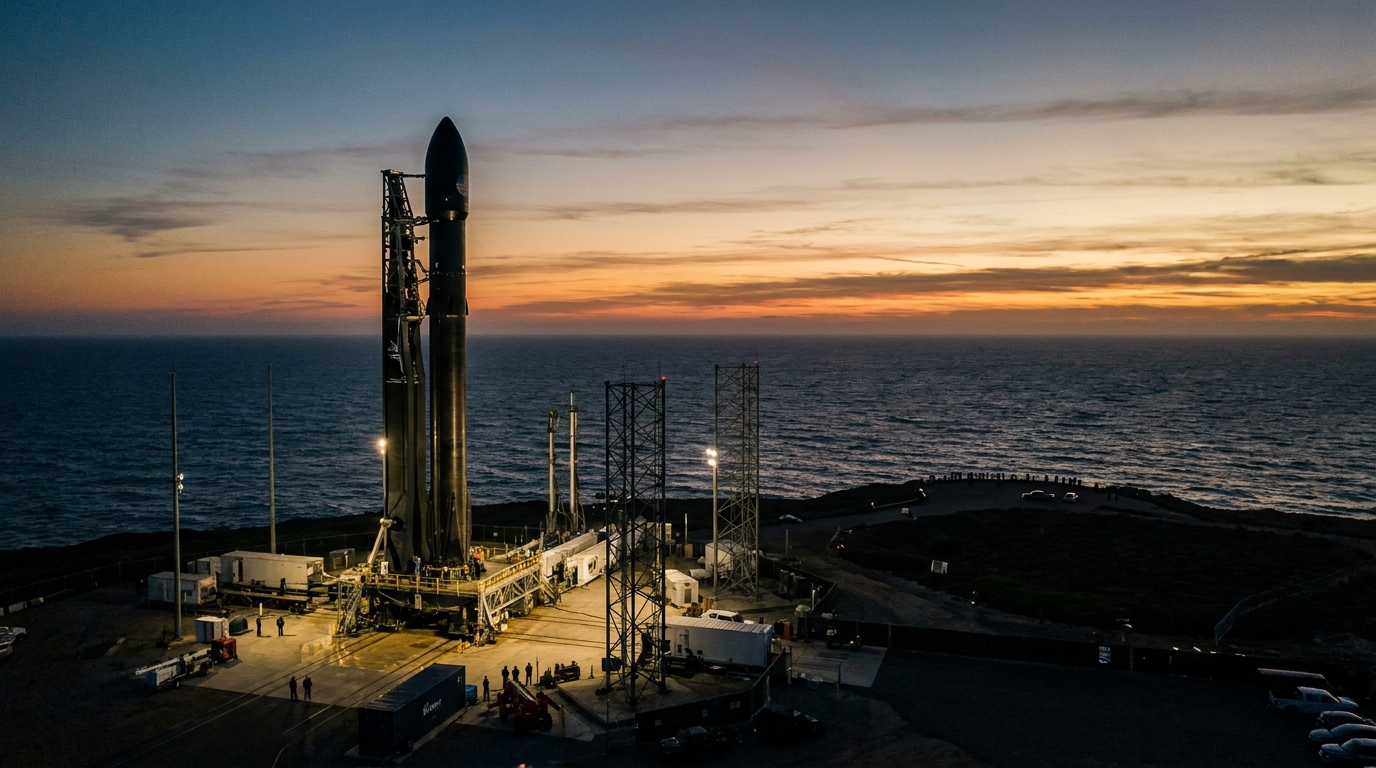
NASA has selected Relativity Space for a historic first: the agency's first fully commercial planetary science mission. The Aeolus orbiter will launch toward Mars in 2028 carrying four NASA instruments designed to map daily wind patterns, dust, clouds, and temperature readings on the Red Planet, SpaceNews confirmed on June 17, 2026.
Eric Schmidt, former Google CEO and Relativity Space's CEO since March 2025, is leading the project under a new initiative called the Interplanetary Sciences Program. The effort is co-financed by an unnamed private philanthropic organization. This partnership breaks new ground: rather than NASA designing and operating the entire mission with federal funding, the private company builds and finances the spacecraft while NASA provides the scientific instruments, technical oversight for one Martian year, and data processing software.
A New Model Opens Doors for Latin American Science
For Latin American scientific communities in North America, particularly Mexico's Space Agency, which maintains active agreements with NASA, this public-private model creates fresh opportunities to participate in cutting-edge planetary exploration through partnerships with commercial players.
What Aeolus Will Study
The Aeolus package includes four NASA instruments:
- A Doppler wind and temperature sensor
- A thermal limb sounder
- Surface radiometric sensors
- A wide-field camera
The orbiter also carries a radar system to map subsurface ice and geological structures beneath the Martian surface. It will serve as a communications relay between Earth and Mars, featuring high-speed laser links and radio frequency capability.
NASA Administrator Jared Isaacman emphasized that the partnership aims to deliver more science more frequently by combining NASA's instruments with private sector innovation. The launch vehicle will be Relativity Space's Terran R, a reusable medium-lift rocket currently in development.
Daily Atmospheric Data from Mars
NASA expects Aeolus to enter Martian orbit in 2029 and begin producing the planet's first daily atmospheric records. This data is critical for planning future robotic landings and crewed missions that various organizations are preparing for the coming decade. The international scientific community, including teams with active NASA partnerships like Mexico's Space Agency, will closely track the program's progress.
Frequently Asked Questions
**When will the Aeolus orbiter reach Mars?**
NASA and Relativity Space plan to launch Aeolus in late 2028 aboard the Terran R rocket, with arrival in Martian orbit scheduled for 2029.
**What scientific instruments does Aeolus carry?**
Aeolus carries four NASA instruments: a wind and temperature Doppler sensor, a thermal limb sounder, surface radiometric sensors, and a wide-field camera, plus a radar for subsurface mapping.