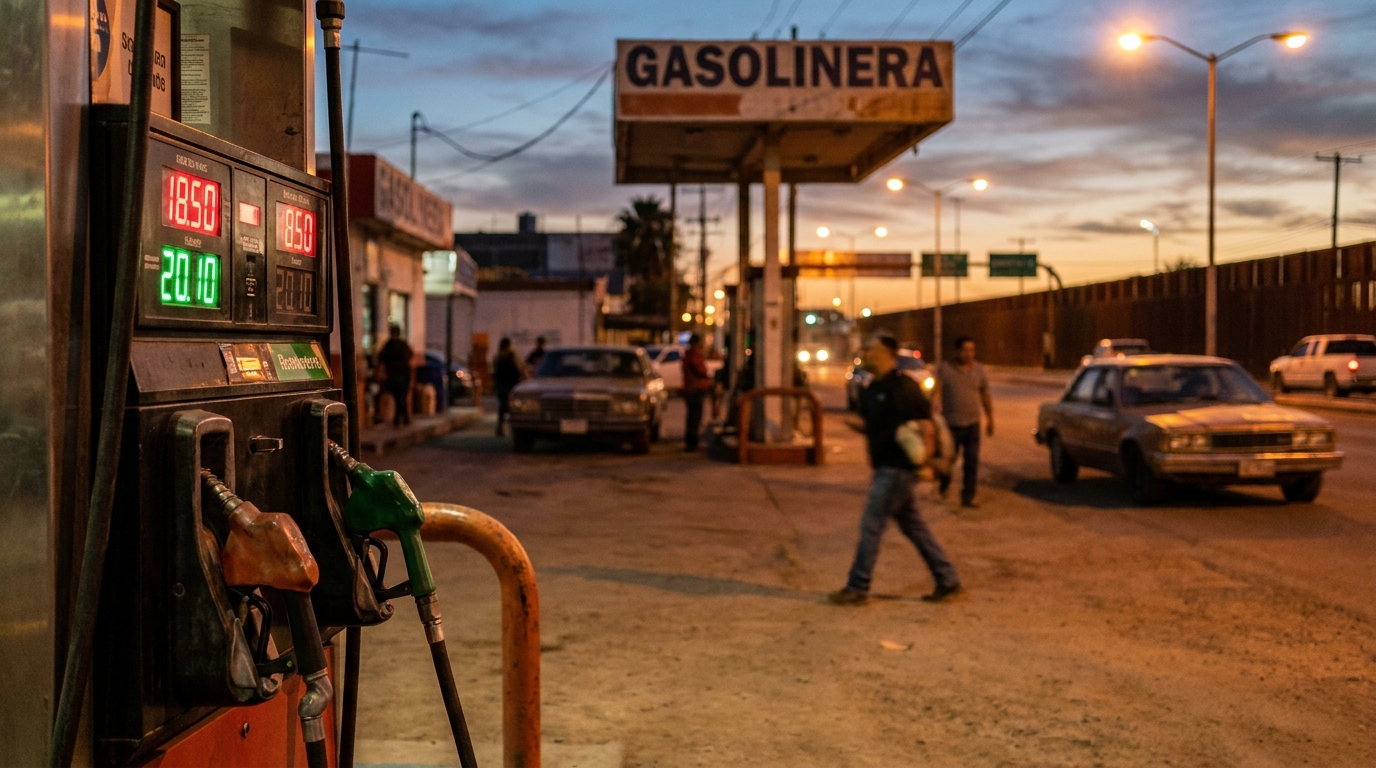
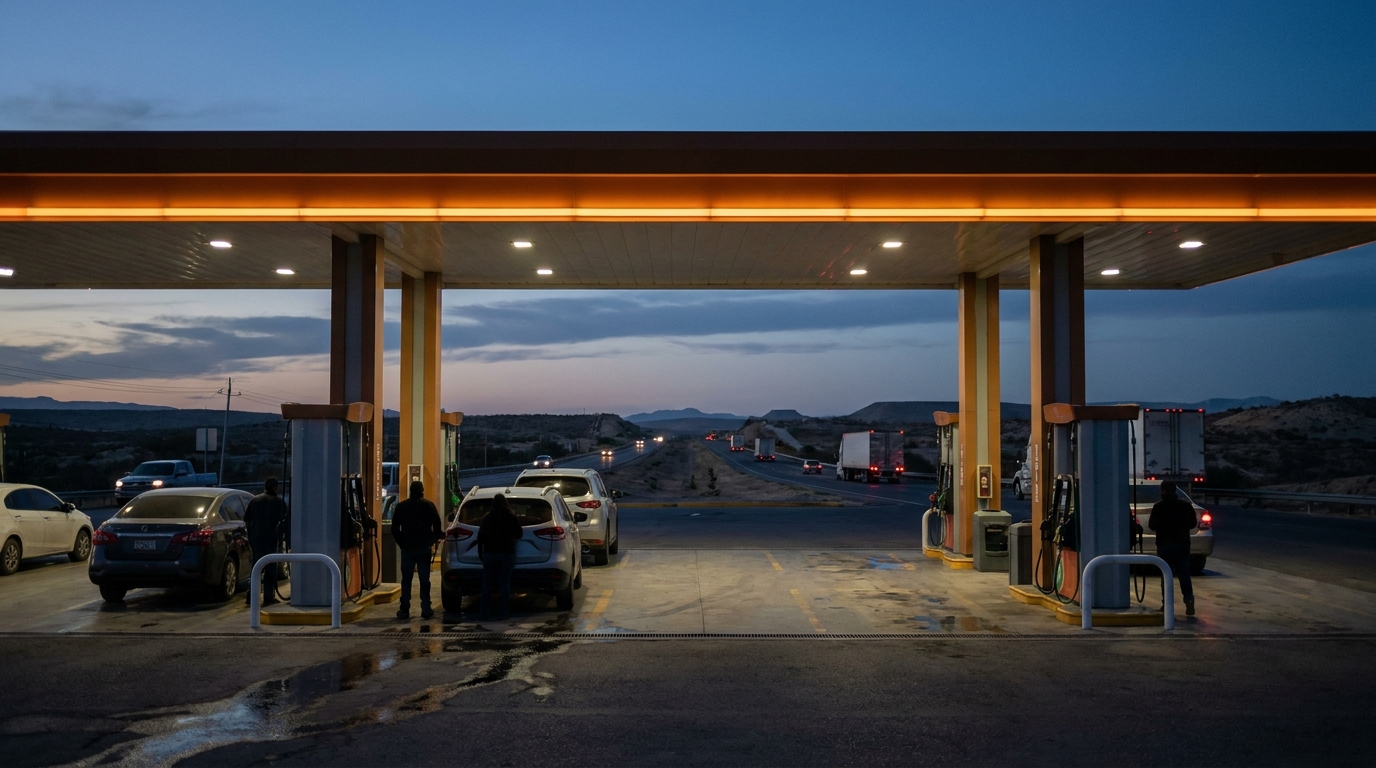
On July 12, the federal government published the list of approximately 2,200 service stations that have not joined the voluntary agreement to keep diesel prices below 27 pesos per liter. Seven government agencies, including the Secretariats of Energy and Finance, Profeco, Pemex, and the National Guard, issued a joint statement urging these stations to join a price-stabilization strategy already adopted by 80 percent of the sector, according to El Economista.
The program is part of the Anti-Inflation and Cost-of-Living Package (PACIC), renewed with the private sector to contain fuel prices amid international pressure from the conflict in the Middle East. According to PETROIntelligence data cited by Energía a Debate, the national average diesel price stood at 27.11 pesos per liter as of July 11, just 11 centavos above the agreed cap. In the border region, where a reduced VAT rate of 8 percent applies, the agreed maximum price is 25.39 pesos per liter.
According to the official repository of the Secretariat of Energy, Baja California has the largest number of flagged stations at 273, followed by Tamaulipas with 178 and Michoacán with 166. The full list includes the corporate name, address, and permit number of each establishment and is publicly available on the agency's portal. The government has backed its call with IEPS tax incentives, competitive Pemex pricing, an expanded last-mile transportation network, and a banking agreement to reduce electronic-payment fees, in effect from May 1 to October 31, according to El Universal.
ONEXPO, the gas-station trade association led by Enrique Félix, acknowledged in a bulletin distributed by OPIS that the sector is making every effort to keep prices in check, but warned that the profit margin on diesel is around 1.50 pesos per liter and is further squeezed by transportation, storage, and distribution costs. Most diesel is sold on credit to trucking fleets, adding additional cash-flow pressure on retailers.
The federal government reiterated that it will maintain oversight of the fuel market to ensure fair competition. The voluntary agreement remains open and is expected to be temporary, pending normalization of international fuel markets.
This article was drafted with artificial intelligence assistance from verified sources and reviewed by a human editor before publication.