
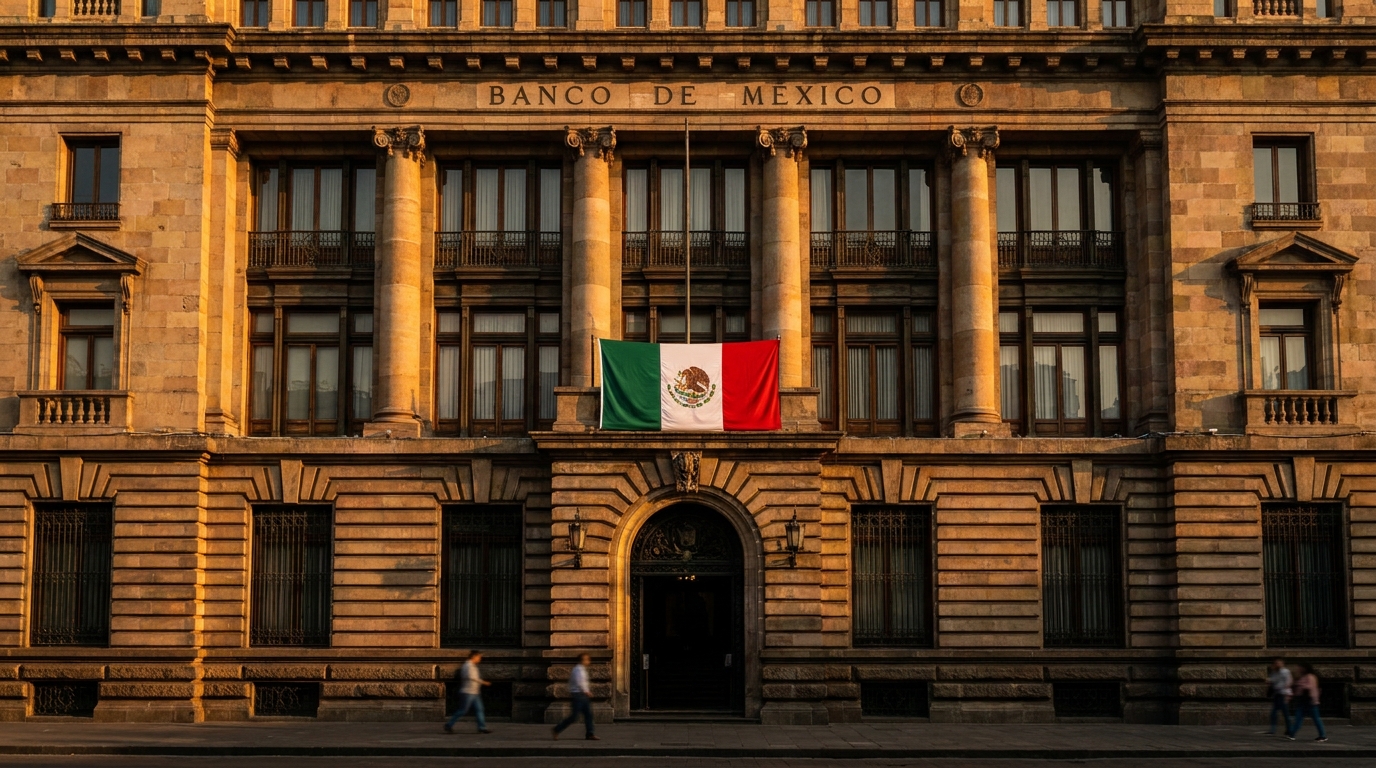
The Mexican peso closed July 2026 at 17.32 units per dollar, a monthly appreciation of 0.98 percent, according to data from Banco de México published on July 31 and reported by El Informador. Year to date, the currency has gained 3.84 percent and remains below 18 units.
Behind this performance lie three factors, according to Gabriela Siller, Director of Economic Analysis at Banco Base. First: the U.S. Federal Reserve left its interest rate unchanged at its July 29 announcement. Second: the new tariffs announced by the U.S. government have not eroded Mexico's competitive standing relative to other countries. Third: the weakness of the Japanese yen, which on July 23 touched 163.99 units per dollar, its worst level since November 1986, as reported by Forbes México.
For the Mexican community in North America, the exchange rate carries a dual effect: a stronger peso reduces the domestic-currency value of every dollar migrants send home to their families, while at the same time making purchases and travel cheaper for those who cross the border to spend in dollars.
During July, the exchange rate traded mostly between 17.4 and 17.6 pesos per dollar, only breaking below the 17.4-unit support level in the final two sessions, Siller told El Informador. The month recorded a high of 17.64 and a low of 17.31 pesos per dollar. FX volatility came in at 6.29 percent, down from 7.5 percent in June and the lowest reading since October 2025.
Banco Base warned that further yen strengthening in the coming days raises the risk of peso depreciation. The Bank of Japan left its rate unchanged in July but signaled a possible hike at its September 18 meeting, according to Forbes México.
This article was drafted with artificial intelligence assistance from verified sources and reviewed by a human editor before publication.