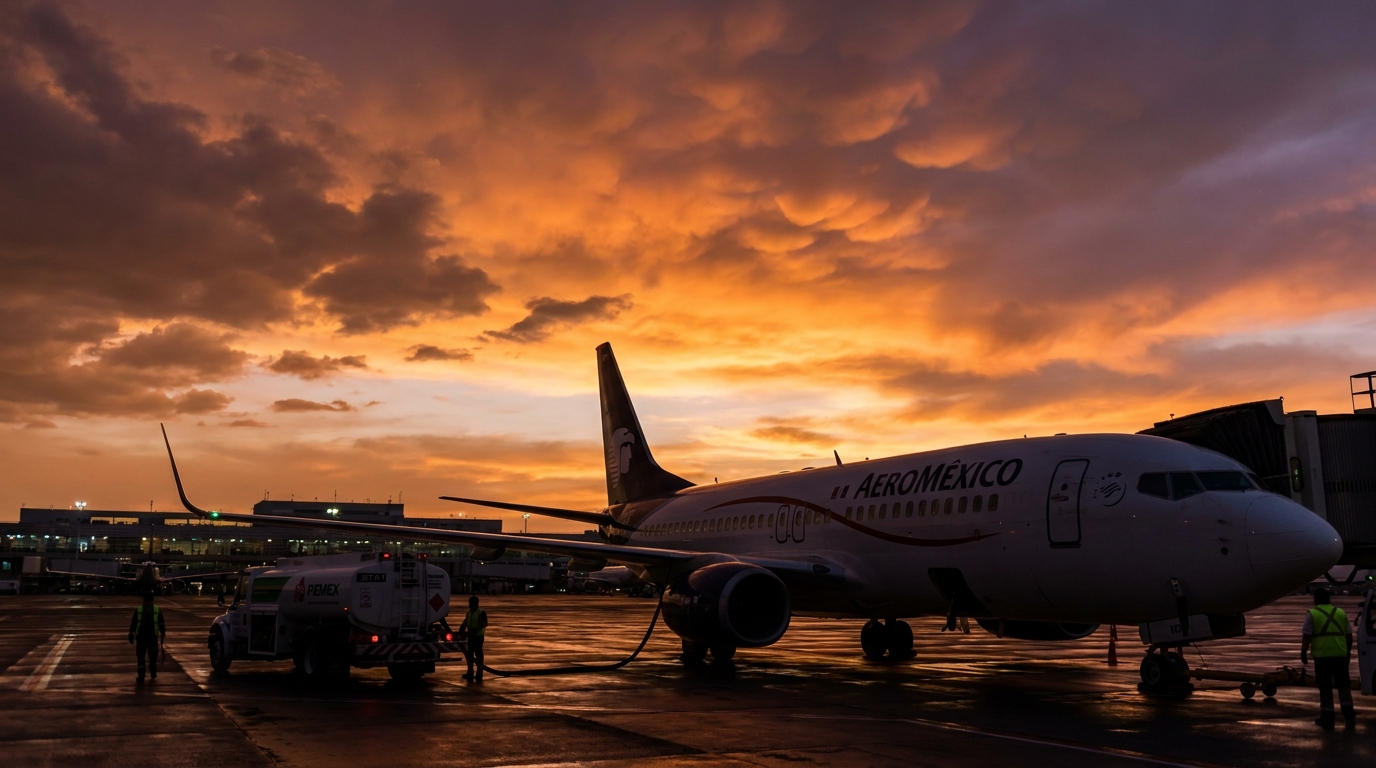
The three major Mexican airlines (Volaris, Viva Aerobus and Aeroméxico) reported combined losses exceeding 3,300 million pesos during the second quarter of 2026, pulled down by an average 83% increase in jet fuel costs, according to El Financiero.
The spike in aviation fuel prices reflects volatility in international oil markets, compounded by geopolitical tensions in the Middle East and the conflict with Iran. For the Mexican community traveling or residing in the United States and Canada, the impact is direct: if airlines cannot pass the cost through to ticket prices, they absorb losses that may translate into fewer frequencies or more expensive routes on cross-border corridors, precisely during peak summer travel season. El Universal reported that Viva Aerobus recorded a net loss of 59 million dollars in the quarter, compared to a profit of 7 million in the same period of 2025.
The breakdown by airline reveals the scale of the financial blow. Volaris reported a net loss of 199 million dollars, of which 175 million are directly attributable to fuel; its jet fuel cost rose 70% compared to the same quarter of the prior year. Aeroméxico faced a negative fuel impact of 220 million pesos, 30 million above projections. Viva Aerobus, in addition to a 99% increase in fuel costs, kept an average of 28 A320neo aircraft grounded due to issues with Pratt & Whitney GTF engines, reducing its capacity 7.7% and adding pressure to operating expenses, which grew 25.7%. Juan Carlos Zuazua, CEO of Viva Aerobus, described the quarter as one of extraordinarily high fuel prices.
The airlines carry minimal jet fuel hedges. Viva Aerobus has protected only 6.6% of its projected 2026 consumption, leaving carriers exposed if oil price volatility persists through the second half of the year. Aeroméxico's full financial reports are expected in the coming days.
This article was written with artificial intelligence assistance based on verified sources and reviewed by a human editor before publication.