
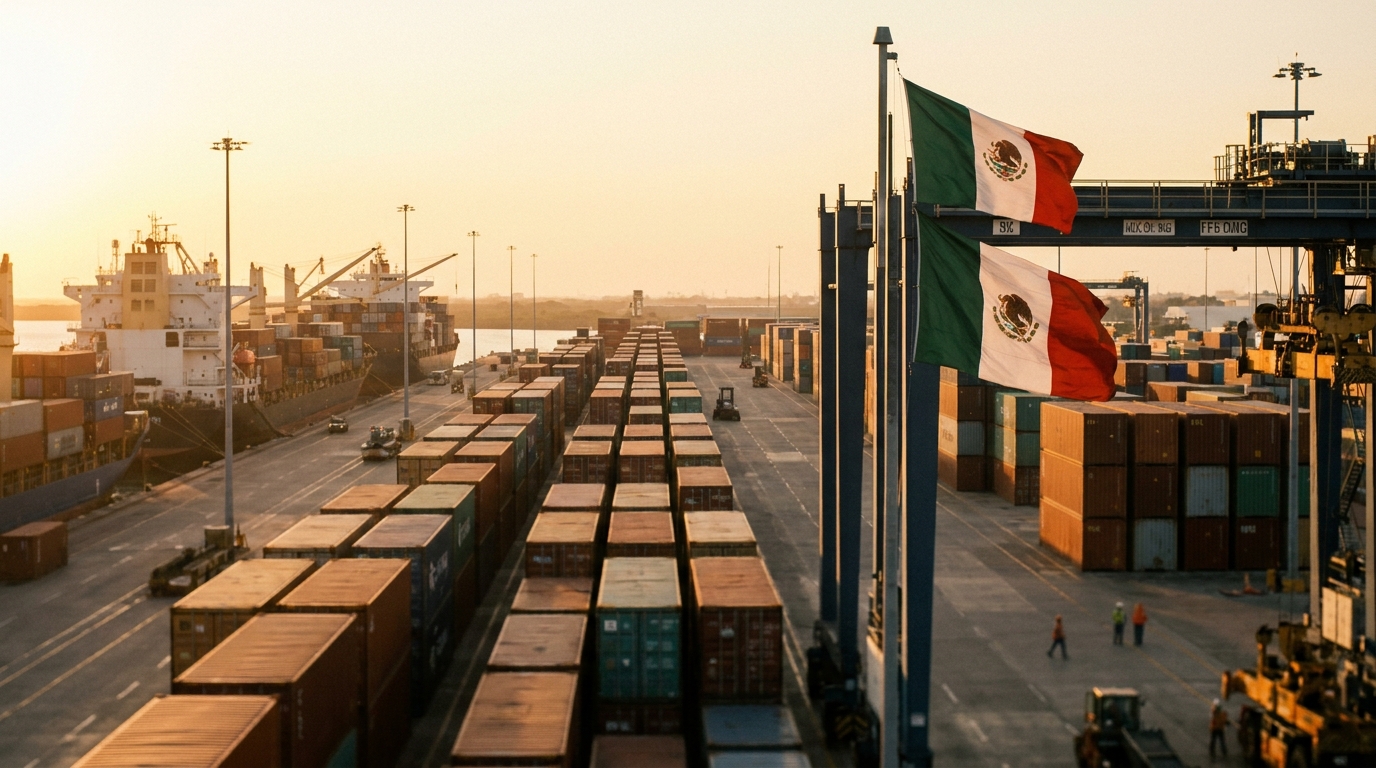
As of August 2, 2026, the USMCA keeps Mexico among the few economies holding a tariff advantage over the United States, according to La Jornada. Eighty-five percent of Mexican exports enter that market duty-free, a figure Economy Secretary Marcelo Ebrard highlighted as he anticipated a ruling on production overcapacity.
Expectations of a new tariff round rest on a warning Ebrard issued last week: Washington will decide in August, under Section 301, whether Mexico is engaged in production overcapacity. On July 23, the U.S. government imposed additional tariffs of 10 to 12.5 percent on imports from 60 countries on forced-labor grounds, formally subjecting Mexico to a 10 percent rate. The exemption holds for goods that meet USMCA rules of origin, which explains why Mexican exports grew 7.7 percent year-on-year in the cumulative figure through May.
Deputy Trade Secretary Luis Rosendo Gutiérrez argues that Mexico holds the largest relative tariff advantage over all other U.S. trading partners, and that this position widens as Washington raises tariffs through other instruments. For Alejo Czerwonko, head of emerging-market investments at UBS, the USMCA "remains the country's key competitive advantage," the only treaty whose goods are exempt when rules of origin are met. In May, Mexico's share of U.S. imports reached 17.4 percent, a record attributed to that preferential treatment. Steel, aluminum, and automotive tariffs remain in place, however, standing as outstanding items in the treaty review.
The next test will come with the Section 301 ruling and the bilateral USMCA round scheduled for September, where Mexico will seek to reduce automotive tariffs and lift Section 232 measures on steel and aluminum. The figure to watch is whether the 85 percent exemption survives that renegotiation.
This article was drafted with artificial intelligence assistance from verified sources and reviewed by a human editor before publication.