Solar Activity Intensifies in Early June
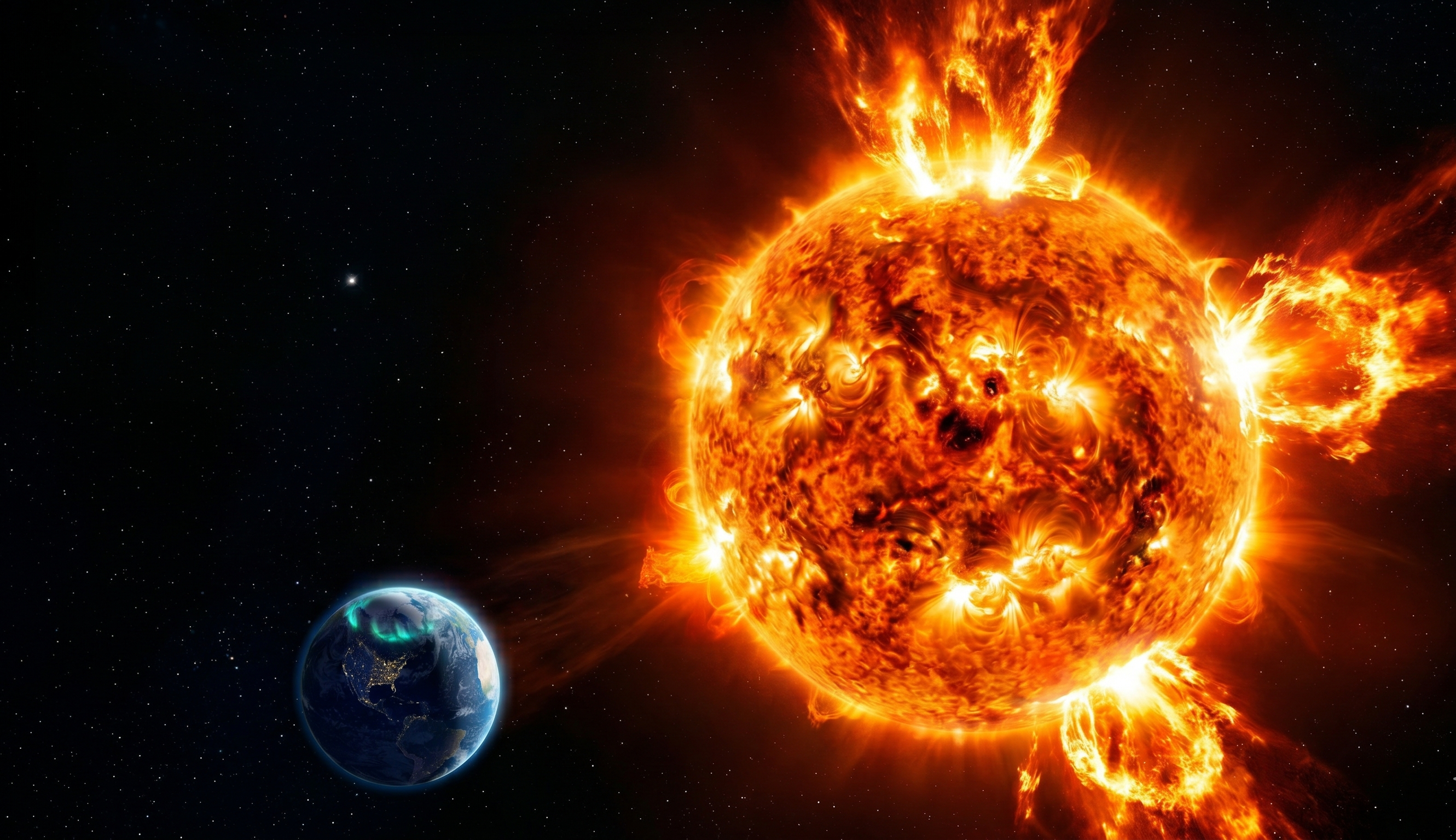
Solar activity experienced a significant surge during the first days of June 2026. According to data released by international space weather monitoring centers, active region 4455 produced several major eruptions in less than 24 hours, including two M-class flares and one X1.0-class flare, among the most energetic categories used to classify these phenomena.
Coronal Mass Ejections Directed at Earth
These eruptions triggered coronal mass ejections (CME) with components directed toward Earth. In response, the Space Weather Prediction Center at the U.S. National Oceanic and Atmospheric Administration (NOAA) issued a G3 (strong) geomagnetic storm watch for June 4 and 5, though the final intensity of effects depends on interactions between solar particles and Earth's magnetic field.
No Direct Risk to Ground Population
Scientists emphasize that such events pose no direct threat to people on Earth's surface. However, they can cause temporary disruptions to high-frequency radio systems, satellite navigation, and sensitive technological infrastructure. Aurora displays may also be visible at unusually low latitudes across parts of North America, depending on how the geomagnetic storm develops.
Scientific Opportunity and Preparedness
From a scientific standpoint, these episodes improve space weather forecasting models and strengthen monitoring systems used by space agencies, satellite operators, and electrical grids. For Mexico, tracking these phenomena contributes to preventive assessment of potential impacts on telecommunications, navigation systems, and specialized observatories.
Sources
- https://www.nmas.com.mx/ciencia-tecnologia/astronomia/habra-tormenta-solar-el-4-de-junio-el-sol-lanzo-3-llamaradas-y-hay-alerta-geomagnetica/ (N+)
- https://energiaadebate.com/ (Energía A Debate)