President Claudia Sheinbaum announced on July 16 a working visit to Quintana Roo to address the sargassum crisis this weekend, ongoing conflicts at Tulum's Parque del Jaguar, and progress on the Maya Train freight line. On Sunday, she will present a comprehensive strategy against algae accumulation from Puerto Morelos.
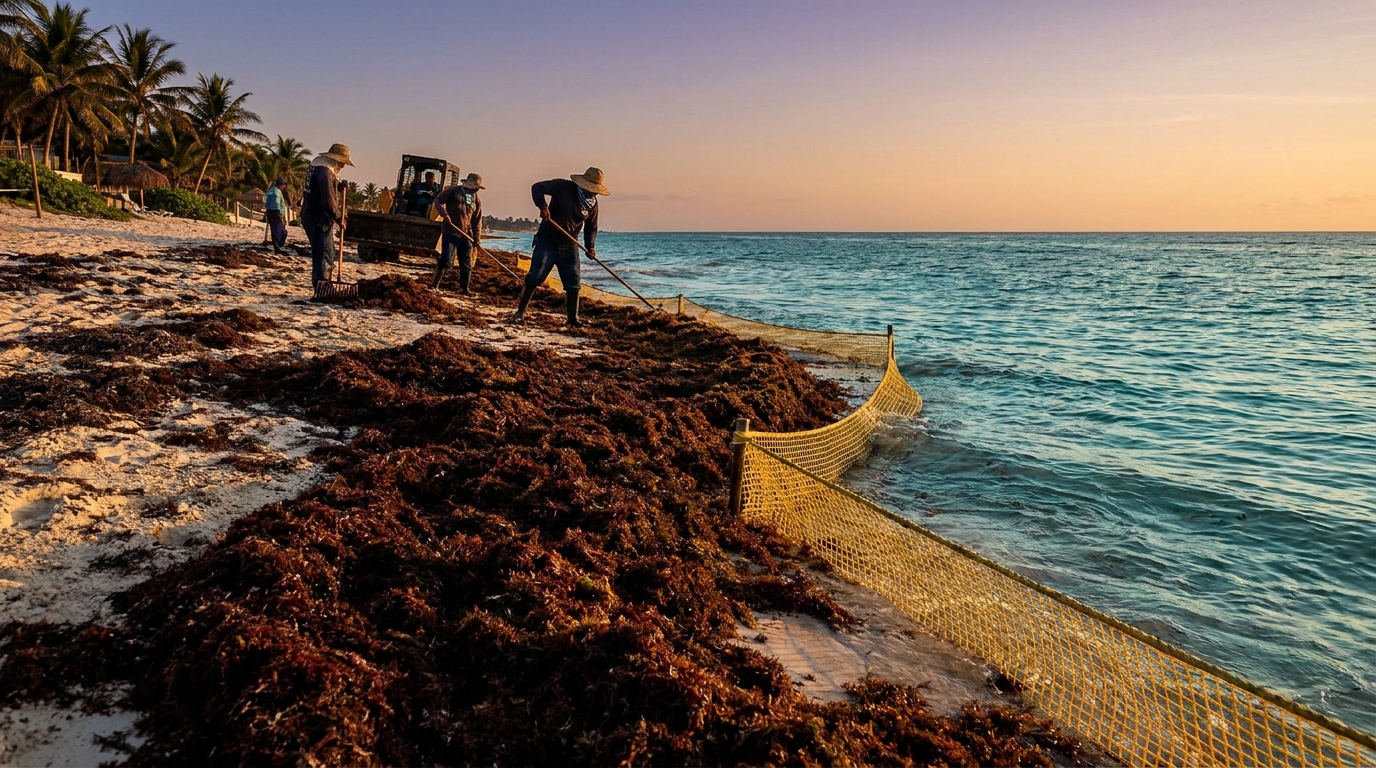
The president said at her morning press conference that the sargassum problem has intensified this year due to rising ocean temperatures, a trend linked to climate change affecting the entire Mexican Caribbean coast. The Secretariat of Environment and Natural Resources, the Secretariat of Tourism, and Sedena's Mundo Maya enterprise have been working in the region's protected natural areas, but Sheinbaum acknowledged that unresolved difficulties persist. The hotel sector and Tulum merchants have expressed concern over the algae's impact on beaches and access conditions at Parque del Jaguar, a space that combines environmental conservation with tourist activities. The Mexican Caribbean corridor is one of the main drivers of national tourism and a priority destination for the Mexican-American community that visits or invests in the area.
According to El Universal, Sheinbaum said the federal government already has an initial diagnosis of the problem and is preparing a comprehensive response plan that includes collecting sargassum offshore and subsequent recycling. On Parque del Jaguar, the president said she will convene federal authorities, hotel operators, and local merchants to directly address their concerns: "we are going to see exactly what is happening and there, with all the institutions, we are going to resolve it," she declared, as reported by La Jornada. The visit also includes a stop to see the new locomotives that arrived for the Maya Train freight line, a project aimed at connecting the southeast rail infrastructure with the peninsula's commercial ports.
Sunday's press conference in Puerto Morelos will be the moment the federal administration publicly presents concrete measures. For the Mexican Caribbean's tourism and business community, and for the thousands of Latin visitors it receives each year, the government's response will shape the outlook for the next high season.
This article was written with artificial intelligence assistance from verified sources and reviewed by a human editor before publication.