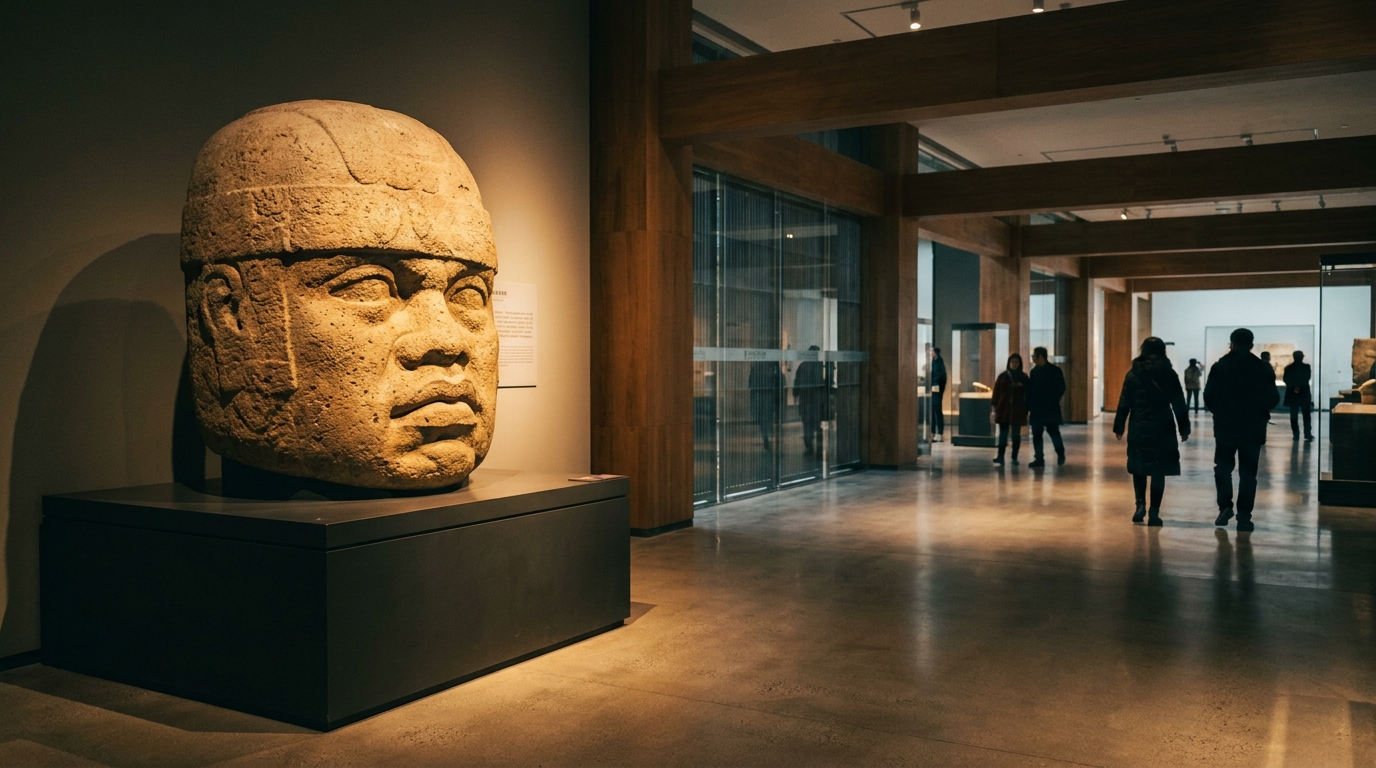
Colossal Head 4 from San Lorenzo, a 4.5-ton Olmec sculpture nearly three thousand years old, has been on display at the Shanghai Museum since July 9. It is the first time one of the 17 known colossal Olmec heads has traveled to Asia.
The piece, from the Museum of Anthropology in Xalapa, is part of the exhibition "At the Top of the World Tree: Ancient Civilizations of the Americas," which brings together 804 pre-Hispanic objects from 13 Mexican institutions, according to El Universal. Participants include the National Museum of Anthropology, the Templo Mayor Museum, and the archaeological zones of Teotihuacan, Toniná and Kabah, among others. The exhibition spans from the Olmec period (1200 BC) to the 16th century and also includes pieces from the Teotihuacan, Maya and Mexica cultures. Organized by the National Institute of Anthropology and History and the Shanghai Museum, it will remain open to the public until November 14, 2027, a period of 16 months.
It is not the only colossal head outside Mexico. Head 5, also from San Lorenzo, has been at the Louvre Abu Dhabi since 2024 and its loan has been extended through 2027. Of the 17 registered colossal Olmec heads in the country, distributed among the sites of San Lorenzo, La Venta, Tres Zapotes and La Cobata, these two are the only ones currently on display abroad.
José Luis Perea González, technical secretary of the INAH, stated at the inauguration that sharing archaeological heritage with other nations is the greatest act of trust in cultural diplomacy, as it means placing within reach of other societies the objects a country considers most valuable for telling the history of its indigenous peoples.
The Shanghai exhibition will remain open to the public for 16 months, until November 2027. When it closes, all 804 pieces, including the 4.5-ton colossal head, will return to their home institutions in Mexico. Head 5 in Abu Dhabi is also scheduled to return in 2027, meaning the two colossal Olmec heads that have traveled abroad will both return to Mexican territory.
This article was written with the assistance of artificial intelligence from verified sources and reviewed by a human editor before publication.