
Oil Markets Retreat on Diplomatic Breakthrough
Brent crude traded at approximately $92.50 per barrel on Friday, May 29, 2026, while West Texas Intermediate (WTI) settled near $87.40, representing the largest weekly drop since April.
The pullback in international benchmarks stems primarily from progress on a provisional 60-day ceasefire agreement between the United States and Iran, reached Thursday by negotiating teams. The accord remains pending formal ratification by President Donald Trump and Iranian authorities.
Hormuz Strait Volatility Persists
Despite diplomatic gains, the Strait of Hormuz carries lingering risk. The Islamic Revolutionary Guard Corps (IRGC) reported 25 vessels, including tankers, transiting the waterway on the latest day under its maritime security coordination.
Direct Impact on Mexico
Moderated crude prices carry immediate consequences for Mexico. Oil revenues constitute a substantial portion of the federal budget, and while President Claudia Sheinbaum's administration has diversified the tax base, international crude dynamics remain a key barometer for public accounts.
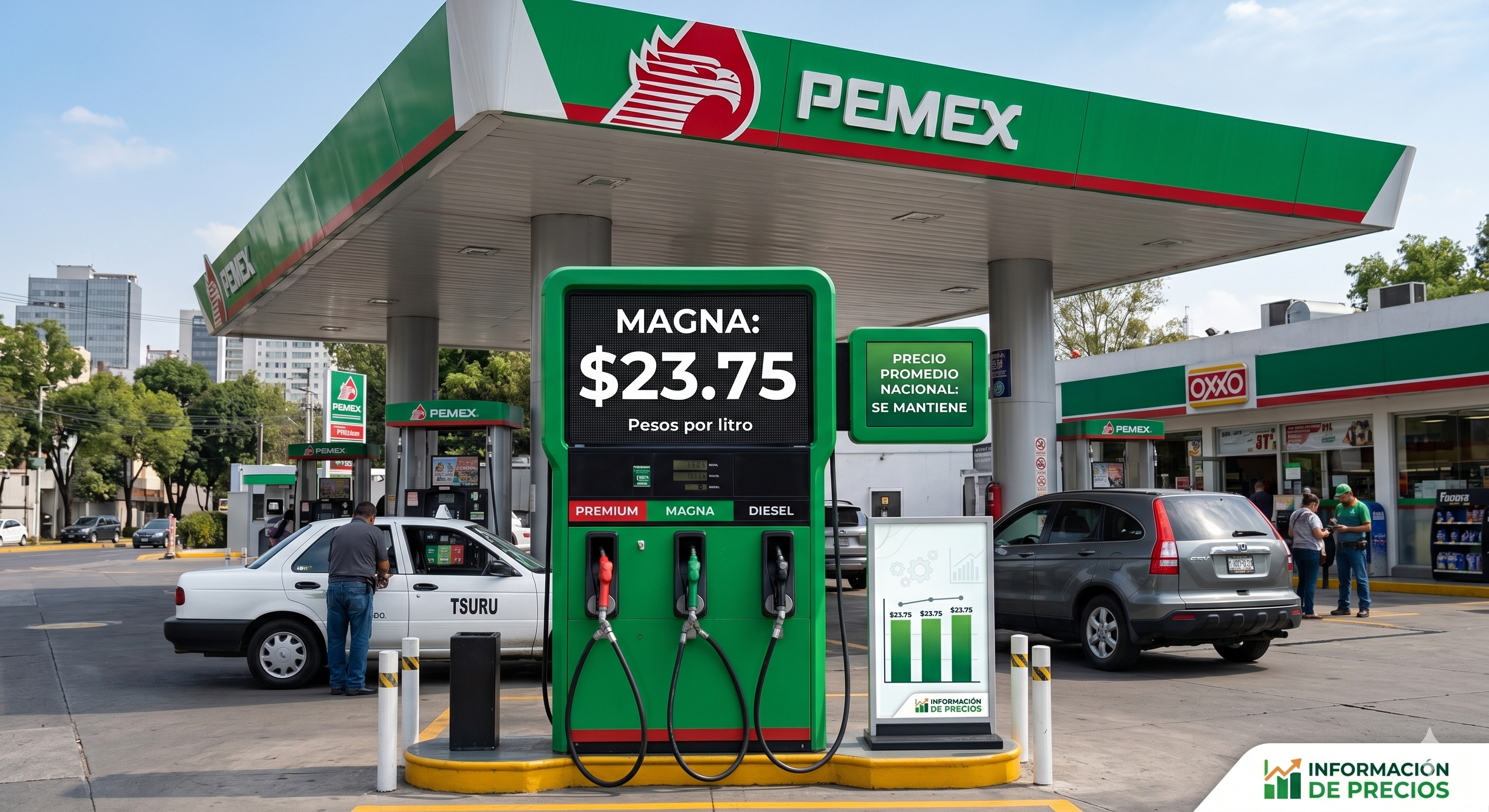
Lower prices also benefit Mexico's fuel import costs, as the country remains a net fuel importer. This eases pressure on consumer subsidies through fiscal incentives in the fuel excise tax (IEPS).
Mexican Markets Respond Positively
Crude behavior buoyed Mexican financial markets, with the peso trading at 17.34 units per dollar. The Trump administration has pursued active diplomatic engagement in the Middle East to ensure crude flows and stabilize global energy markets, a move with direct consequences for the integrated North American economy.
Sources
- WTI, Texas and Brent crude prices, Milenio
- 2026 Strait of Hormuz crisis, Wikipedia and CNN
- Current oil prices, preciopetroleo.net