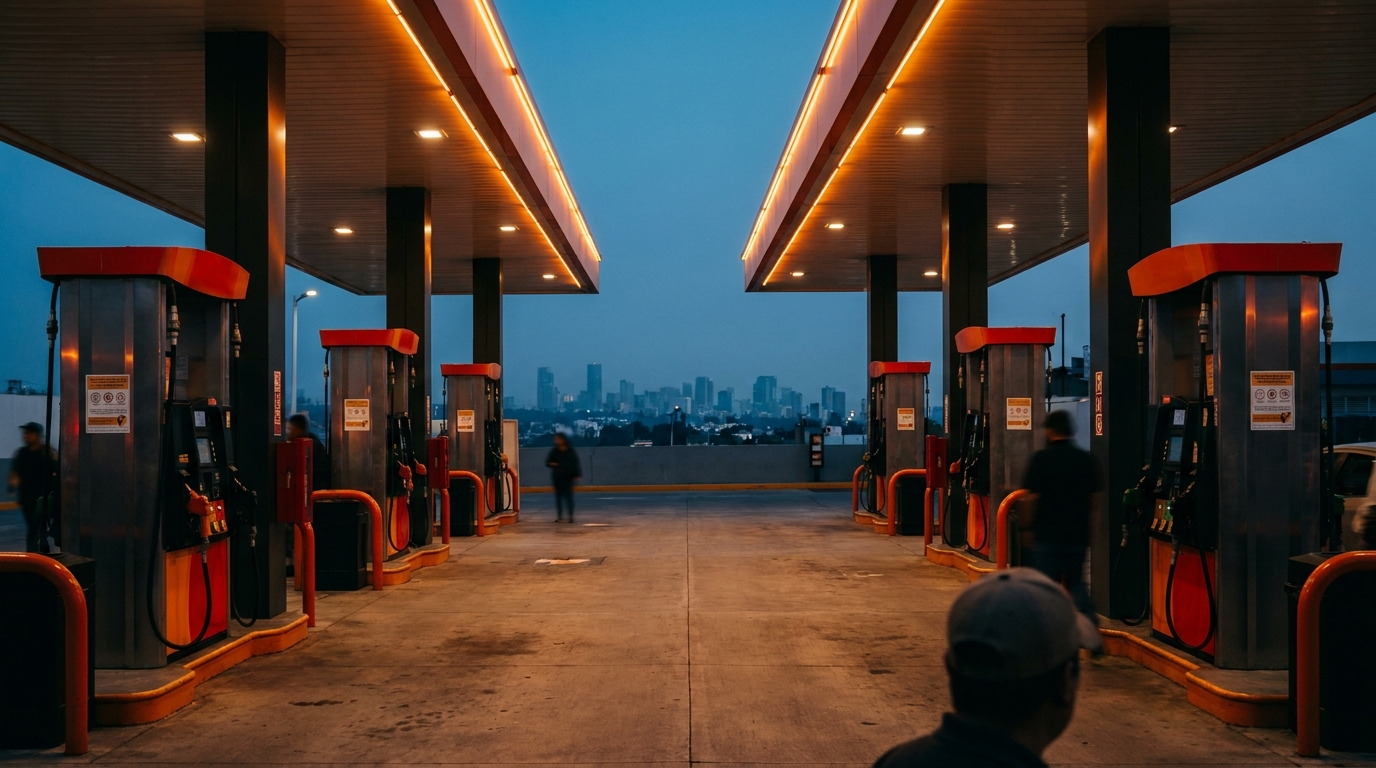
Mexico's Finance Ministry (Secretaría de Hacienda y Crédito Público) raised the diesel tax incentive to 71.58% for the week of July 25 to 31, 2026, the highest level since these incentives were reactivated in March. The adjustment responds to a 17.4% surge in the price of Mexico's crude export blend during July, which closed on Friday the 24th at $87.4 dollars per barrel, according to Infobae.
The international crude price spike, with Brent above $100 per barrel last week, is linked to the escalation of the conflict between the United States and Iran, which includes the blockade of the Strait of Hormuz and Houthi attacks in the Red Sea, as reported by La Jornada. WTI accumulated an 18.6% gain in July, while Mexico's crude export blend rose 17.4% in the same period. For Mexican consumers and the transport sector, the tax incentive mechanism means the federal government absorbs part of the Special Tax on Production and Services (IEPS), preventing international volatility from being fully passed through to fuel prices.
The decree, published in the Official Gazette (Diario Oficial de la Federación) on Friday, July 24, sets the following per-liter incentives for each fuel, compared to the previous week's levels:
- Regular Gasoline (Magna): incentive of 38.18% (2.56 pesos per liter), up from 22.20% the previous week.
- Premium Gasoline: incentive of 30.06% (1.70 pesos per liter), a jump from 8.23% the prior week, after eight weeks without support.
- Diesel: incentive of 71.58% (5.27 pesos per liter), up from 50.64% the previous week.
With these adjustments, the national average price of Magna settled at 23.69 pesos per liter and diesel at 27.06 pesos, according to El Imparcial. Additionally, 84% of service stations maintain a voluntary agreement with the government to keep diesel below 27 pesos per liter and Magna below 24 pesos.
Hacienda publishes fuel tax incentives every Friday for the following week. The next update, covering the first week of August, will be published on Friday, July 31, against a backdrop of international prices that remain elevated due to Middle East tensions.
This article was written with artificial intelligence assistance from verified sources and reviewed by a human editor before publication.