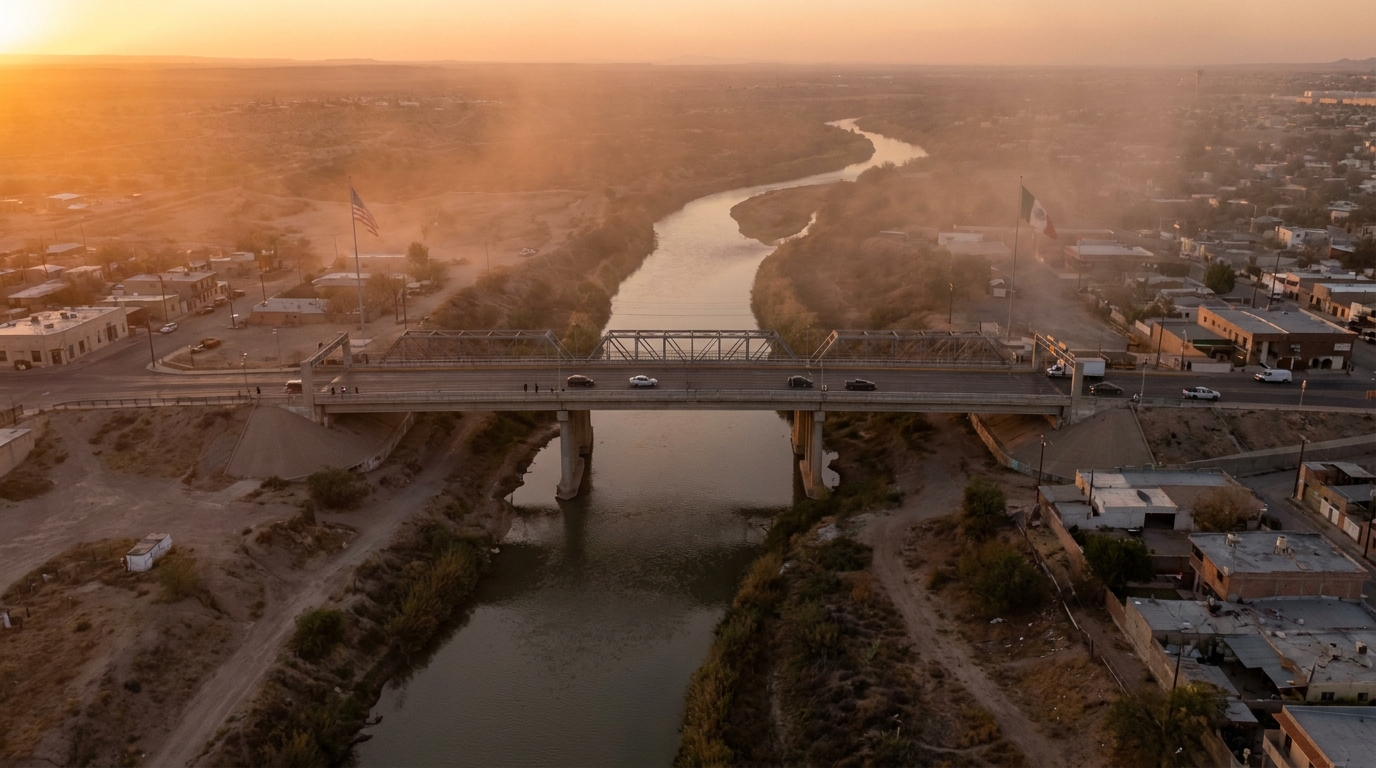
This July 4, 2026, the United States turns 250 years old. Among the more than 60 million Hispanics living in the country, the Mexican-American community, the largest within that group, arrives at this date not as a spectator but as a co-author of a history that began before 1776.
America 250 celebrations kicked off on July 3 amid an extreme heat wave that forced parade cuts in Pennsylvania and the cancellation of rehearsals for the official concert at the Capitol, according to the Associated Press. President Donald Trump will headline an event at Mount Rushmore and another at the National Mall, in a day that two parallel organizations, Freedom 250 and America250, mark with distinct narratives. An AP-NORC poll found that four in ten adults in the country feel proud of the anniversary.
The Latino presence runs through all 250 years of that history, from north to south. In Madrid, the Casa de América inaugurated four exhibitions that, as El País reports, present the other faces of the United States beyond the official anniversary narrative. Among them, American Latinos 1935-1945 by Alberto Ferreras stands out: more than 300 photographs from the Library of Congress taken during the Great Depression by Dorothea Lange and Jack Delano, documenting the daily lives of Hispanic communities. The exhibition will be open to the public until September 30.
On the U.S. side, the Joseph A. Unanue Latino Institute at Seton Hall University is opening this July 4 a traveling exhibition covering 250 years of Latino contributions, from Spanish military figure Bernardo de Gálvez, who was pivotal in the war of independence, to Justice Sonia Sotomayor and astronaut Ellen Ochoa. Spanish-language network HITN is also airing a 50-hour marathon with aerial tours of all 50 states. Rosie Rios, president of America250, stated that the 61 million Hispanics living in the country are a fundamental part of its history.
The date is more than an official commemoration: it is also a gauge of how one in five people in the United States recognizes themselves in this history and continues to shape it. Exhibitions in Madrid and on U.S. campuses will remain open through September, while Latino communities in Philadelphia, Los Angeles, and Houston are participating in July 4 festivities today with their own programming.
This article was written with artificial intelligence assistance from verified sources and reviewed by a human editor before publication.