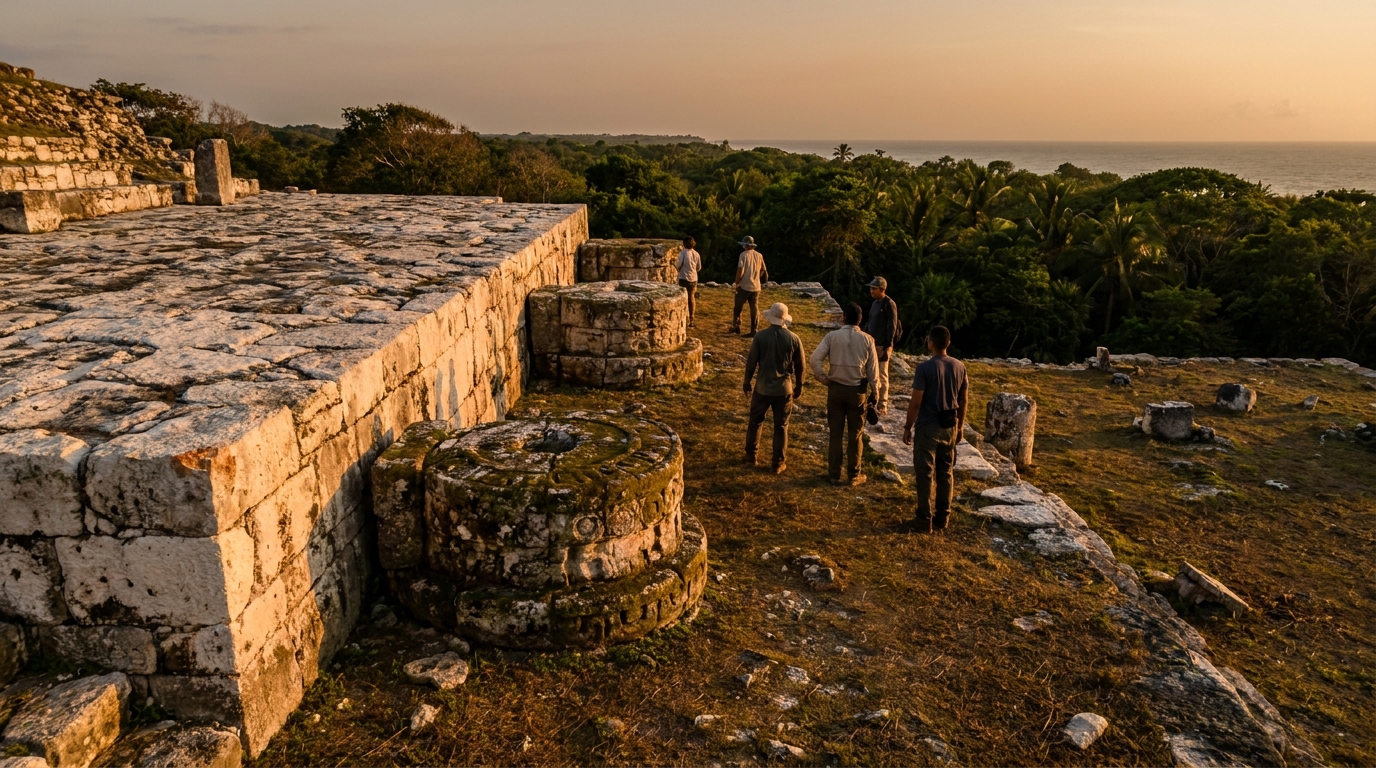
Archaeologists from Mexico's National Institute of Anthropology and History (INAH) confirmed on June 17, 2026 the discovery at the Campo Viejo archaeological site in Coatepec, Veracruz of an Early Classic period platform (200-600 CE) and a 1.88-meter monolith with possible Maya features, characteristics with no documented precedent on the Gulf of Mexico coast.
The find emerged from a salvage excavation the INAH conducted before land-use change approval for the San Lucas residential development in that municipality. According to El Universal on June 19, 2026, archaeologist Lino Espinoza García of the INAH Veracruz Center declared that "it is a unique discovery, we have no precedent," confirming the site fits no known architectural pattern from the region. The discovery raises critical questions about cultural exchange routes between the Gulf coast and the Maya area during the Early Classic period, an understudied era in Veracruz central to understanding the origins of Mesoamerican civilization.
Platform Features
The platform stretches 30 meters long by 12 meters wide and was built with white limestone slabs treated through a specialized firing process. Its flanks display circular stone formations and quadrangular figures with no prior record in Gulf archaeology. The monolith, measuring 1.47 meters at its widest point and 22 centimeters thick, depicts two elite figures receiving liquid from a divine entity, imagery researchers interpret as possibly Mayan in character. Archaeologist Alberto Vázquez called the structure "highly distinctive" and noted that "we currently have no documented correlation."
Artifacts and Timeline
Among objects recovered as offerings were charred maize remains and a jade bead fragmented into four pieces. Field work at Campo Viejo will continue through mid-August 2026. Analysis of recovered materials will extend through February 2027, when the INAH plans to publish findings on cultural ties between the Gulf coast and the Maya world.
The Campo Viejo site adds evidence that Veracruz functioned as a conduit for civilization exchange during the Early Classic period, with profound implications for understanding prehispanic Mexico's shared history.
Frequently Asked Questions
**What did the INAH discover in Veracruz in June 2026?**
The INAH discovered at Campo Viejo, Coatepec, Veracruz a 30-meter-long Early Classic platform and a 1.88-meter monolith with possible Maya features, unprecedented in Gulf archaeology.
**Why is the Campo Viejo find significant?**
The platform's circular stones and quadrangular figures, plus the monolith's Maya-like features, have no documented precedent on the Gulf Coast, raising new questions about cultural exchange routes during the Early Classic period.