Not a Volcano. Not a Geyser. So What Is It?
Specialists from UNAM and the University of Michoacán confirmed Monday that the phenomenon observed in El Salitre, Michoacán, is an active hydrothermal system with no magma rising toward the surface.
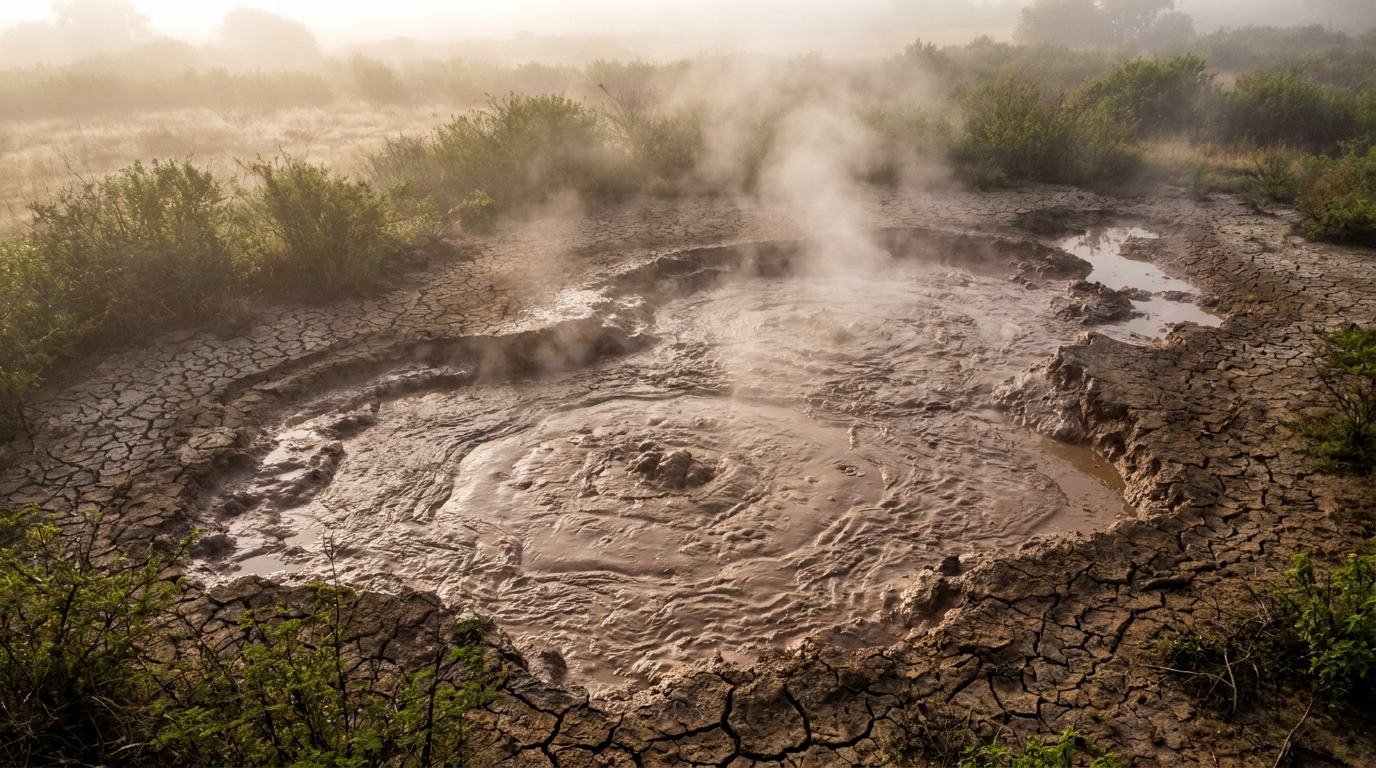
The research, published in La República, details concrete findings: 11 mud pools with temperatures near 86 degrees Celsius, accompanied by emissions of carbon dioxide, ammonia, and hydrogen sulfide. Dr. Ruth Esther Villanueva Estrada, a researcher at UNAM's Institute of Geophysics, explained that the activity stems from hot fluids circulating through natural fractures in the subsoil along the Ixtlán fault within the Trans-Mexican Volcanic Belt. Similar manifestations were documented in 1906 and reappeared in 2017 in the same area.
Coordinated Scientific Effort
The project involves three institutional levels: UNAM conducting fundamental research, the University of Michoacán handling field work and geochemical monitoring, and state Civil Protection along with CENAPRED assessing risk. Ruling out the volcanic hypothesis matters because it removes the most alarming scenario for residents. It also matters for science: El Salitre becomes a natural laboratory for studying hydrothermal circulation in Mexico's volcanic belt.
A Geothermal Opportunity?
The next question is practical: can this system be harnessed for geothermal purposes? Low-enthalpy hydrothermal energy like what's observed here allows direct applications, heating, greenhouses, and thermal spas without deep extraction. CENAPRED will maintain site monitoring through the summer, and UNAM will publish the complete technical report in July.
Sources
- https://larepublica.pe/ciencia/2026/05/30/cientificos-mexicanos-descubren-que-agujero-no-es-un-volcan-ni-un-geiser-revelan-fenomeno-que-desafia-la-naturaleza-961680
- https://www.geofisica.unam.mx/