
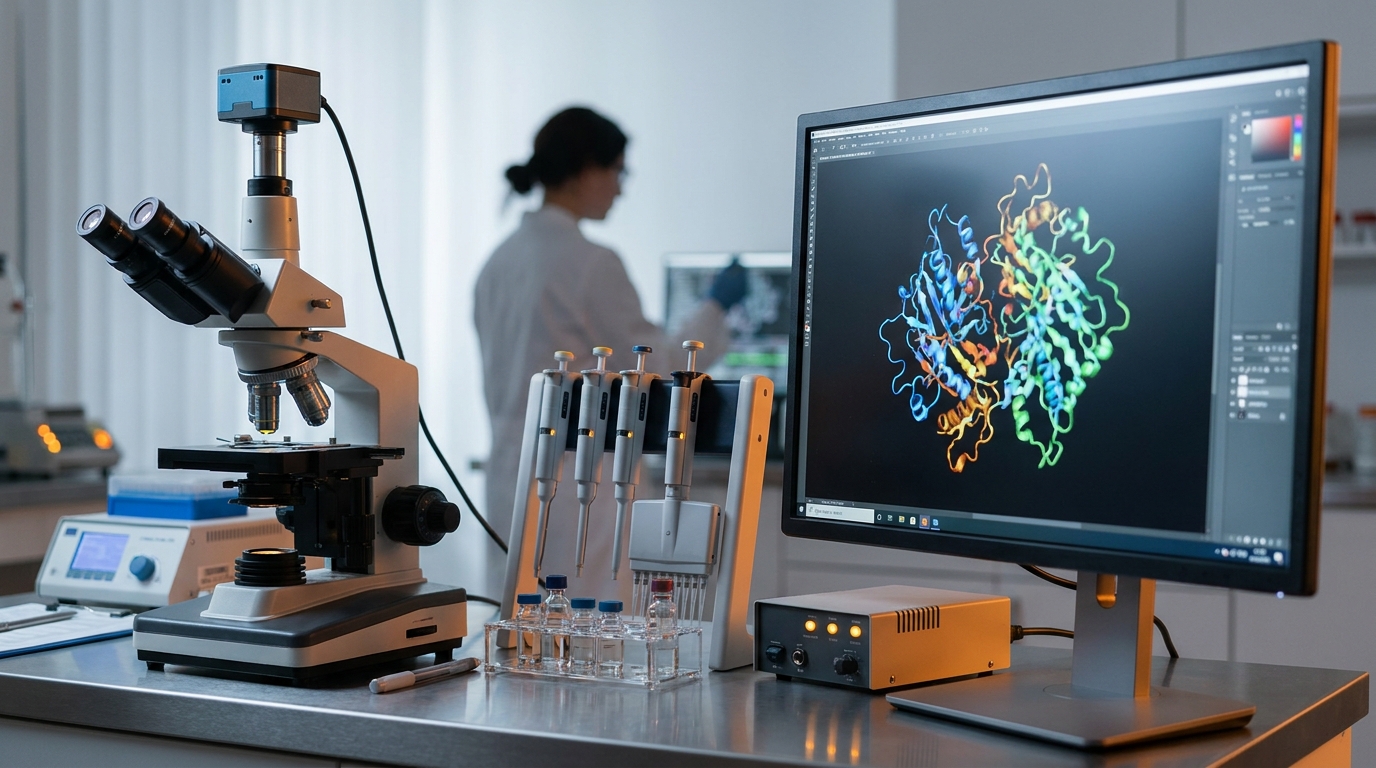
On June 30, Anthropic launched Claude Science, an artificial intelligence environment for researchers that integrates more than 60 scientific tools, according to the company's official announcement. The company will allocate up to $30,000 in credits to 50 global projects and announced it will develop its own drugs for neglected diseases, a category that disproportionately affects Latin America.
Claude Science allows researchers to run genomic analyses, model proteins, and design chemical compounds from a single workspace, with AI agents that coordinate complex tasks and verify results. According to MIT Technology Review, the platform is already available to paid subscribers on macOS and Linux. The announcement includes a credits program with applications open until July 15: researchers from any country, including Mexico and Latin America, can apply for up to $30,000 per project. This global openness is particularly relevant for the region, where diseases such as dengue, Chagas, and tuberculosis represent a persistent public health burden.
The platform relies on a coordinating agent that deploys specialized subagents and a reviewing agent that verifies sources and calculations, according to Anthropic's announcement. During the presentation, the system autonomously identified new drug candidates for phenylketonuria, a rare genetic disease. According to MIT Technology Review, Anthropic recently hired John Jumper, the Nobel Prize-winning researcher behind AlphaFold, from Google DeepMind. Eric Kauderer-Abrams, Anthropic's head of life sciences, described the launch as the company's most significant product alongside Claude Code. The credits program, with applications open until July 15 and results on July 31, will fund projects running from September 1 to December 1, 2026.
The move positions Anthropic at the intersection of artificial intelligence and drug discovery, a space of growing industry interest. For Latin American researchers, the application window closes July 15: the call is open on Anthropic's official portal.
This article was written with artificial intelligence assistance based on verified sources and reviewed by a human editor before publication.