
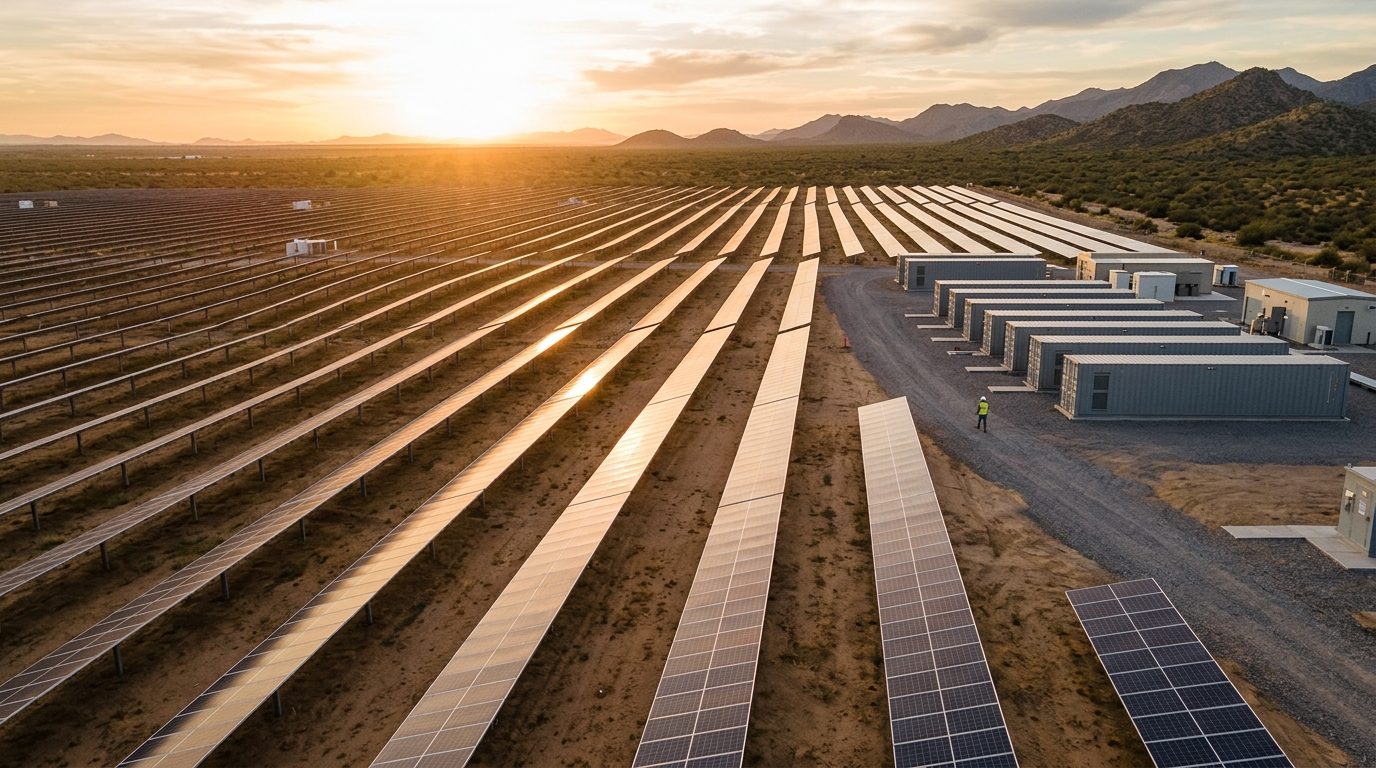
Infrastructure investor Actis launched Yeltica Energy on September 17, 2026, a renewable generation platform in Mexico with the goal of surpassing 2 GW of solar, wind and battery storage capacity, according to BNamericas. The vehicle starts with three solar-plus-battery projects totaling around 330 MWp of photovoltaic capacity and 255 MWh of storage, awarded in the first Mixed Investment Tender of the Comisión Federal de Electricidad (CFE).
Actis does not arrive as an unknown. The UK-based firm, owned by General Atlantic since 2024, has held 7.3 GW of generation capacity in Mexico since its founding, with businesses it later sold, such as Zuma Energía, Saavi Energía and Atlas Renewable Energy, and today it owns Valia Energía, a 3.2 GW gas platform, according to IPE Real Assets. The launch builds on the mixed investment scheme, in which CFE buys 70% of a project's electricity for up to 25 years and leases 70% of the battery's capacity. For Mexico the figure matters: the country set a goal that 38% of its electricity come from renewable sources by 2030, up from around 20% today, according to BNamericas.
Yeltica Energy will be led by José Luis García, with more than 25 years in the sector. He was CEO of Zelestra LATAM, where he built and divested more than 1 GW in Chile, Peru and Colombia, and previously led Zuma Energía, where he developed more than 800 MW of wind and solar in Mexico. Alberto Estefan, Actis's managing director of energy infrastructure, said Mexico is one of the most attractive infrastructure markets in Latin America from the firm's perspective. The platform plans to grow through greater participation in public tenders and through proprietary origination alongside developers and offtakers. As a scale reference, CFE awarded more than 7 GW of solar and wind capacity in this year's call, PV Tech reported.
The next measuring point is the upcoming public capacity tenders, where Yeltica Energy plans to compete. Actis also takes part in data centers in the country through Terranova and NextStream, a segment that adds electricity demand to the equation.
This article was written with the assistance of artificial intelligence from verified sources and reviewed by a human editor before publication.